

How much money do you need to start forex trading This is one of the most common questions asked by beginners entering the forex market in 2026. Many new traders believe they can start with a very small amount and quickly generate large profits. Social media videos, trading influencers, and aggressive broker marketing often create unrealistic expectations about how forex trading actually works.
In reality, understanding how much money do you need to start forex trading depends on several important factors, including your trading goals, risk tolerance, strategy, emotional discipline, and overall experience level.
Some traders start with small accounts to learn the basics of live trading, while others prefer larger balances to reduce emotional pressure and improve risk management flexibility. The truth is that forex trading success depends far more on consistency and capital protection than simply depositing money into a trading account.
This guide explains how much money do you need to start forex trading realistically in 2026, the hidden dangers of underfunded accounts, common beginner mistakes, leverage risks, and how experienced traders approach account sizing more professionally.
Quick Summary: How Much Money Do You Need to Start Forex Trading
| Starting Capital | Suitable For | Main Challenges |
|---|---|---|
| $10 – $100 | Learning live trading basics | High emotional pressure and weak risk management |
| $200 – $500 | Beginner-level controlled trading | Requires strong discipline and realistic expectations |
| $1000+ | More sustainable trading approach | Still requires proper risk management |
| $5000+ | Advanced position management | Professional mindset becomes essential |
Can You Start Forex Trading With a Small Amount
Yes, technically you can start forex trading with a small amount of money. Many forex brokers now allow traders to open accounts with deposits as low as:
- $10
- $50
- $100
This is mainly possible because of leverage and micro lot trading. Modern trading platforms allow smaller position sizes compared to traditional financial markets.
However, many beginners misunderstand what this actually means.
Just because you can open a forex account with a small balance does not mean it is ideal for long-term trading success.
There is a major difference between:
- Starting forex trading
- Trading sustainably with proper risk management
Understanding how much money do you need to start forex trading also means understanding the limitations of small trading accounts.
Why Beginners Often Underestimate Capital Requirements
Many beginners searching for how much money do you need to start forex trading are hoping for a shortcut to fast income.
This expectation is often influenced by:
- Social media trading content
- Luxury lifestyle marketing
- Profit screenshots
- High leverage promotions
- Unrealistic trading challenges
In reality, smaller accounts usually create additional problems for beginners.
These include:
- Higher emotional pressure
- Overtrading temptation
- Poor risk management flexibility
- Aggressive position sizing
- Revenge trading behavior
This is why experienced traders focus more on protecting capital rather than chasing fast account growth.
Understanding Leverage in Forex Trading
Leverage is one of the main reasons why forex trading appears accessible to beginners.
Leverage allows traders to control larger positions using smaller amounts of money.
For example, a trader using leverage may open a position much larger than their account balance.
This is one reason many people searching for how much money do you need to start forex trading believe they can generate significant profits from tiny accounts.
However, leverage increases both:
- Potential profits
- Potential losses
Many beginner traders misuse leverage by taking oversized trades. This often leads to rapid account losses.
Understanding leverage properly is far more important than simply choosing the highest leverage ratio available.
How Much Money Do You Need to Start Forex Trading Realistically
There is no universal answer because every trader has different goals and financial situations.
Still, realistic expectations are extremely important when deciding how much money do you need to start forex trading.
Starting With $50–$100
Very small accounts are usually better suited for learning rather than serious income generation.
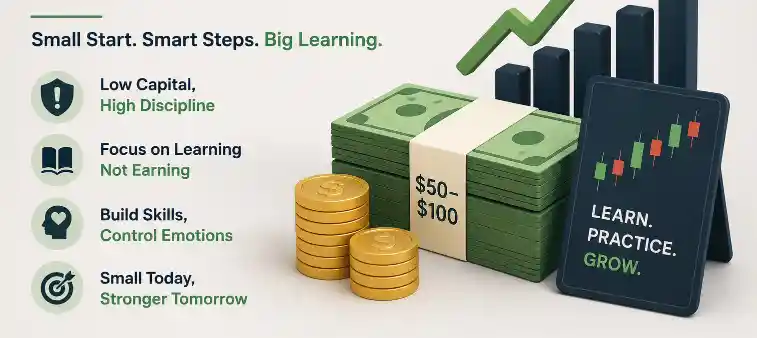
At this level:
- Risk management becomes difficult
- Profit potential remains limited
- Emotional pressure increases significantly
- Overleveraging temptation becomes common
Many beginners try turning small balances into large accounts quickly, which often creates emotional mistakes.
Starting With $200–$500
This range offers slightly better flexibility.
Traders may:
- Use smaller position sizes more comfortably
- Practice better risk management
- Reduce emotional pressure slightly
- Avoid excessive leverage more easily
However, discipline is still extremely important.
Even moderate leverage misuse can damage accounts quickly.
Starting With $1000 or More
Many experienced traders believe larger accounts provide better long-term flexibility.
Benefits may include:
- Better position sizing
- Reduced emotional stress
- Improved risk management
- More stable trade execution
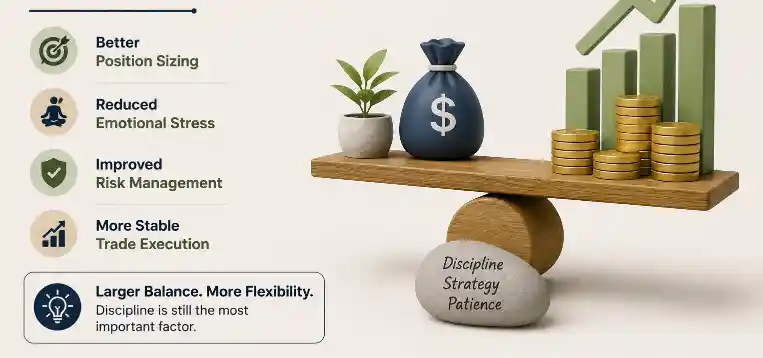
Still, larger balances do not guarantee profitability.
Poor discipline can destroy both small and large accounts.
Trader Insight: Why Account Size Alone Does Not Guarantee Success
Many beginners assume larger capital automatically leads to successful trading.
In reality, professional traders think differently about money management.
Experienced traders usually focus heavily on:
- Risk management
- Emotional control
- Trade consistency
- Capital preservation
A disciplined trader with a smaller account may survive longer than an emotional trader with a large balance.
This is an important lesson when understanding how much money do you need to start forex trading.
The Importance of Risk Management
Risk management is one of the most important parts of sustainable forex trading.
Without proper risk control, account size becomes far less important because losses can accumulate quickly.
Many experienced traders risk only a small percentage of their account per trade.
This helps reduce the impact of losing streaks.
Common Beginner Risk Management Mistakes
- Using excessive leverage
- Trading without stop losses
- Risking too much on single trades
- Trying to recover losses emotionally
- Holding losing positions too long
Good risk management does not eliminate losses. Instead, it helps traders survive long enough to improve.
Can Forex Trading Become a Full-Time Income
This is another area where unrealistic expectations are extremely common.
Many people researching how much money do you need to start forex trading hope to replace a full-time income quickly.
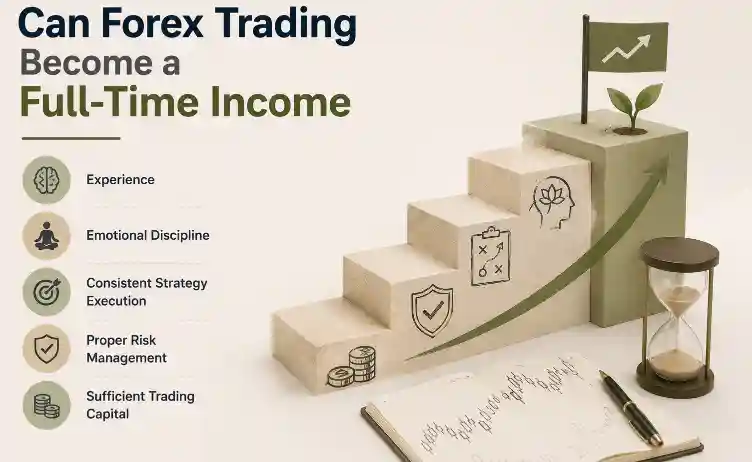
In reality, generating stable income from forex trading usually requires:
- Experience
- Emotional discipline
- Consistent strategy execution
- Proper risk management
- Sufficient trading capital
Small accounts may help traders gain experience, but consistent income generation generally requires a more professional approach.
Even experienced traders face losing periods and market uncertainty.
Demo Accounts vs Small Live Accounts
Many beginner traders start with demo accounts before risking real money.
Demo trading helps traders understand:
- Platform functionality
- Technical analysis basics
- Trade execution
- Strategy testing
- Chart reading
However, demo accounts do not fully replicate the emotional pressure of real-money trading.
This is why some traders eventually transition to small live accounts to experience real market psychology.
When deciding how much money do you need to start forex trading, many traders use small live accounts mainly for emotional training rather than profit generation.
Why Many Small Forex Accounts Fail Quickly
One major problem with small forex accounts is psychological pressure.
Many traders attempt to grow accounts aggressively because profits from tiny balances appear too small.
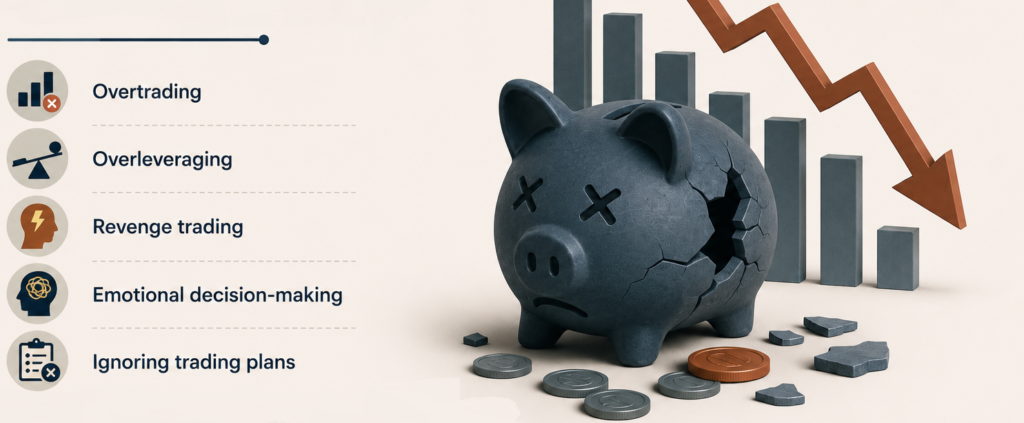
This often leads to:
- Overtrading
- Overleveraging
- Revenge trading
- Emotional decision-making
- Ignoring trading plans
As a result, many small forex accounts fail quickly.
Experienced traders understand that survival and consistency matter more than fast account growth.
Choosing the Right Account Size for Your Goals
The ideal answer to how much money do you need to start forex trading depends heavily on your personal goals.
- If Your Goal Is Learning: A smaller account may be enough for gaining live market experience and improving discipline.
- If Your Goal Is Long-Term Growth: Risk management and patience become more important than chasing fast profits.
- If Your Goal Is Full-Time Trading: Larger capital and consistent performance are generally necessary.
Professional trading is usually much slower and more disciplined than social media often suggests.
Common Beginner Mistakes
- Believing Forex Is a Quick Money System: Forex trading requires long-term skill development and emotional discipline.
- Using Maximum Leverage: High leverage increases both profits and losses dramatically.
- Ignoring Risk Management: Without proper risk control, even profitable strategies can fail long term.
- Overtrading Small Accounts: Trying to grow accounts too aggressively often creates emotional mistakes.
- Depositing Money You Cannot Afford to Lose: Trading capital should never come from essential living expenses or borrowed money.
How Experienced Traders Approach Capital
Professional traders usually approach forex trading differently from beginners.
Instead of chasing unrealistic returns, they focus on:
- Protecting trading capital
- Maintaining consistency
- Managing risk carefully
- Following structured trading plans
Many experienced traders understand that long-term survival matters more than short-term excitement.
This mindset is extremely important when understanding how much money do you need to start forex trading responsibly.
Practical Tips for Beginner Forex Traders
- Start with realistic expectations
- Focus on learning before profits
- Use proper risk management
- Avoid excessive leverage
- Practice with demo accounts first
- Trade only with money you can afford to lose
- Develop emotional discipline slowly
- View trading as a long-term skill
Building trading consistency usually takes much longer than beginners initially expect.
Safety Analysis: Is Forex Trading Risky?
Forex trading involves significant financial risk, especially for inexperienced traders.
The market moves quickly, leverage magnifies exposure, and emotional decisions can lead to rapid losses.
However, forex trading itself is not automatically dangerous if approached responsibly.
The biggest risks often come from:
- Poor education
- Overconfidence
- Excessive leverage
- Unrealistic expectations
- Lack of emotional discipline
Beginners who focus on education, risk management, and consistency generally have a better chance of improving over time.
Final Verdict
So, how much money do you need to start forex trading in 2026?
Technically, traders can start with very small amounts because of leverage and modern trading platforms. However, sustainable forex trading depends far more on discipline, consistency, emotional control, and risk management than deposit size alone.
Very small accounts may help beginners gain practical experience, but they also create psychological pressure and limited flexibility. Larger balances may improve risk management opportunities, yet they still cannot guarantee profitability.
Understanding how much money do you need to start forex trading should involve more than simply choosing a deposit amount. Traders should also focus on education, capital preservation, emotional discipline, and realistic expectations.
The forex market rewards patience and consistency far more than aggressive short-term trading behavior.
Related Forex Trading Guides
- What is Leverage in Forex Trading? – Learn how leverage affects profit potential and trading risk.
- Why 90% Traders Lose Money in Forex Trading – Discover common mistakes beginner traders make.
- Pullback Trading Strategy in Forex – Learn how experienced traders enter trends more safely.
- Forex Market Hours Explained – Understand the best times to trade forex effectively.

