

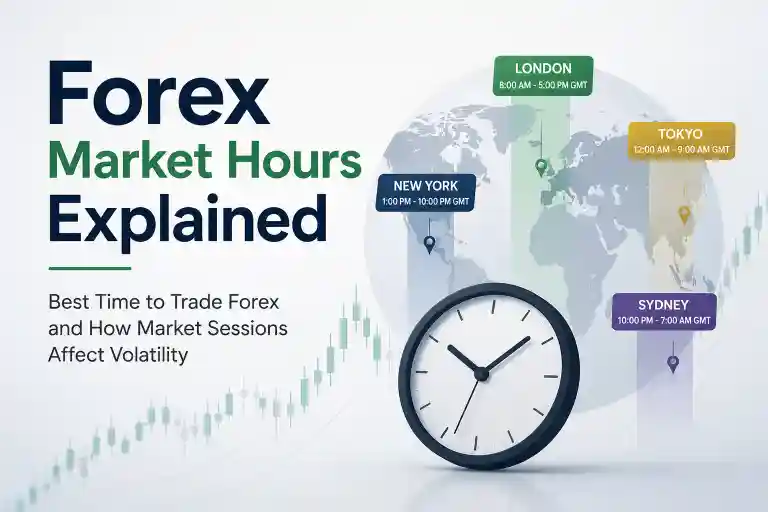
Forex Market Hours play a major role in how the currency market behaves throughout the trading week. Although the forex market operates 24 hours a day from Monday to Friday, trading conditions are not the same during every hour.
Liquidity, volatility, spread size, and market momentum constantly change depending on which global financial centers are active.
Many beginner traders assume they can trade effectively at any time because the market never fully closes during weekdays. However, experienced traders understand that market timing can significantly influence trade quality, execution speed, and overall risk conditions.
Some trading sessions are calm and slow-moving, while others produce strong price movement and increased institutional activity. Understanding these changes helps traders avoid poor trading periods and focus on more favorable market conditions.
This guide explains Forex Market Hours in detail, how global trading sessions work, why certain periods are more active than others, and how traders use market timing to improve decision-making.
Quick Summary of Forex Market Hours
| Topic | Explanation |
|---|---|
| Forex Market Hours | The forex market operates 24 hours a day during weekdays through global financial centers. |
| Main Trading Sessions | Sydney, Tokyo, London, and New York. |
| Most Active Period | London and New York session overlap. |
| Lowest Activity | Late US session and some parts of the Sydney session. |
| Best Sessions for Volatility | London session and London-New York overlap. |
| Important Factors | Liquidity, spreads, volatility, and economic news. |
| Best for Beginners | Trading during active sessions with stable liquidity. |
What Are Forex Market Hours
Forex Market Hours refer to the time periods during which the global foreign exchange market remains open for trading.
Unlike stock exchanges that operate through centralized trading locations with fixed opening hours, the forex market functions through a decentralized global network of:
- Banks
- Financial institutions
- Central banks
- Hedge funds
- Brokers
- Retail traders
Because major financial centers around the world open and close at different times, forex trading activity shifts continuously from one region to another.
This creates the well-known 24-hour forex trading cycle.
However, while the market technically remains open throughout the week, the quality of trading conditions changes significantly depending on the active trading session.
When Does the Forex Market Open and Close
The forex market generally opens on Monday morning in the Asia-Pacific region and closes on Friday evening in the United States.
The market remains active because trading activity rotates between major global financial centers.
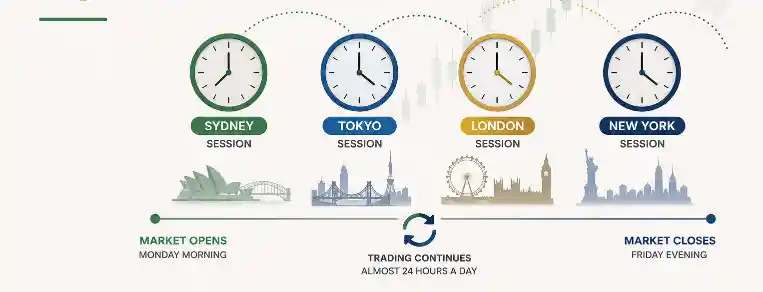
The four major forex trading sessions are:
- Sydney Session
- Tokyo Session
- London Session
- New York Session
As one market session closes, another begins. This overlapping structure allows the forex market to continue operating almost continuously during weekdays.
Weekend closures occur because institutional trading activity slows significantly after the US market closes on Friday.
Why Forex Market Hours Matter More Than Beginners Realize
Many beginners focus heavily on indicators and strategies while ignoring market timing.
However, Forex Market Hours directly affect:
- Liquidity levels
- Market volatility
- Spread size
- Execution quality
- Trend strength
- Breakout reliability
For example, a breakout strategy may perform well during highly active trading periods but struggle during quiet market conditions.
Similarly, scalpers usually need tighter spreads and faster execution, which are more common during high-liquidity sessions.
Understanding market hours helps traders avoid forcing trades during periods of weak participation.
The Four Major Forex Trading Sessions Explained
Sydney Session
The Sydney session begins the forex trading week.
This session is generally calmer compared to London and New York.
Liquidity remains lower, and price movement may become slower for many currency pairs.
Currency pairs involving the Australian Dollar (AUD) and New Zealand Dollar (NZD) often show increased activity during this session.
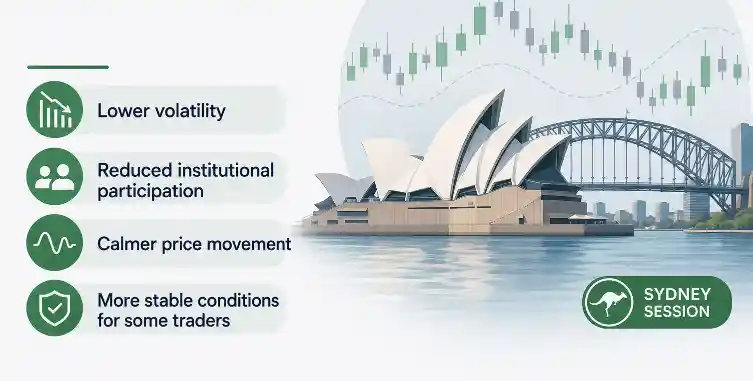
Characteristics of the Sydney Session
- Lower volatility
- Reduced institutional participation
- Calmer price movement
- More stable conditions for some traders
Although volatility is lower, important movements can still occur depending on global news and economic releases.
Tokyo Session
The Tokyo session represents the major Asian trading period.
JPY-related currency pairs typically become more active during this time.
Compared to London and New York, volatility usually remains moderate, but trends can still develop under the right conditions.
Currency Pairs Often Active During Tokyo Session
- USD/JPY
- EUR/JPY
- AUD/JPY
- GBP/JPY
Asian economic announcements and regional institutional activity influence this session strongly.
London Session
The London session is widely considered one of the most important Forex Market Hours because London remains a major global financial center.
This session often produces:
- Higher volatility
- Strong market momentum
- Increased liquidity
- Larger intraday price movement
Many professional traders prefer trading during the London session because institutional participation increases significantly.
Breakouts and trend continuation setups often become more reliable during this period.
Why London Session Is So Important
The London session overlaps with both Asian and US market activity, creating strong participation from global institutions.
This often leads to increased trading volume and better trade execution conditions.
New York Session
The New York session is another highly active trading period.
USD-related currency pairs often experience strong volatility due to:
- US economic data releases
- Institutional participation
- Central bank commentary
- Market reactions to financial news
Because the US Dollar is involved in most major forex transactions, the New York session remains highly influential.
Volatility becomes especially strong during the overlap between London and New York.
The Most Active Forex Market Hours
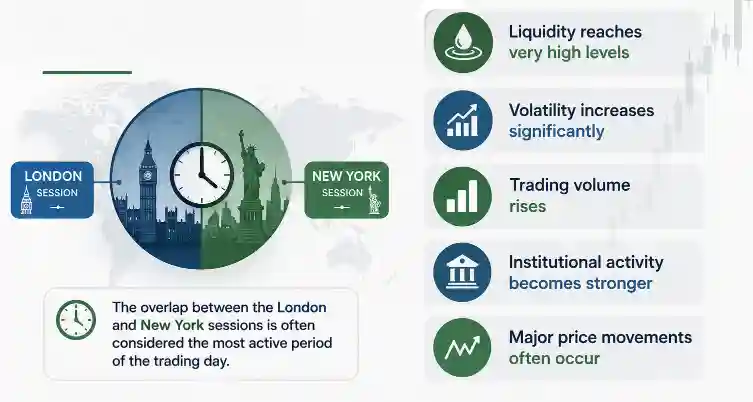
One of the most important trading periods in forex occurs during the overlap between the London and New York sessions.
This overlap is often considered the most active period of the trading day.
Why the London-New York Overlap Matters
- Liquidity reaches very high levels
- Volatility increases significantly
- Trading volume rises
- Institutional activity becomes stronger
- Major price movements often occur
Many breakout opportunities and trend movements develop during this overlap.
For day traders and scalpers, this period often provides more favorable trading conditions compared to quieter sessions.
How Volatility Changes During the Trading Day
Volatility changes continuously throughout the forex market cycle.
Generally:
- Sydney session remains relatively calm
- Tokyo session introduces moderate activity
- London session increases volatility strongly
- London-New York overlap creates peak activity
- Late New York session may slow down again
Understanding volatility patterns helps traders adjust:
- Position size
- Risk management
- Profit targets
- Trading expectations
Different strategies may perform better under different volatility conditions.
Trader Insight: Why Timing Often Improves Strategy Performance
Many beginners assume strategy alone determines success. However, market timing can strongly influence how well a strategy performs.
For example:
- Breakout setups during inactive hours may fail more frequently
- Scalping during low liquidity periods may become difficult due to wider spreads
- Trend-following strategies often perform better during active sessions
- News trading becomes more volatile during major economic releases
Experienced traders often focus heavily on market conditions instead of trading continuously throughout the day.
Sometimes avoiding poor market conditions is just as important as finding good setups.
Best Forex Market Hours for Different Trading Styles
Scalping
Scalpers generally prefer highly liquid trading periods because tighter spreads and fast execution improve short-term trading conditions.
London and New York sessions are commonly preferred.
Day Trading
Day traders often focus on sessions with stronger intraday movement.
The London session and London-New York overlap usually provide more opportunities for intraday setups.
Swing Trading
Swing traders hold positions longer, so exact trading hours may become less important.
However, understanding volatility remains useful for managing entries and exits.
Breakout Trading
Breakout traders often prefer session openings and overlap periods when volatility increases sharply.
Higher participation can help confirm stronger market momentum.
How Economic News Affects Forex Market Hours
Major economic announcements can dramatically change market behavior.
Important events include:
- Interest rate decisions
- Inflation reports
- Non-Farm Payroll data
- GDP reports
- Central bank speeches

These events often occur during major market sessions and can create rapid price movement.
Volatility may increase sharply within seconds after major economic releases.
Many traders monitor economic calendars before entering trades.
Common Mistakes Traders Make With Forex Market Hours
- Trading During Extremely Quiet Hours: Low liquidity periods may produce slow movement and weak trade setups.
- Ignoring Spread Changes: Spreads often widen during inactive periods or around market rollovers.
- Using the Same Strategy in All Market Conditions: Some strategies perform poorly during low volatility periods.
- Overtrading During High Volatility: Strong market movement can encourage emotional decision-making and excessive risk-taking.
How Beginners Can Choose the Best Time to Trade Forex
The best Forex Market Hours depend on several factors:
- Your trading style
- Your local time zone
- Your preferred currency pairs
- Your schedule
- Your experience level
Many beginners benefit from focusing on one session consistently rather than trading randomly throughout the day.
Building familiarity with specific market conditions often improves discipline and decision-making.
Practical Tips for Trading Forex Market Hours More Effectively
- Trade during active sessions when liquidity improves
- Avoid random trading during extremely quiet periods
- Monitor economic news schedules carefully
- Understand how volatility changes throughout the day
- Practice observing market behavior before increasing risk
- Choose trading hours that match your strategy
Consistency and patience are important for developing timing skills.
Difference Between Forex Market Hours and Trading Sessions
Many beginners confuse Forex Market Hours with trading sessions.
Forex Market Hours refer to the overall 24-hour operation of the forex market.
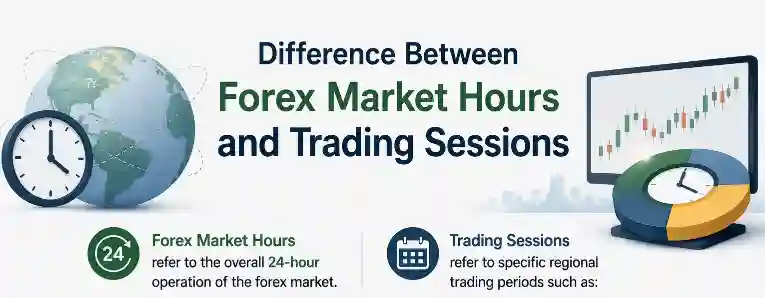
Trading sessions refer to specific regional trading periods such as:
- London session
- New York session
- Tokyo session
- Sydney session
Understanding both concepts helps traders analyze global market activity more effectively.
Safety Analysis: Can Trading at the Wrong Time Increase Risk
Yes, trading during poor market conditions can increase risk significantly.
Inactive market hours may produce:
- Wider spreads
- Slower movement
- Lower liquidity
- Less reliable breakouts
- Unexpected price spikes
Highly volatile sessions can also become risky if traders ignore risk management.
This is why market timing should always be combined with proper discipline and position sizing.
Final Verdict: Why Forex Market Hours Matter for Long-Term Trading
Understanding Forex Market Hours is essential for traders who want to improve market timing, risk management, and overall trade quality.
The forex market may remain open continuously during weekdays, but trading conditions constantly change depending on global participation and session activity.
Experienced traders rarely trade randomly throughout the day. Instead, they focus on periods that match their strategy, preferred volatility level, and risk tolerance.
Learning how market hours affect liquidity, volatility, and execution quality can help traders make more disciplined and informed decisions over time.
Like every trading skill, understanding market timing improves gradually through observation, experience, and consistent practice.
Related Forex Trading Guides
- Forex Trading Sessions Explained – Learn how different global sessions influence volatility and market behavior.
- Breakout Trading Strategy in Forex – Understand why breakout traders focus on active market hours.
- Pullback Trading Strategy in Forex – Learn how market timing affects trend continuation setups.
- What is Leverage in Forex Trading – Understand leverage risks during highly volatile sessions.
- Why 90% Traders Lose Money in Forex Trading – Real Reasons Most Beginners Fail – Discover common mistakes related to poor timing and emotional trading.

