

Why 90% traders lose money in forex trading is one of the most searched questions among beginners entering the financial markets. Forex trading is often promoted online as a simple way to make money from a laptop or smartphone, but the reality experienced by most traders is very different.
Many beginners start trading with excitement and high expectations. They watch social media clips showing luxury lifestyles, fast profits, and successful trades. However, after a few weeks or months, many traders experience repeated losses, emotional stress, and account drawdowns.
While the exact percentage may vary between brokers and regions, the reality remains the same — a large number of retail traders struggle to become consistently profitable.
This does not mean the forex market is fake or manipulated against retail traders. In most cases, traders lose money because they approach trading without the right mindset, education, or risk management.
In this detailed guide, we will break down the real reasons why Why 90% traders lose money in forex trading, what beginners usually overlook, and what separates disciplined traders from emotional traders.
Quick Summary: Why 90% traders lose money in forex trading
| Reason | Impact on Traders |
|---|---|
| Lack of Education | Leads to poor decisions and unrealistic expectations |
| Overusing Leverage | Causes large losses from small market movements |
| Poor Risk Management | Destroys accounts even with good strategies |
| Emotional Trading | Leads to revenge trading and impulsive decisions |
| No Trading Plan | Creates inconsistency and random entries |
| Overtrading | Increases unnecessary losses and stress |
| Unrealistic Expectations | Pushes traders toward risky behavior |
| Strategy Switching | Prevents long-term consistency |
Understanding these mistakes early can help traders avoid many common problems that lead to account losses.
The Reality of Forex Trading Most Beginners Ignore
One major reason why 90% traders lose money in forex trading is because they enter the market with the wrong expectations.
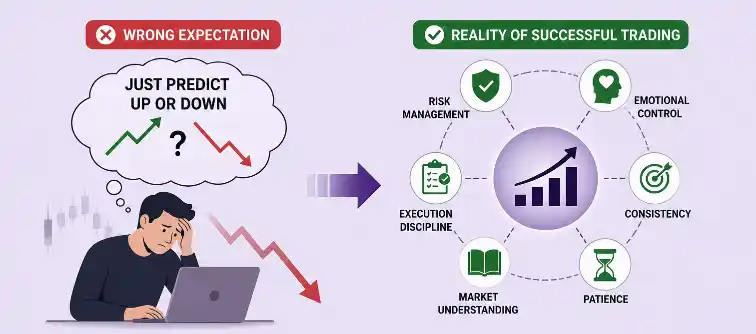
Many people believe forex trading is mainly about predicting whether price will go up or down. In reality, successful trading involves:
- Risk management
- Emotional control
- Consistency
- Patience
- Market understanding
- Execution discipline
Trading is closer to probability management than gambling or guessing.
Professional traders understand that losses are part of the business. Beginners often believe every trade should win, which creates frustration and emotional mistakes.
1. Lack of Proper Forex Education
Many beginners start trading after watching a few short videos or joining online signal groups.
This creates a dangerous situation because traders begin risking real money without understanding:
- Market structure
- Spread and execution
- Leverage
- Lot sizes
- Liquidity
- Risk exposure
Without proper education, traders often copy strategies blindly without understanding why they work or fail.
Forex trading requires structured learning, just like any other professional skill.
2. Overusing Leverage Without Understanding the Risk
Leverage is one of the biggest reasons why 90% traders lose money in forex trading.
Forex brokers allow traders to control large positions with small deposits. While this increases profit potential, it also increases risk significantly.

For example:
- A trader using excessive leverage can lose a large percentage of their account from a small market movement
- High leverage creates emotional pressure
- Beginners often focus on profit potential while ignoring downside risk
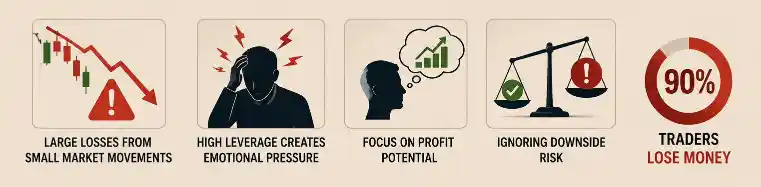
Leverage itself is not the problem. Misusing leverage is the real issue.
3. Poor Risk Management
Risk management is one of the most overlooked areas in trading.
Many traders focus entirely on finding winning trades while ignoring how much they can lose.
Common risk management mistakes include:
- Risking too much on one trade
- Trading oversized positions
- Removing stop losses
- Adding to losing trades emotionally
- Trying to recover losses quickly
Even traders with profitable strategies can fail if risk is not controlled properly.
Professional traders survive because they prioritize capital preservation first.
4. Emotional Trading Destroys Consistency
One of the hardest parts of forex trading is controlling emotions.
Trading triggers emotions such as:
- Fear
- Greed
- Frustration
- Overconfidence

After a losing streak, many traders begin revenge trading. They increase position size or take random trades to recover losses quickly.
This usually creates even bigger losses.
Emotional trading removes discipline from the process.
Reality Check: Forex Trading Is Not Fast Money
One major misunderstanding among beginners is believing forex trading can create instant wealth.
Social media often shows unrealistic trading lifestyles:
- Luxury cars
- Large profits
- Quick success stories
What is rarely shown:
- Years of learning
- Psychological pressure
- Losses and drawdowns
- Risk management discipline
Forex trading is a skill-based activity that takes time to develop.
Traders who expect overnight success often take dangerous risks and eventually lose their capital.
5. Trading Without a Clear Strategy
Another major reason why 90% traders lose money in forex trading is the absence of a structured trading plan.
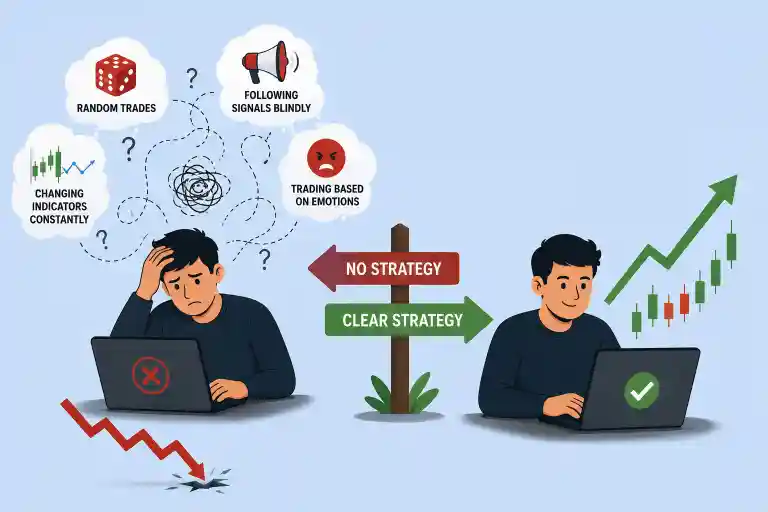
Many traders:
- Enter trades randomly
- Follow signals blindly
- Switch between indicators constantly
- Trade based on emotions
A proper trading strategy should include:
- Entry rules
- Exit rules
- Risk parameters
- Market condition filters
- Trade management rules
Without structure, trading becomes inconsistent and emotional.
6. Ignoring Market Conditions
The forex market does not behave the same way every day.
Sometimes the market trends strongly. Other times it moves sideways with low momentum.
Many traders fail because they use the same strategy in every condition.
For example:
- Trend-following systems may fail during ranging markets
- Breakout systems may fail during low volatility periods
Understanding market conditions is essential for improving consistency.
7. Overtrading and Lack of Patience
Many beginners feel the need to trade constantly.
They believe more trades mean more profit opportunities.
In reality, overtrading often leads to:
- Low-quality entries
- Emotional exhaustion
- Higher transaction costs
- Increased mistakes
Experienced traders understand that sometimes the best decision is to stay out of the market.
Hidden Problem: Strategy Hopping
Some traders constantly switch strategies after a few losses.
This creates a cycle where traders never fully understand or master one approach.
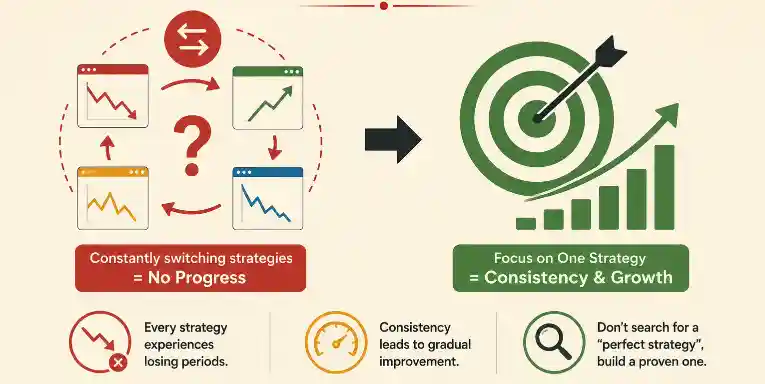
Every strategy experiences losing periods.
Successful traders focus on consistency and gradual improvement instead of constantly searching for a “perfect strategy.”
8. Lack of Backtesting and Practice
Another overlooked reason why 90% traders lose money in forex trading is lack of preparation.
Many traders start live trading without:
- Testing their strategy
- Understanding risk
- Practicing execution
Backtesting helps traders:
- Understand strategy behavior
- Measure risk-to-reward performance
- Build confidence in execution
Demo trading is not useless — it helps traders develop discipline before risking real capital.
Hidden Terms Beginners Often Ignore
Many beginner traders ignore important market mechanics such as:
- Spread widening during news
- Slippage during volatility
- Swap charges on overnight positions
- Execution delays in fast markets
These factors can affect profitability significantly, especially for short-term traders.
Trader Insight: What Consistent Traders Actually Focus On
In real trading environments, successful traders usually focus less on predicting the market perfectly and more on managing risk effectively.
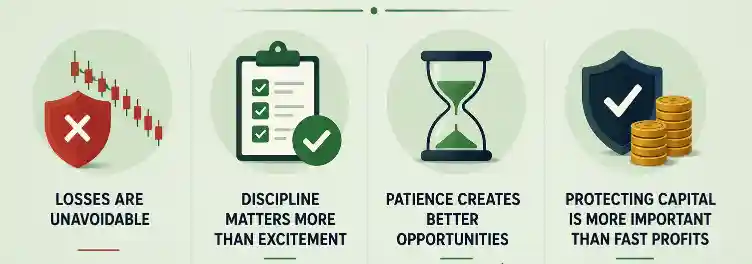
Consistent traders understand:
- Losses are unavoidable
- Discipline matters more than excitement
- Patience creates better opportunities
- Protecting capital is more important than fast profits
This mindset difference is often what separates profitable traders from emotional traders.
Pros and Cons of Forex Trading
Advantages
- High liquidity market
- Flexible trading hours
- Ability to trade rising and falling markets
- Low entry barrier for beginners
Disadvantages
- High emotional pressure
- Leverage increases risk significantly
- Requires strong discipline
- Most beginners underestimate complexity
Who Is Most at Risk of Losing Money
Traders with the highest risk of failure usually:
- Seek fast profits
- Use excessive leverage
- Trade emotionally
- Ignore education
- Rely entirely on signals
On the other hand, traders who focus on learning, patience, and consistency usually survive longer in the market.
Safety Analysis: Is Forex Trading Unsafe
Forex trading itself is not automatically unsafe.
However, trading becomes risky when:
- Leverage is abused
- Risk management is ignored
- Unregulated brokers are used
- Emotional decisions control trading
The market rewards discipline more than excitement.
Understanding risk is far more important than chasing fast profits.
How Successful Traders Think Differently
Successful traders usually:
- Accept losses calmly
- Risk small amounts per trade
- Follow structured plans
- Focus on long-term consistency
- Stay patient during uncertain conditions
They understand that trading is a long-term process, not a shortcut to instant wealth.
Final Verdict
The reason why 90% traders lose money in forex trading is not because the market is impossible.
Most failures happen because traders enter the market without preparation, discipline, or realistic expectations.
Forex trading rewards:
- Patience
- Risk control
- Emotional discipline
- Consistent learning
Beginners who focus only on profits often struggle. Traders who focus on process and risk management usually improve over time.
Success in forex trading is less about finding a perfect strategy and more about developing the mindset and discipline required to survive long term.

