

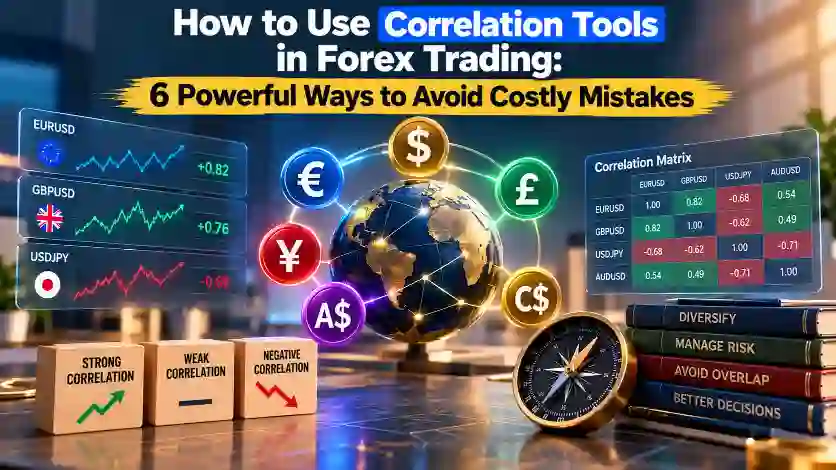
Learning how to use correlation tools in forex trading is one of the most underrated skills a trader can develop, mainly because most beginners never realize how much hidden risk they’re carrying until a correlation tool shows it clearly. Currency pairs rarely move in isolation — many are closely linked, and trading several correlated pairs at once can quietly multiply your real exposure far beyond what your position sizing rules assume. This guide covers what correlation tools actually show, how to read them properly, and the mistakes that turn a useful tool into a false sense of diversification.
What Correlation Tools in Forex Trading Actually Measure
How to Use Correlation Tools in Forex Trading starts with understanding the correlation coefficient between -1 and +1. A reading near +1 means two currency pairs tend to move in the same direction, while a reading near -1 indicates opposite movement. A reading around 0 suggests little meaningful relationship.Correlation tools usually measure this relationship over a selected historical period. Since correlation can change with market conditions, interest-rate expectations, and risk sentiment, traders should review it regularly rather than treating it as a fixed relationship.
6 Powerful Ways to Use Correlation Tools Properly
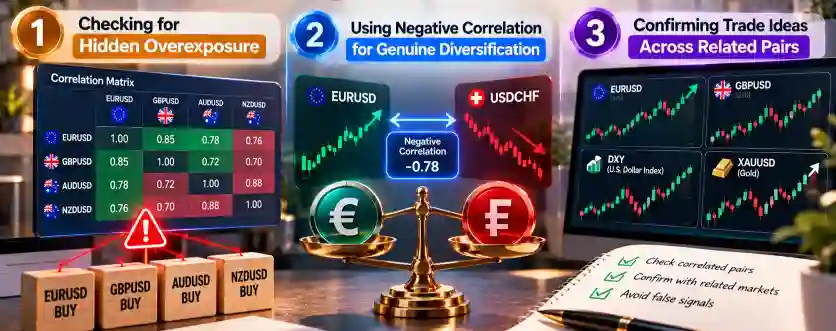
1. Checking for Hidden Overexposure
Two seemingly different trades — for example, going long EUR/USD and long GBP/USD — can actually represent one large, concentrated bet on USD weakness rather than two independent positions. Running a correlation check before opening multiple trades reveals this overlap before it becomes a problem.
2. Using Negative Correlation for Genuine Diversification
Pairs with strong negative correlation may move in opposite directions, which can help offset exposure when used intentionally for hedging. Knowing which pairs tend to move together or against each other is an important part of How to Use Correlation Tools in Forex Trading.
3. Confirming Trade Ideas Across Related Pairs
When two positively correlated pairs both show the same technical setup independently, it can add confidence to the overall directional bias — though this should support a decision, not replace proper analysis on its own.
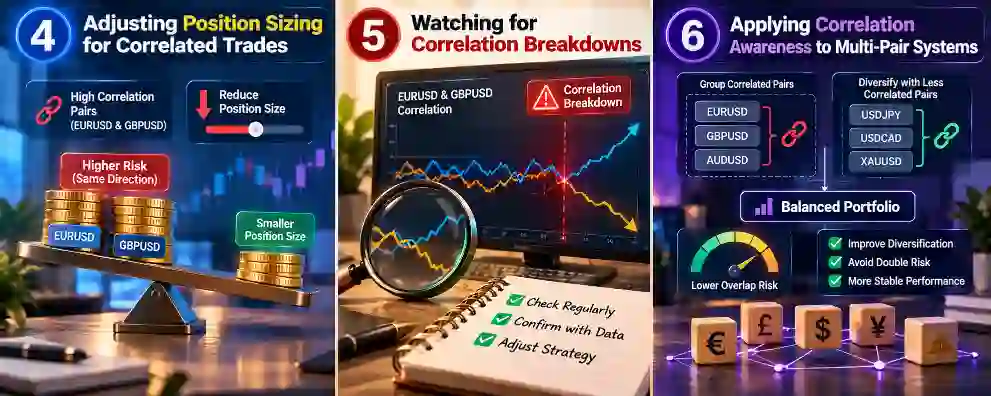
4. Adjusting Position Sizing for Correlated Trades
If two open trades are highly correlated, treating them as separate full-risk positions understates real exposure. Reducing size across correlated trades keeps total account risk aligned with what was actually intended, rather than accidentally doubling it.
5. Watching for Correlation Breakdowns
Correlation between currency pairs can weaken or even reverse during major events, such as a central bank decision that affects one currency more than another. Checking a correlation tool regularly helps traders identify these changes instead of assuming relationships remain permanent.
6. Applying Correlation Awareness to Multi-Pair Systems
Traders running the same strategy across several pairs need to understand which of those pairs are correlated, since a single market-wide move can trigger the same signal on multiple correlated pairs simultaneously — turning what looks like several independent trades into one oversized directional bet.
A Real Example: Correlation Hiding Real Risk
Picture a trader who opens long positions on EUR/USD, GBP/USD, and AUD/USD at the same time, each sized at 1% risk, believing total exposure is a conservative 3%. A correlation check reveals all three pairs are strongly positively correlated at that moment, largely driven by broad USD weakness. When USD strength suddenly returns, all three trades move against the trader simultaneously, and the real combined loss looks far closer to a single 3% hit taken all at once rather than three separate, independent 1% risks. This is exactly the kind of hidden exposure a quick correlation check would have revealed in advance.
How Correlation Connects to Broader Risk Management
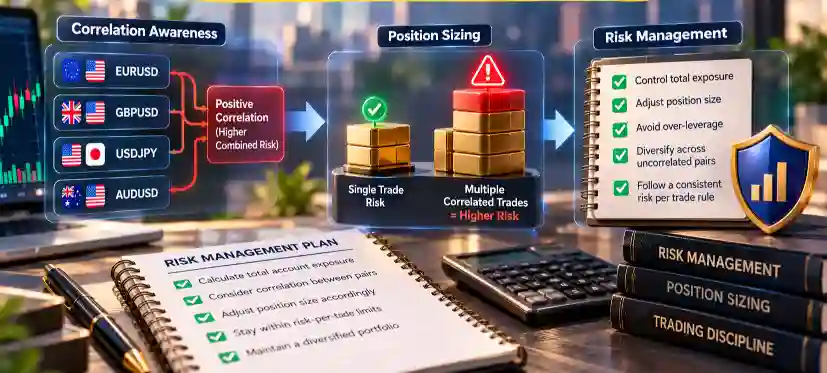
Correlation awareness is really just an extension of good position sizing discipline. Ignoring it undermines even a carefully calculated risk-per-trade rule, since the real combined risk across correlated positions can be significantly higher than intended. This ties directly into the sizing principles covered in our risk management tips for prop firm traders, where controlling total account exposure matters just as much as controlling risk on any single trade.
Common Mistakes Traders Make With Correlation Tools
- Treating correlation as permanently fixed: Relationships between pairs shift over time, and relying on outdated correlation data can lead to false assumptions about diversification.
- Ignoring correlation across multi-pair systems: Running the same simple trading system across several correlated pairs without adjusting sizing can unintentionally multiply risk on a single market move.
- Assuming correlation guarantees a trade outcome: A correlated setup adds context, but it doesn’t replace the need for genuine technical or structural confirmation, a distinction covered in our guide to market structure in forex trading.
- Checking correlation only after opening trades: Reviewing exposure after the fact defeats the purpose — correlation checks are most useful before positions are opened, not afterward.
Final Thoughts
Correlation tools in forex trading reveal a layer of risk that position sizing alone often misses — the hidden overlap between trades that look independent but actually move together. Checking correlation before opening multiple positions, adjusting size accordingly, and staying aware that these relationships shift over time turns a simple tool into a genuine safeguard against unintentional overexposure, rather than a false sense of diversification.
FAQs
How often should correlation be checked?
Since correlation shifts over time, checking it periodically — especially before opening new correlated positions or after major economic events — gives a far more accurate picture than relying on outdated data.
Does high correlation mean two pairs will always move identically?
No. High correlation indicates a strong historical tendency to move together, not a guarantee. Correlation can weaken or break down entirely during specific events affecting one currency but not the other.
Can correlation tools replace proper risk management?
No. Correlation tools reveal hidden exposure, but they work alongside position sizing and stop-loss discipline rather than replacing the need for a complete risk management approach.

