

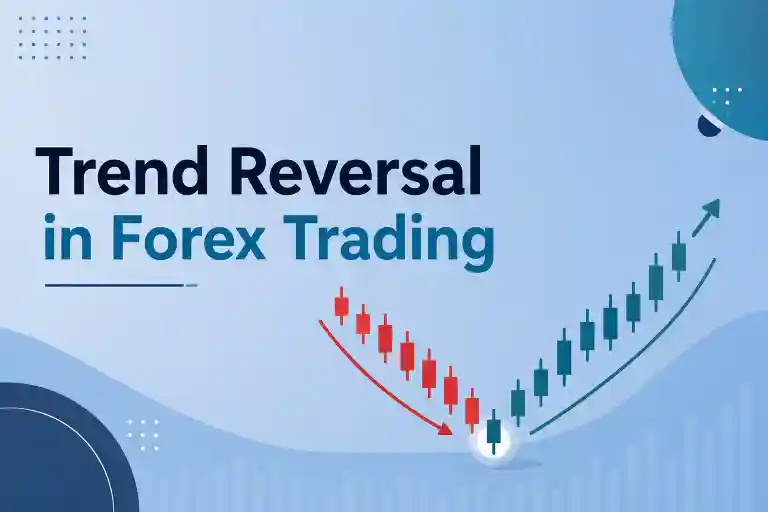
Trend reversal in forex trading is one of the most important concepts traders learn when analyzing the market. A trend reversal happens when price direction changes from bullish to bearish or from bearish to bullish.
Understanding trend reversal in forex trading can help traders avoid entering trades too late, reduce the risk of trading against new market momentum, and identify potential opportunities earlier.
However, many beginners confuse temporary pullbacks with actual reversals. This often leads to poor trade entries, emotional decision-making, and unnecessary losses.
In reality, identifying a genuine trend reversal requires patience, market context, confirmation signals, and strong risk management.
This guide explains how trend reversal in forex trading works, common reversal patterns, warning signs traders watch for, major beginner mistakes, and how experienced traders approach reversals more carefully.
Quick Summary: Trend Reversal in Forex Trading
| Concept | Explanation |
|---|---|
| Trend Reversal | A change in overall market direction |
| Bullish Reversal | Price changes from downtrend to uptrend |
| Bearish Reversal | Price changes from uptrend to downtrend |
| False Reversal | Temporary price correction mistaken as reversal |
| Key Confirmation Tools | Price action, support/resistance, volume, indicators |
What Is Trend Reversal in Forex Trading
Trend reversal in forex trading refers to a situation where the market changes its existing direction.
For example:
- An uptrend turning into a downtrend is called a bearish reversal
- A downtrend turning into an uptrend is called a bullish reversal
Trend reversals can happen because of:
- Economic news releases
- Central bank decisions
- Changes in market sentiment
- Institutional profit-taking
- Technical resistance or support zones
Not every price movement signals a true reversal. Sometimes price only pauses temporarily before continuing the original trend.
This is why experienced traders wait for confirmation instead of reacting emotionally to every market movement.
Trend Reversal vs Pullback
One of the biggest beginner mistakes is confusing a pullback with a reversal.
Pullback
A pullback is a temporary correction against the main trend.
For example, during a strong uptrend, price may move downward briefly before continuing higher.
Trend Reversal
A reversal indicates the market may be changing direction completely.
This usually involves:
- Market structure shifts
- Momentum changes
- Breaks of important support or resistance levels
- Increased selling or buying pressure
Understanding the difference between pullbacks and trend reversal in forex trading is extremely important for risk management.
How Traders Identify Trend Reversal in Forex Trading
Experienced traders usually combine multiple forms of analysis before assuming a reversal is happening.
1. Market Structure Changes
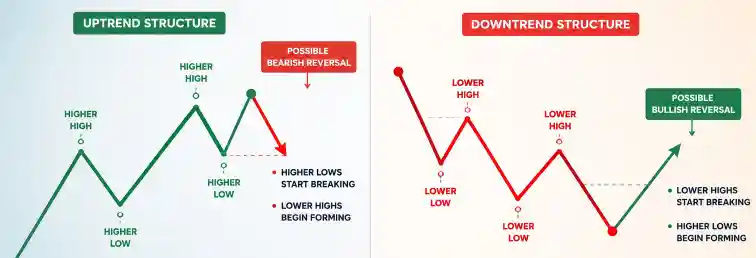
Price structure is one of the most important reversal indicators.
In an uptrend, price typically forms:
- Higher highs
- Higher lows
A possible bearish reversal may appear when:
- Higher lows start breaking
- Lower highs begin forming
Similarly, bullish reversals often appear when downtrend structure weakens.
2. Support and Resistance Zones
Major support and resistance areas often play an important role in trend reversal in forex trading.
For example:
- Strong resistance may stop an uptrend
- Strong support may stop a downtrend
These zones attract institutional attention because many traders place orders around them.
3. Candlestick Reversal Patterns
Many traders use candlestick patterns to identify possible reversals.
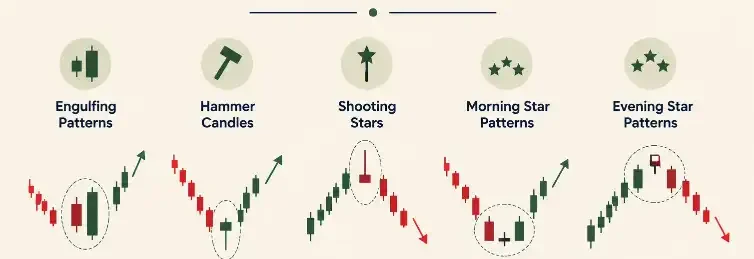
Popular reversal candlestick patterns include:
- Engulfing patterns
- Hammer candles
- Shooting stars
- Morning star patterns
- Evening star patterns
However, candlestick patterns alone are not always reliable without proper market context.
4. Trendline Breaks
Trendlines help traders visualize market direction.
A strong trendline break may signal weakening momentum and possible reversal conditions.
Still, false breakouts are common, especially during volatile market conditions.
5. Indicator Confirmation
Some traders use technical indicators to support reversal analysis.
Commonly used indicators include:
- Relative Strength Index (RSI)
- Moving Averages
- MACD
- Stochastic Oscillator
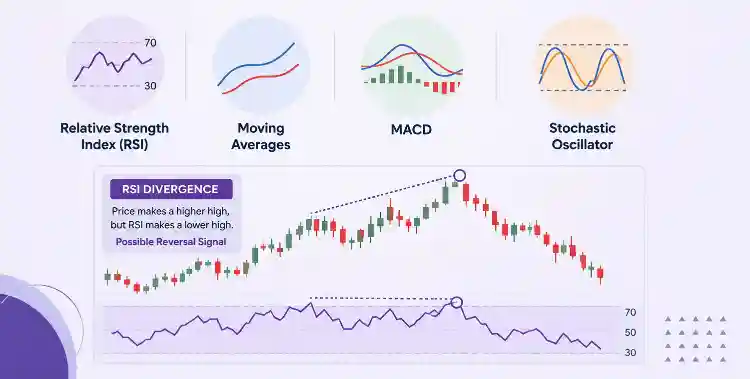
For example, RSI divergence sometimes signals weakening momentum before reversals occur.
Most Common Trend Reversal Patterns
- Head and Shoulders Pattern: This is one of the most recognized bearish reversal patterns. It usually forms after an uptrend and signals weakening bullish momentum.
- Inverse Head and Shoulders: This pattern often appears near the end of downtrends and may signal bullish reversal conditions.
- Double Top: A double top occurs when price fails twice near the same resistance level. This may indicate weakening buying pressure.
- Double Bottom: A double bottom forms when price rejects a support level twice. It may suggest sellers are losing momentum.
Trader Insight: Why Reversal Trading Is Difficult
Many beginner traders prefer reversal trading because they believe catching the exact turning point will generate larger profits.
In reality, trend reversal in forex trading is extremely difficult because markets often create fake reversal signals.
Professional traders understand that:
- Most reversals require confirmation
- False reversals happen regularly
- Patience matters more than prediction
- Risk management is essential
Many experienced traders prefer waiting for trend confirmation instead of trying to predict exact market tops and bottoms.
Why False Reversals Happen Frequently
False reversals occur when price temporarily changes direction before continuing the original trend.
These situations often trap inexperienced traders.
Common causes include:
- News volatility
- Low liquidity periods
- Stop-loss hunting
- Emotional retail trading behavior
- Short-term profit-taking
This is why relying on one signal alone can become dangerous.
Risk Management During Trend Reversal Trading
Risk management becomes extremely important when trading reversals.
Because reversal trades involve uncertainty, experienced traders usually manage risk carefully.
Important Risk Management Practices
- Use stop losses responsibly
- Avoid oversized positions
- Wait for confirmation signals
- Do not risk too much on one trade
- Avoid emotional revenge trading
Many traders lose money because they assume every temporary market move is a reversal.
How Economic News Influences Trend Reversal in Forex Trading
Fundamental events can create strong reversal movements in the forex market.
Examples include:
- Interest rate decisions
- Inflation reports
- Non-Farm Payroll data
- GDP releases
- Central bank speeches

Major news events can rapidly change market sentiment and trigger strong trend reversals.
This is why many professional traders monitor economic calendars regularly.
Common Beginner Mistakes
- Trying to Catch Exact Tops and Bottoms: Many beginners enter reversal trades too early without confirmation.
- Ignoring Market Context: Reversal patterns work better when combined with support, resistance, and trend analysis.
- Using Excessive Leverage: High leverage can magnify losses quickly during volatile reversals.
- Trading Every Reversal Signal: Not every candlestick pattern creates a real reversal.
- Ignoring Risk Management: Without proper stop-loss placement, reversal trading can become extremely risky.
How Experienced Traders Approach Trend Reversal Trading
Professional traders usually avoid emotional prediction-based trading.
Instead, they focus on:
- Waiting for confirmation
- Analyzing market structure
- Managing risk carefully
- Following trading plans
- Protecting capital
Experienced traders understand that consistency matters more than trying to predict every market turning point.
Practical Tips for Beginners
- Focus on market structure first
- Learn support and resistance properly
- Avoid emotional reversal trading
- Use stop losses consistently
- Practice on demo accounts first
- Combine multiple confirmation signals
- Do not rely only on indicators
Learning trend reversal in forex trading takes time, patience, and practical market experience.
Safety Analysis: Is Reversal Trading Risky
Trend reversal trading can be risky, especially for beginners.
Markets often create fake signals and sudden volatility, making reversals difficult to trade consistently.
The biggest risks usually come from:
- Entering too early
- Overleveraging
- Poor emotional control
- Ignoring confirmation signals
- Lack of risk management
However, traders who use disciplined analysis and proper risk management may reduce unnecessary mistakes over time.
Final Verdict
Trend reversal in forex trading is an important concept that helps traders understand changing market direction and potential momentum shifts.
However, reversal trading is not as simple as identifying a single candlestick pattern or indicator signal. Successful reversal analysis usually requires market structure understanding, confirmation signals, patience, and disciplined risk management.
Many beginner traders fail because they attempt to predict every market turning point without proper confirmation.
Experienced traders often focus more on protecting capital and waiting for high-quality setups instead of forcing trades aggressively.
Understanding trend reversal in forex trading realistically can help traders approach the market with better discipline and more controlled expectations.
Forex Education Related Topics You Should Read
- What Is Swap and Rollover in Forex Trading? – Important Facts Every Beginner Must Know
- Currency Pairs in Forex Trading – Learn Structure, Types & Real Market Behavior Easily
- Bid & Ask Price in Forex Trading – Master Pricing Mechanics for Better Trade Execution
- Forex Market Hours Explained – Best Time to Trade Forex and How Market Sessions Affect Volatility

