

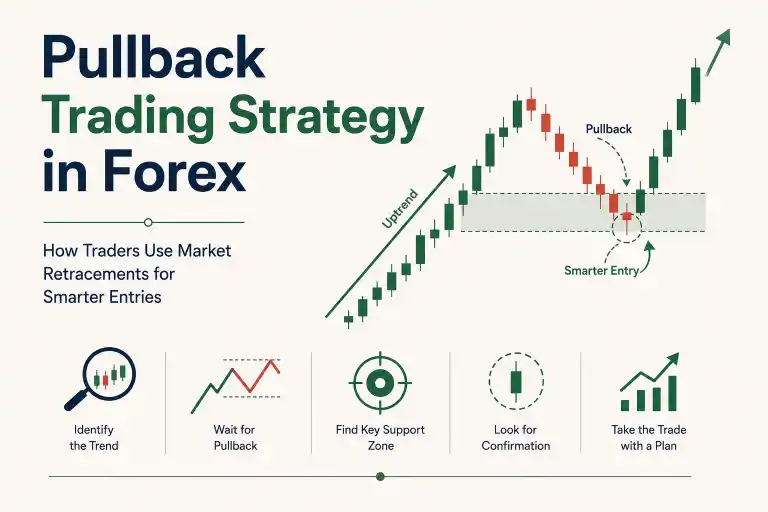
The Pullback Trading Strategy in Forex is one of the most widely used trend-following approaches among professional and retail traders. Instead of entering trades emotionally after strong price movements, traders wait for temporary retracements before joining the main trend.
This approach is popular because it helps traders avoid chasing the market at unfavorable prices. Pullback trading focuses on patience, structure, and disciplined entries rather than impulsive decision-making.
Many beginner traders struggle because they enter trades too late after large market moves. They often fear missing opportunities and buy near short-term highs or sell near short-term lows. Experienced traders usually approach the market differently. Rather than reacting emotionally, they wait for price to retrace toward important areas before considering entries.
Markets rarely move in a perfectly straight line. Even strong trends experience temporary pauses and corrections. Understanding how these pullbacks form can help traders improve entries, manage risk more effectively, and reduce emotional trading behavior.
In this detailed guide, we will explain how the pullback trading strategy in forex works, how traders identify strong trends, common entry methods, important risk management concepts, psychological challenges, and the mistakes beginners should avoid.
Quick Summary of the Pullback Trading Strategy in Forex
| Topic | Explanation |
|---|---|
| What Is a Pullback? | A temporary price retracement against the main trend. |
| Main Goal | Enter trades at better prices during trending markets. |
| Best Market Condition | Strong and clear trends. |
| Common Tools Used | Support/resistance, moving averages, trendlines, Fibonacci levels. |
| Biggest Beginner Mistake | Entering too early without confirmation. |
| Risk Factor | Pullbacks can sometimes become full trend reversals. |
| Ideal Trader Type | Patient and disciplined traders. |
What Is a Pullback in Forex Trading
A pullback is a temporary price movement against the direction of the overall trend.
In simple terms:
- During an uptrend, price temporarily moves downward before continuing higher.
- During a downtrend, price temporarily moves upward before continuing lower.
Pullbacks are a normal part of market behavior. Financial markets naturally move in waves because traders constantly take profits, adjust positions, and react to changing market conditions.
These temporary retracements create opportunities for traders to enter trends at more favorable prices.
For example, if EUR/USD is trending upward strongly, experienced traders may avoid buying immediately after a large bullish move. Instead, they often wait for price to retrace toward support before considering new buy positions.
This approach can improve risk-to-reward opportunities and reduce emotional trading.
Why Pullbacks Happen in the Forex Market
No market moves continuously in one direction forever. Even strong trends experience periods of temporary retracement before continuing. Understanding why pullbacks occur helps traders remain patient instead of emotionally chasing momentum.
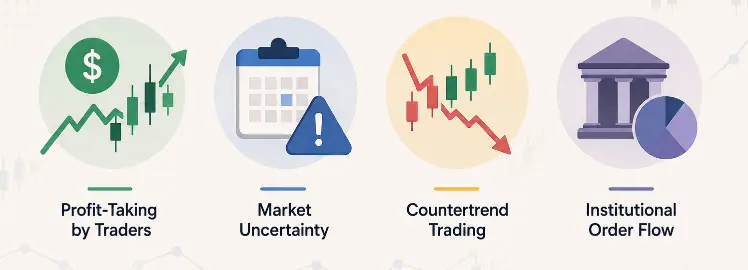
Several factors commonly create pullbacks in forex trading:
- Profit-Taking by Traders: After strong price movements, many traders close positions to secure profits. This temporary buying or selling pressure can cause short-term retracements.
- Market Uncertainty: Traders sometimes become cautious before major economic news releases or central bank events, creating temporary pauses in the trend.
- Countertrend Trading: Some traders intentionally trade against the trend during short-term exhaustion periods, contributing to pullbacks.
- Institutional Order Flow: Large market participants may gradually enter positions rather than buying or selling aggressively at extreme prices.
Understanding these factors helps traders recognize that pullbacks are often a natural part of trending markets rather than signs of immediate market failure.
Understanding the Pullback Trading Strategy in Forex
The main concept behind the Pullback Trading Strategy in Forex is simple: Trade in the direction of the main trend after a temporary correction occurs. Instead of entering trades emotionally after strong price moves, traders wait for pullbacks toward important market zones.
In an uptrend, traders often wait for temporary downward retracements before looking for buying opportunities.
In a downtrend, traders wait for temporary upward corrections before considering sell positions.
This strategy is popular because it often provides:
- Better trade entries
- Improved risk-to-reward ratios
- More logical stop-loss placement
- Reduced emotional decision-making
- Better alignment with overall market direction
Pullback trading is not about predicting exact market tops or bottoms. Instead, it focuses on entering trends more efficiently.
How to Identify a Strong Trend Before Trading Pullbacks
One of the biggest mistakes beginners make is attempting pullback trades in weak or sideways markets.
Pullback Trading Strategy in Forex generally work best when the market shows a strong directional trend.
Signs of an Uptrend
- Higher highs and higher lows
- Strong bullish momentum
- Price remaining above key moving averages
- Support levels holding consistently
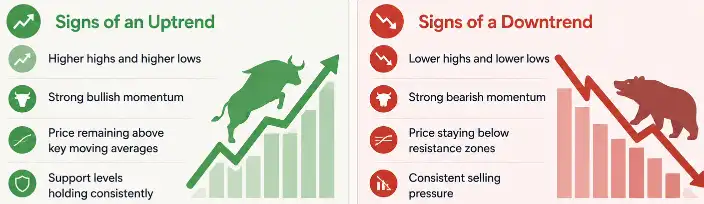
Signs of a Downtrend
- Lower highs and lower lows
- Strong bearish momentum
- Price staying below resistance zones
- Consistent selling pressure
Without a clear trend, pullback setups become less reliable because markets may produce false signals or choppy price movement.
How Traders Identify Pullback Zones
Experienced traders do not enter trades randomly during retracements. Instead, they look for areas where price may react and continue moving with the trend.
Several tools are commonly used to identify pullback zones.
Support and Resistance Levels
Support and resistance zones are among the most commonly used pullback areas.
In an uptrend, previous resistance may become new support after a breakout.
In a downtrend, previous support may become resistance.
These areas often attract attention because many traders place orders around important market levels.
Moving Averages
Many traders use moving averages to identify dynamic support and resistance.
Common moving averages used for pullback trading include:
- 50 EMA
- 100 EMA
- 200 EMA
In strong trends, price often retraces toward these moving averages before continuing.
Trendlines
Trendlines help traders visualize market direction and possible retracement zones.
When price pulls back toward a respected trendline, traders may watch for continuation signals.
Fibonacci Retracement Levels
Some traders use Fibonacci retracement tools to estimate possible correction zones.
Commonly observed levels include:
- 38.2%
- 50%
- 61.8%
These levels are not guarantees, but they are widely monitored by market participants.
Buy Setup Using the Pullback Trading Strategy
In an uptrend, traders generally look for opportunities to buy after temporary corrections.
A basic pullback buy setup often includes:
- Strong upward market movement
- Temporary retracement toward support
- Price reaching an important zone
- Bullish confirmation signals appearing
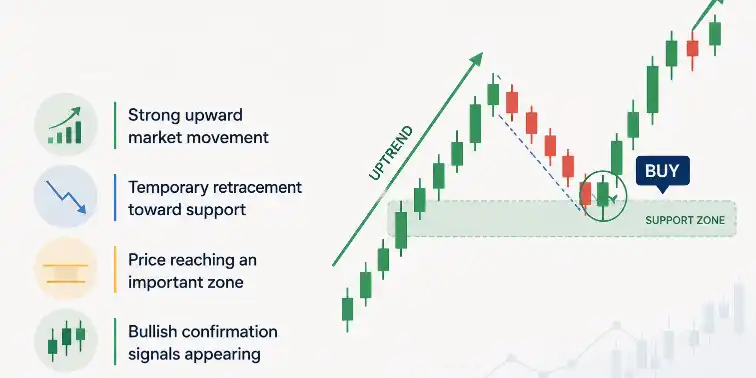
Common bullish confirmation signals include:
- Bullish engulfing candles
- Pin bars with strong rejection wicks
- Increasing bullish momentum
- Breaks of short-term bearish structure
Many traders avoid entering immediately during the correction itself. Instead, they wait for signs that buyers are regaining control.
Sell Setup Using the Pullback Trading Strategy
During downtrends, traders often wait for temporary upward corrections before looking for selling opportunities.
A typical sell setup may involve:
- Strong bearish trend
- Temporary upward retracement
- Price approaching resistance
- Bearish confirmation signals
Bearish confirmation may include:
- Bearish engulfing candles
- Strong rejection from resistance
- Increasing bearish momentum
- Failure to break higher
This structured approach helps traders avoid emotional entries during aggressive price movement.
Trader Insight: Why Pullback Trading Feels Difficult Emotionally
Many beginners struggle with pullback trading because it requires patience.
When traders see strong momentum, emotions often create fear of missing out. Instead of waiting for retracements, beginners frequently chase price after large candles.
This usually creates poor entries and larger stop-loss requirements.
Experienced traders often think differently.
They understand that markets naturally retrace, and they are willing to wait for higher-quality opportunities instead of reacting emotionally.
One of the biggest advantages of pullback trading is that it encourages structured decision-making rather than impulsive behavior.
Pullback vs Trend Reversal: An Important Difference
One of the most important trading skills is understanding the difference between a normal pullback and a true trend reversal.
A pullback is temporary.
A reversal may signal that the entire trend direction is changing.
Many beginners confuse the two.
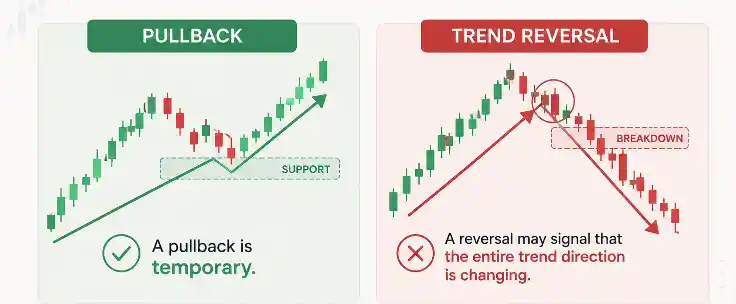
Warning Signs a Pullback May Become a Reversal
- Strong break of market structure
- Major support or resistance failure
- Large momentum shifts
- Unexpected economic news events
- Price creating lower lows in an uptrend or higher highs in a downtrend
Recognizing reversals requires practice and market observation.
This is why traders use stop losses even when setups appear strong.
Best Timeframes for Pullback Trading
The pullback trading strategy can work on multiple timeframes, but higher timeframes often provide cleaner setups.
Many traders combine timeframes for better analysis.
Common Multi-Timeframe Approach
- Daily chart for overall trend direction
- 4-hour chart for pullback structure
- 1-hour chart for entry confirmation
Lower timeframes may contain more noise and false signals, especially during volatile market conditions.
Common Pullback Trading Mistakes Beginners Make
- Entering Too Early: Many traders enter before the pullback actually finishes, resulting in premature entries.
- Ignoring Market Trend: Pullback trading works best when aligned with the larger trend direction.
- Trading Without Confirmation: Entering blindly during retracements increases the chance of false setups.
- Using Excessive Leverage: Even strong setups can fail. Overleveraging increases emotional pressure and account risk.
- Chasing Missed Trades: Emotional traders sometimes enter after the pullback already ends, creating poor entries.
Risk Management in Pullback Trading
The Pullback Trading Strategy in Forex still involves risk like every trading approach. This is why proper risk management remains essential. Experienced traders often focus heavily on capital protection.
Common Risk Management Practices
- Risking only a small percentage per trade
- Using stop losses below support or above resistance
- Avoiding low-quality setups
- Maintaining favorable risk-to-reward ratios
- Avoiding emotional overtrading
No trading strategy wins every time. Risk management helps traders survive losing periods while remaining consistent long term.
Who Should Use the Pullback Trading Strategy
This strategy may suit traders who:
- Prefer structured trading setups
- Can remain patient
- Understand trend analysis
- Want improved entry prices
- Prefer trend-following strategies
However, traders who struggle with emotional discipline or impulsive entries may initially find pullback trading difficult.
Practical Pullback Trading Tips for Beginners
- Always identify the main trend first
- Wait for pullbacks near important zones
- Use confirmation signals before entering
- Avoid emotional chasing behavior
- Practice on demo accounts first
- Focus on consistency instead of fast profits
- Keep a trading journal to review mistakes
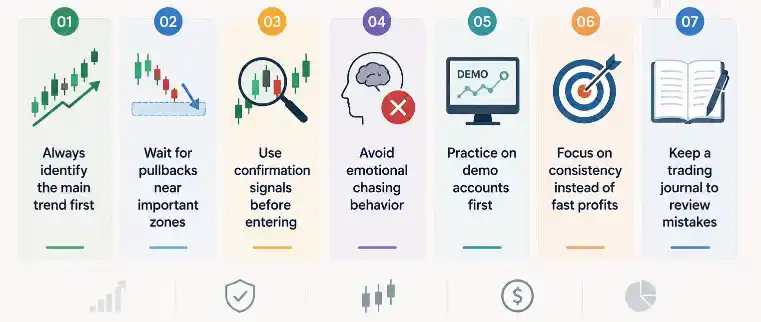
Developing patience is often one of the biggest improvements beginner traders can make.
Pros and Cons of Pullback Trading Strategy in Forex
Advantages
- Improved trade entries
- Better risk-to-reward opportunities
- Reduced emotional trading
- Logical stop-loss placement
- Works well in trending markets
Disadvantages
- Requires patience
- False pullbacks can occur
- Can be difficult during volatile conditions
- Trend reversals may create losses
- Beginners may enter too early
Final Verdict: Is the Pullback Trading Strategy Effective
The Pullback Trading Strategy in Forex remains popular because it focuses on patience, structure, and trend continuation rather than emotional trading.
Instead of chasing aggressive market movement, traders wait for temporary corrections that may provide safer and more controlled entries.
Like every trading strategy, pullback trading is not perfect and still carries risk. However, when combined with strong risk management, discipline, and proper market analysis, it can become a valuable approach for trend-following traders.
One of the most important skills traders develop over time is learning the difference between healthy pullbacks and actual trend reversals.
With practice and experience, Pullback trading strategy can help traders improve timing, reduce emotional decisions, and develop more consistent trading habits.
Related Forex Trading Guides
Before using the Pullback Trading Strategy in Forex, it is important to understand trend direction, market structure, and risk management concepts. These related guides can help improve your trading knowledge and decision-making.
- What is Support and Resistance in Forex – Learn how key support and resistance zones help traders identify pullback entry areas.
- Breakout Trading Strategy in Forex – Understand how breakout trading differs from pullback trading and how traders manage false breakouts.
- Bull Market and Bear Market in Forex – Learn how market trends influence pullback trading opportunities.
- Why 90% Traders Lose Money in Forex Trading – Discover common trading mistakes beginners make while trading trends and pullbacks.
- Leverage in Forex Trading – Understand how leverage affects risk while trading pullback setups.
Combining pullback trading with strong market understanding and proper risk management can help traders improve consistency and avoid emotional trading decisions.

