


Bull Market and Bear Market are two of the most important concepts every trader should understand before entering the financial markets. These terms describe the overall direction of price movement and market sentiment, and they influence nearly every trading decision — from choosing trade setups to managing risk.
Many beginners enter forex trading believing that indicators alone can predict the market. However, experienced traders understand that identifying the broader market direction is often more important than finding the “perfect” entry.
If you trade against a strong market trend, even a good strategy can struggle. On the other hand, trading in the direction of the market often improves consistency and reduces unnecessary mistakes.
This guide explains bull market and bear markets in a practical, beginner-friendly way so you can understand how these market conditions form, how traders identify them, and how they affect real trading decisions.
Quick Summary: Bull Market vs Bear Market
| Market Type | Main Direction | Market Sentiment | Who Controls the Market? |
|---|---|---|---|
| Bull Market | Upward | Positive and confident | Buyers |
| Bear Market | Downward | Negative and cautious | Sellers |
While the concept may sound simple, understanding these conditions properly can significantly improve how you analyze charts and make trading decisions.
What is a Bull Market
A bull market refers to a market environment where prices are consistently moving higher over a period of time.
In forex trading, this means a currency pair is gaining value steadily due to strong buying pressure.
For example, if EUR/USD continues making higher highs and higher lows over several days or weeks, traders consider the pair to be in a bullish trend.
During a bull market:
- Buyers dominate the market
- Confidence among traders increases
- Economic outlook is often positive
- Price movements tend to favor upward continuation
However, bull markets are not perfectly straight upward moves. Temporary pullbacks and corrections happen regularly.
Experienced traders understand that these pullbacks are normal parts of a healthy trend.
What is a Bear Market
A bear market is the opposite of a bull market.
It describes a market condition where prices are consistently moving downward due to stronger selling pressure.
In forex, this means traders are selling a currency pair more aggressively than buying it.
For example, if GBP/USD keeps declining over time while making lower highs and lower lows, the pair is considered bearish.
A bear market usually reflects:
- Negative market sentiment
- Economic uncertainty
- Fear or caution among traders
- Increased selling activity
Just like bull markets, bear markets also experience temporary reversals and short-term rallies.
Why Are They Called Bull Market and Bear Market
The names come from the attacking style of these animals.
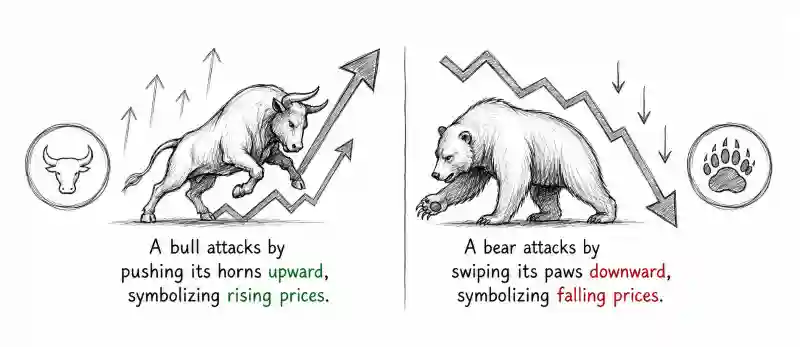
- A bull attacks by pushing its horns upward, symbolizing rising prices
- A bear attacks by swiping its paws downward, symbolizing falling prices
Over time, these terms became widely used in trading and investing to describe overall market direction.
How Bull Market and Bear Market Develop
Markets do not move randomly for long periods. Bullish and bearish trends are usually driven by larger economic and psychological factors.
Some common influences include:
- Interest rate decisions
- Economic growth
- Inflation data
- Employment reports
- Political stability
- Global financial sentiment
For example:
- If a country’s economy performs strongly, its currency often strengthens
- If economic conditions weaken, investors may lose confidence, causing the currency to decline
In forex trading, currencies are constantly compared against each other. This means trends often reflect the relative strength or weakness between two economies.
How to Identify a Bull Market
Recognizing bullish conditions early can help traders align their strategies with the market direction.
Common signs of a bull market include:
- Higher highs and higher lows
- Strong buying momentum
- Price remaining above support zones
- Positive economic developments
- Strong trend continuation after pullbacks
Many traders use moving averages, trendlines, or market structure analysis to confirm bullish conditions.
One important point beginners should remember is that a single upward candle does not automatically mean the market is bullish.
Real trends develop over time.
How to Identify a Bear Market
Bearish markets are identified through consistent downward price movement.
Signs of a bear market often include:
- Lower highs and lower lows
- Strong selling pressure
- Support levels breaking repeatedly
- Negative economic news
- Weak recovery attempts
During bearish conditions, traders generally look for selling opportunities rather than buying against the trend.
Reality Check: Why Beginners Misread the Market
One of the biggest beginner mistakes is focusing too much on small timeframes.
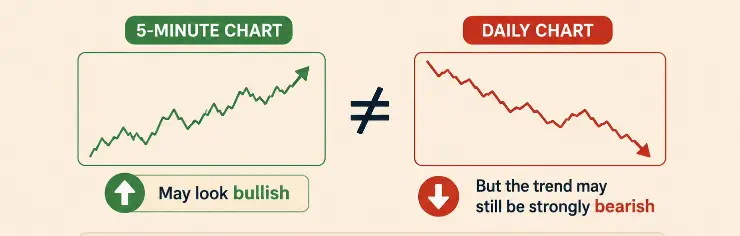
For example:
- A 5-minute chart may look bullish
- But the daily trend may still be strongly bearish
This creates confusion and often leads traders into low-quality trades.

Experienced traders usually analyze:
- Higher timeframe trend
- Overall market structure
- Momentum strength
- Key support and resistance levels
Instead of reacting to every short-term movement.
How Bull Market and Bear Market Affect Trading Strategies
Market conditions directly influence which strategies work best.
Trading During a Bull Market
- Traders focus more on buying opportunities
- Pullbacks are often used as entry points
- Trend-following strategies tend to perform better
- Buy-side momentum remains stronger
Trading During a Bear Market
- Traders look for selling setups
- Temporary rallies are often used to enter short positions
- Risk management becomes more important
- Downward continuation is more likely
Trying to trade aggressively against a strong trend usually increases risk unnecessarily.
Why Market Direction Matters More Than Most Indicators
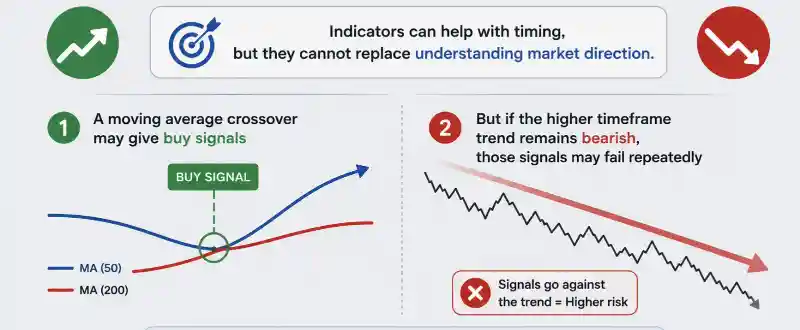
Indicators can help with timing, but they cannot replace understanding market direction.
For example:
- A moving average crossover may give buy signals
- But if the higher timeframe trend remains bearish, those signals may fail repeatedly
This is why many experienced traders prioritize:
- Trend analysis
- Market structure
- Momentum
Before relying on indicators.
Hidden Risk During Strong Trends
Strong bull market and bear markets can create emotional pressure for beginners.
Common emotional mistakes include:
- Fear of missing out (FOMO)
- Entering trades too late
- Trying to predict reversals too early
- Overtrading volatile moves
For example, beginners often try to “catch the top” during a bull market or “buy the bottom” during a bear market.
This can become dangerous because strong trends often continue longer than expected.
Common Mistakes Traders Make
- Trading Against the Trend: Many beginners try to predict reversals instead of following confirmed market direction.This usually leads to unnecessary losses.
- Ignoring Higher Timeframes: Small timeframe movements can be misleading without understanding the bigger picture.
- Overusing Indicators: Using too many indicators often creates confusion instead of clarity.
- Forcing Trades in Sideways Markets: Not every market is clearly bullish or bearish. Sometimes waiting is the better decision.
Practical Tips for Beginners
- Always identify the overall trend before trading
- Use higher timeframes to confirm market direction
- Avoid trading emotionally during strong trends
- Focus on risk management instead of quick profits
- Practice trend recognition using demo accounts
These habits help build discipline and improve consistency over time.
Trader Insight: What Experienced Traders Understand
Professional traders do not try to fight the market constantly.
Instead, they adapt to market conditions.

In real trading environments, recognizing whether the market is bullish or bearish helps traders:
- Filter bad setups
- Improve trade timing
- Reduce emotional decisions
- Trade with market momentum instead of against it
This is one reason why market direction is considered one of the foundational concepts in trading.
Who Should Learn This Concept
Understanding Bull Market and Bear Market is important for:
- Beginner traders
- Swing traders
- Day traders
- Position traders
- Anyone learning technical analysis
Regardless of trading style, understanding trend direction improves decision-making.
Safety Analysis: Is Trend Trading Safe
Trading with the trend is generally considered safer than trading against it because momentum supports the direction of the trade.
However, risks still exist.
Trends can reverse unexpectedly due to:
- Economic news
- Central bank decisions
- Political events
- Market sentiment shifts
This is why proper risk management remains essential even in strong market conditions.
Final Verdict
Bull Market and Bear Market in Forex are more than just trading terms — they represent the overall behavior and psychology of the market.
Understanding these conditions helps traders:
- Read market direction more clearly
- Choose better trading opportunities
- Avoid trading against momentum
- Improve consistency over time
While indicators and strategies are useful, they become much more effective when combined with a clear understanding of overall market trends.
Like every trading skill, recognizing bullish and bearish conditions takes practice. But once traders learn to identify market direction properly, trading decisions become more structured, disciplined, and less emotional.
If you want to understand how trends form in real market conditions, you should also explore our guide on how the forex market works and learn how price moves step by step.
For better trading decisions, you can also read about support and resistance in forex trading, which helps identify key market levels.

