

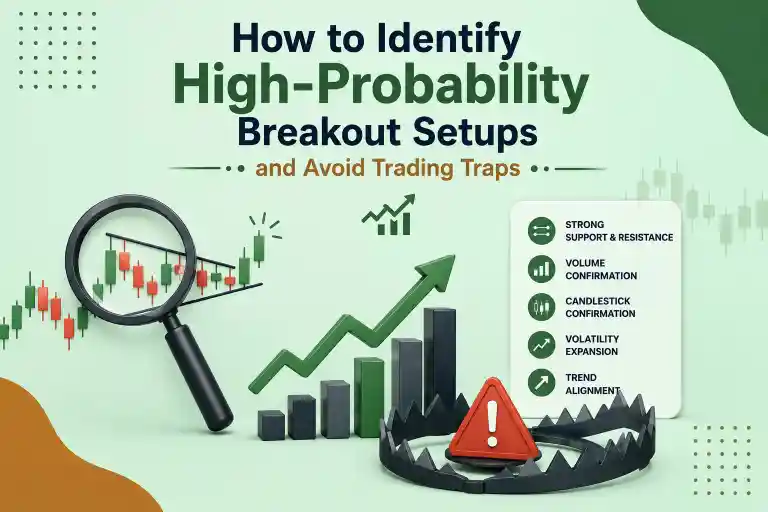
High-Probability Breakout Setups are among the most widely used trading opportunities in the forex market. Many major price movements begin when the market breaks out from a well-established support level, resistance zone, consolidation range, or chart pattern. For traders who understand how to identify quality breakout opportunities, these setups can provide attractive risk-to-reward ratios and the potential to participate in developing market trends.
However, breakout trading is not as simple as buying above resistance or selling below support. One of the biggest challenges traders face is distinguishing between genuine breakouts and false breakouts. Markets often move beyond key levels briefly before reversing sharply, trapping traders who entered too early.
This is why successful traders focus on High-Probability Breakout Setups rather than reacting to every breakout signal. By understanding market structure, trend direction, volume behavior, and confirmation techniques, traders can significantly improve their decision-making process.
In this guide, we will explore how breakout trading works, the characteristics of strong breakout opportunities, common mistakes traders make, and practical methods used by experienced traders to identify higher-quality setups.
Understanding Breakouts in Forex Trading
A breakout occurs when price successfully moves beyond a significant technical level that has previously limited market movement. These levels may include support, resistance, trendlines, chart patterns, or trading ranges.
When a breakout occurs, it often signals a shift in the balance between buyers and sellers. If buying pressure becomes strong enough to overcome resistance, price may continue higher. Likewise, if sellers overwhelm support, further downside movement may develop.
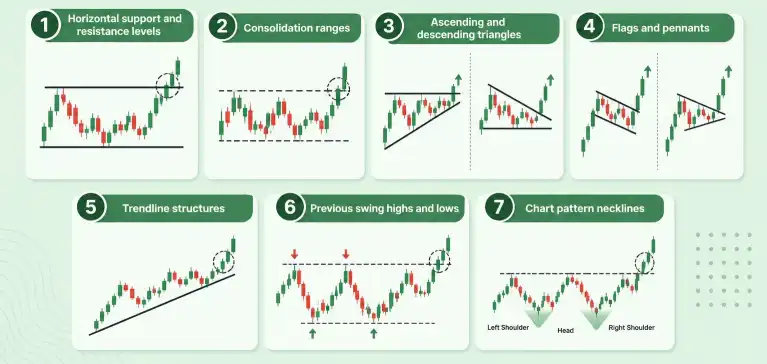
Breakouts commonly occur around:
- Horizontal support and resistance levels
- Consolidation ranges
- Ascending and descending triangles
- Flags and pennants
- Trendline structures
- Previous swing highs and lows
- Chart pattern necklines
Because breakouts often lead to increased volatility and momentum, they remain popular among both beginner and professional traders.
Why Traders Focus on High-Probability Breakout Setups
The primary attraction of High-Probability Breakout Setups is the possibility of entering a strong market move during its early stages. Unlike range-bound conditions where profit targets may be limited, successful breakouts can lead to extended trends.

Some advantages of breakout trading include:
- Clear entry and exit planning
- Potentially favorable risk-to-reward ratios
- Opportunities to participate in new trends
- Flexibility across different timeframes
- Applicability in multiple financial markets
Despite these advantages, traders should remember that not every breakout leads to a sustained move. This makes setup selection extremely important.
Characteristics of High-Probability Breakout Setups
Strong Technical Levels
One of the most important features of High-Probability Breakout Setups is the presence of a clearly defined technical level. The market should have reacted to the level multiple times, demonstrating that traders recognize its importance.
Examples include:
- Repeated resistance rejections
- Multiple support bounces
- Historical price turning points
- Psychological round-number levels
The more market participants focus on a level, the more significant a breakout from that level may become.
Consolidation Before the Breakout
Many strong breakouts are preceded by periods of consolidation. During consolidation, price moves within a narrow range as buyers and sellers temporarily reach equilibrium.
This period often creates pressure that eventually results in a strong directional move.
Common consolidation patterns include:
- Rectangles
- Triangles
- Flags
- Pennants
- Sideways trading ranges
Longer consolidation periods often lead to stronger breakout potential because market participants have had more time to build positions.
Alignment With the Trend
High-Probability Breakout Setups frequently occur in the direction of the dominant trend. Trading with the broader market direction often improves the chances of success.
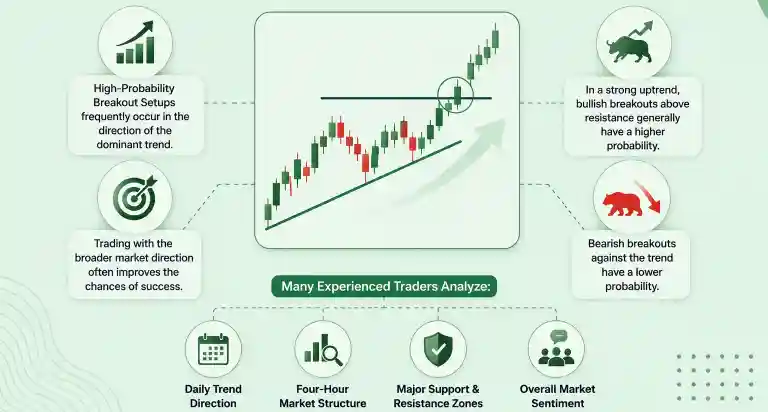
For example, in a strong uptrend, bullish breakouts above resistance generally have a higher probability than bearish breakouts against the trend.
Many experienced traders analyze:
- Daily trend direction
- Four-hour market structure
- Major support and resistance zones
- Overall market sentiment
This helps ensure that breakout opportunities align with broader market momentum.
Increased Participation
Strong breakouts are usually accompanied by increased market activity. In markets where volume data is available, rising volume often supports the breakout.
Forex traders may use alternative indicators such as:
- Tick volume
- Volatility expansion
- Momentum indicators
- Price action strength
Greater participation suggests stronger conviction behind the move.
Why Confirmation Matters in Breakout Trading
One of the most common reasons traders lose money on breakouts is entering before confirmation occurs.
Many traders anticipate the breakout rather than waiting for evidence that the market has actually broken through the level.
Useful confirmation signals include:
- Candle closes beyond the breakout level
- Strong momentum candles
- Successful retests of broken levels
- Continued price acceptance beyond resistance or support
- Volatility expansion following the breakout
Although waiting for confirmation may result in a slightly later entry, it often reduces exposure to false breakout scenarios.
Understanding False Breakouts
A false breakout occurs when price temporarily moves beyond a key level before quickly reversing back into the original range.
False breakouts are common because markets constantly seek liquidity. Many traders place stop-loss orders around obvious support and resistance levels, creating areas where price may briefly move before reversing.
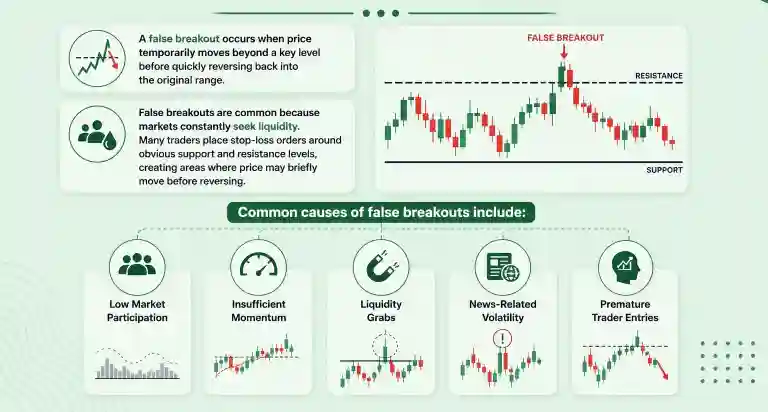
Common causes of false breakouts include:
- Low market participation
- Insufficient momentum
- Liquidity grabs
- News-related volatility
- Premature trader entries
Recognizing that false breakouts are a normal part of trading helps traders remain disciplined and avoid emotional decisions.
Common Breakout Trading Mistakes
- Entering Too Early: Many traders enter positions before the breakout has been confirmed. This increases the likelihood of being caught in a false breakout.
- Ignoring Market Context: Breakouts should always be analyzed within the broader market environment. A breakout against a strong trend may have a lower chance of success.
- Chasing Price: Entering after a breakout has already traveled a significant distance often results in poor trade locations and unfavorable risk-to-reward ratios.
- Using Inappropriate Stop Losses: Breakouts frequently experience temporary pullbacks. Stops placed too close to normal market fluctuations may lead to unnecessary losses.
- Risking Too Much Capital: Even High-Probability Breakout Setups can fail. Proper risk management remains essential regardless of setup quality.
How Professional Traders Evaluate Breakout Opportunities
Professional traders rarely base decisions on a single candle breaking a level. Instead, they combine multiple forms of analysis before entering a trade.
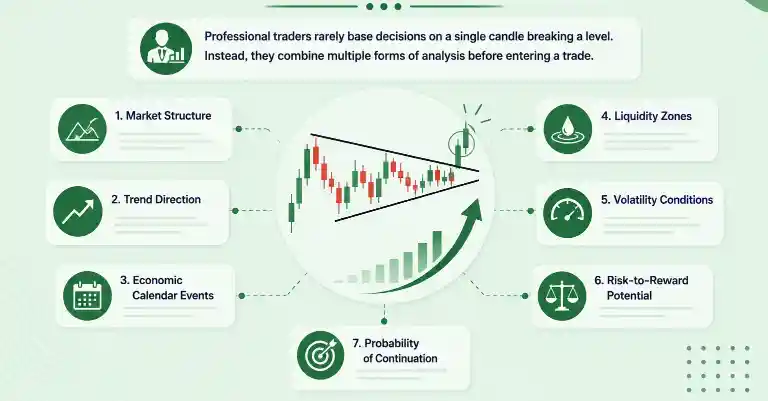
Factors commonly evaluated include:
- Market structure
- Trend direction
- Economic calendar events
- Liquidity zones
- Volatility conditions
- Risk-to-reward potential
- Probability of continuation
This comprehensive approach helps filter out lower-quality setups and improves consistency over time.
Example of a High-Probability Breakout Setups
Imagine EUR/USD has traded between 1.1000 and 1.1050 for several days. During this period, price repeatedly fails to move above resistance.
Eventually, strong bullish momentum pushes the pair above 1.1050 and the daily candle closes above resistance.
A trader reviewing this breakout may observe:
- Well-established resistance
- Extended consolidation period
- Strong bullish momentum
- Higher-timeframe trend alignment
- Potential retest opportunity
These factors collectively strengthen the breakout scenario and increase confidence in the setup.
Practical Tips for Identifying Better Breakouts
- Focus on clearly defined support and resistance levels.
- Wait for candle close confirmation.
- Monitor major economic events.
- Trade in the direction of the dominant trend when possible.
- Consider retest entries after the breakout.
- Maintain realistic risk management rules.
- Keep a detailed trading journal.
The Role of Patience in Breakout Trading
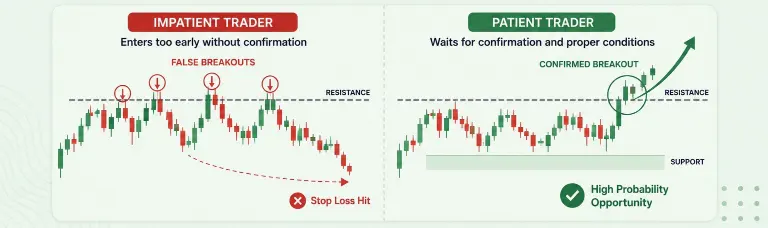
Many beginner traders believe that entering first is the key to success. In reality, patience often provides a significant advantage.
Experienced traders understand that missing a small portion of a move is usually less damaging than repeatedly entering false breakouts.
By waiting for confirmation and proper market conditions, traders can avoid many unnecessary losses and focus on opportunities where the probabilities are more favorable.
Reality Check: Why Most Breakout Traders Struggle
Many traders assume every breakout will lead to a strong trend, but the market rarely works that way. Breakouts that occur during low liquidity, before major news events, or against the prevailing trend often have a higher chance of failure.
Another common mistake is entering too early out of fear of missing the move. This impatience frequently leads to false breakout trades and avoidable losses.
Even high-probability breakout setups can fail. Successful traders understand this and focus on risk management rather than trying to win every trade. In many cases, trading fewer but higher-quality setups produces better long-term results than chasing every breakout opportunity.
Final Verdict
High-Probability Breakout Setups are built on several important factors, including strong technical levels, consolidation before expansion, trend alignment, confirmation signals, and proper market context. While breakout trading can provide excellent opportunities, traders must remain aware of false breakouts and avoid emotional decision-making.
The most successful breakout traders focus on patience, discipline, and risk management rather than attempting to trade every market movement. By learning to identify quality setups and waiting for confirmation, traders can significantly improve their ability to participate in meaningful market trends while reducing avoidable losses.
| You may also like this……. How Greed Destroys Forex Trading Accounts – How to Avoid It |

