

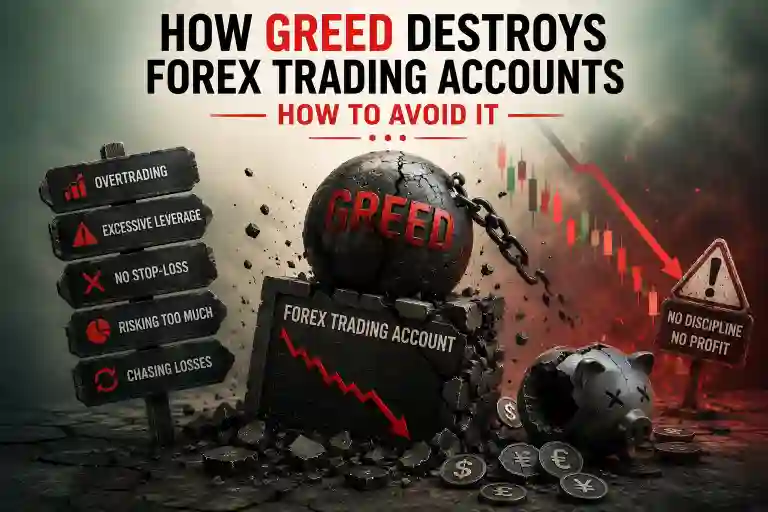
The forex market offers traders opportunities to profit from currency price movements, but it also exposes them to emotional pressure that can quickly damage trading performance. Among all trading emotions, greed is one of the most dangerous. Understanding How Greed Destroys Forex Trading Accounts is essential because many traders enter the forex market with the goal of making money, but when greed takes control, decision-making becomes emotional rather than logical.
Understanding how greed destroys forex trading accounts is important for both beginners and experienced traders. Greed often pushes traders to ignore risk management, increase position sizes recklessly, overtrade, and chase unrealistic profits. While these behaviors may occasionally lead to short-term gains, they frequently end with significant losses and emotional frustration.
In this article, we will explain how greed affects forex traders, why it becomes dangerous, and how traders can develop healthier trading habits to protect their accounts over the long term.
What Is Greed in Forex Trading
In forex trading, greed refers to the emotional desire to make more money than the market realistically allows within a short period. It causes traders to focus excessively on profits while ignoring risk, discipline, and trading plans.
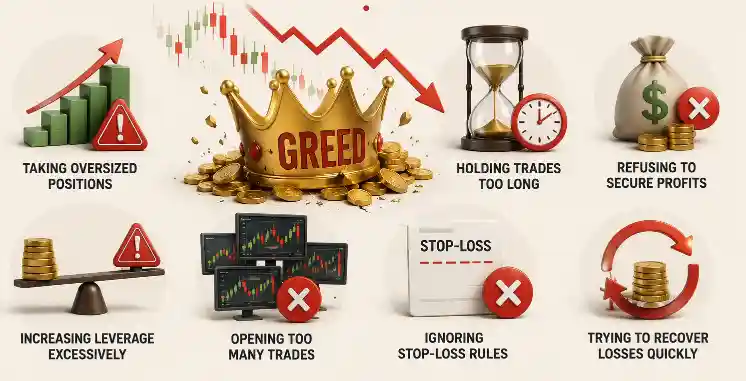
Greed can appear in different ways during trading, including:
- Taking oversized positions
- Holding trades too long
- Refusing to secure profits
- Increasing leverage excessively
- Opening too many trades
- Ignoring stop-loss rules
- Trying to recover losses quickly
Many traders do not recognize greed immediately because it often disguises itself as confidence or ambition. However, when emotions begin controlling decisions, trading discipline usually disappears.
How Greed Destroys Forex Trading Accounts
One of the main reasons traders fail is because they underestimate the emotional side of trading. Understanding how greed destroys forex trading accounts can help traders identify dangerous habits before they become serious problems.
Greed rarely destroys an account instantly. Instead, it usually develops gradually through repeated emotional decisions and increasing risk exposure.
Using Excessive Leverage
Leverage is one of the biggest attractions in forex trading because it allows traders to control larger positions with smaller amounts of capital. However, greed often encourages traders to use leverage irresponsibly.
For example, a trader with a small account may attempt to double or triple their balance quickly by opening very large positions. While this may occasionally produce temporary profits, it also increases the risk of rapid losses.
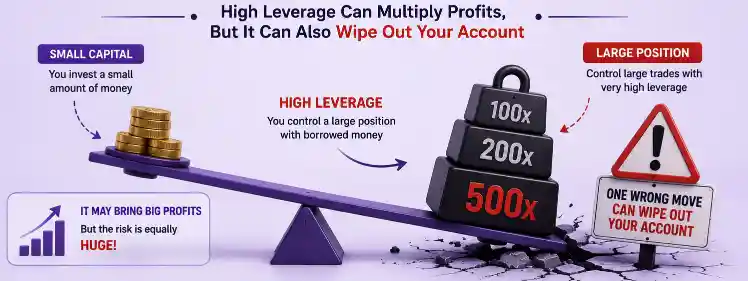
High leverage creates several problems:
- Large account drawdowns
- Emotional stress
- Poor decision-making
- Margin calls
- Account liquidation risks
Many trading accounts collapse because traders become obsessed with maximizing profits rather than protecting capital.
Ignoring Risk Management Rules
Another major example of how greed destroys forex trading accounts is the tendency to ignore proper risk management.
Greedy traders often believe that risking more money will automatically generate bigger profits. As a result, they may:
- Remove stop-loss orders
- Risk large percentages of their account on single trades
- Average down losing positions
- Hold losing trades emotionally
- Trade without proper analysis
Risk management exists to protect traders during losing periods. Since losses are unavoidable in forex trading, ignoring risk controls can quickly damage an account.
Professional traders usually focus on survival first. They understand that protecting capital is more important than chasing aggressive profits.
Holding Winning Trades Too Long
Greed can also affect traders after they enter profitable positions. Instead of following their planned exit strategy, greedy traders often continue holding trades in hopes of making even more money.
This behavior can become dangerous because markets frequently reverse unexpectedly. A trade that was once profitable may eventually turn into a loss.
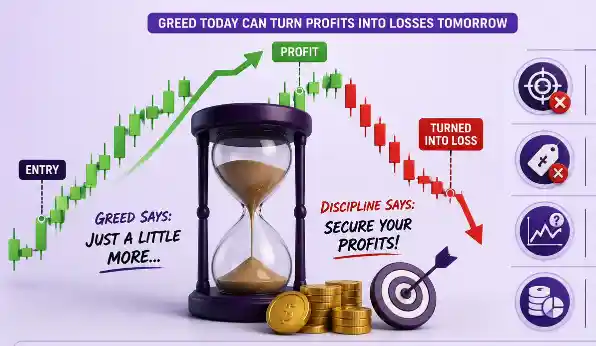
Common signs of greed during profitable trades include:
- Ignoring take-profit targets
- Removing profit limits
- Expecting unrealistic price moves
- Refusing to secure partial profits
Successful traders understand that consistent profits matter more than maximizing every individual trade.
Overtrading the Market
Overtrading is another common example of how greed destroys forex trading accounts. Many traders believe that opening more trades will increase profit opportunities. In reality, excessive trading usually leads to poor decision-making and emotional exhaustion.
Greedy traders often:
- Trade low-quality setups
- Enter the market without confirmation
- Trade out of boredom
- Force trades during weak market conditions
- Trade excessively after profits
Overtrading increases transaction costs and emotional pressure while reducing overall consistency.
Professional traders understand that patience is essential. High-quality setups do not appear constantly, and waiting for favorable opportunities is part of successful trading.
Revenge Trading After Losses
One of the most destructive emotional behaviors in forex trading is revenge trading. After losing money, greedy traders often try to recover losses immediately by increasing position sizes or opening multiple trades.
This emotional reaction usually leads to even larger losses because decisions are no longer based on strategy or analysis.
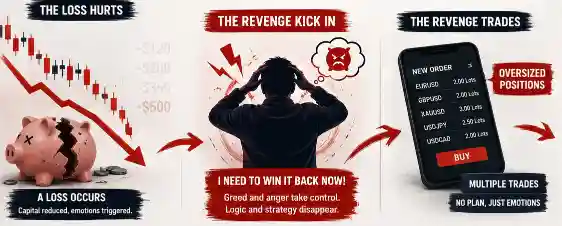
Revenge trading often includes:
- Increasing lot sizes emotionally
- Entering random trades
- Ignoring trading plans
- Trading aggressively after losing streaks
- Trying to recover losses quickly
Instead of accepting losses as part of trading, greedy traders treat losses emotionally, which damages discipline and long-term consistency.
Constantly Chasing Bigger Profits
Many traders become trapped in a cycle of constantly chasing larger profits. After experiencing some success, greed often pushes them to take bigger risks.
For example:
- A trader who doubles a small account may suddenly increase risk aggressively.
- A profitable week may create overconfidence.
- A series of winning trades may encourage reckless behavior.
This mindset creates emotional instability because traders begin focusing only on profit size instead of process quality.
Long-term trading success usually comes from consistency, discipline, and controlled risk rather than aggressive profit chasing.
Fear of Missing Out (FOMO)
Greed and fear are closely connected in trading. One common emotional problem is the fear of missing out, also known as FOMO.
When traders see strong market movements, greed often convinces them to enter trades impulsively without proper analysis.
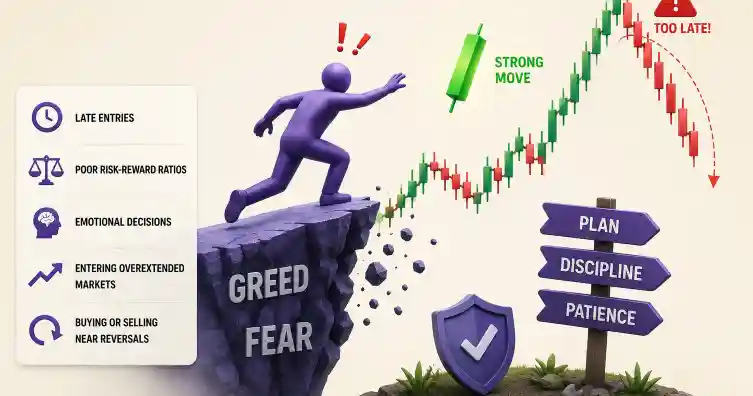
FOMO trading usually results in:
- Late entries
- Poor risk-reward ratios
- Emotional decisions
- Entering overextended markets
- Buying or selling near reversals
Many traders lose money because they feel pressured to participate in every market move instead of waiting for proper setups.
How Social Media Increases Greed
Social media has significantly influenced trading psychology. Traders are constantly exposed to screenshots of profits, luxury lifestyles, and unrealistic income claims.
This environment often creates unhealthy expectations, especially for beginners.
Greed increases when traders compare themselves to others online. Some traders begin taking excessive risks because they want fast results similar to what they see on social media.
Unfortunately, social media rarely shows:
- Large losses
- Blown accounts
- Emotional stress
- Years of practice
- Trading failures
Comparing trading journeys to unrealistic online content can encourage emotional and reckless behavior.
Lack of Patience and Discipline
Patience is one of the most important skills in forex trading. Greed often destroys patience by making traders feel that they constantly need action.
Impatient traders may:
- Enter trades too early
- Ignore confirmation signals
- Break trading rules
- Increase position sizes emotionally
- Close trades impulsively
Discipline allows traders to follow their plans consistently even during emotionally difficult periods.
Without discipline, greed eventually begins controlling trading behavior.
Why Greed Is Dangerous for Beginner Traders
Beginner traders are especially vulnerable because they often lack experience and emotional control. Many enter the forex market with unrealistic expectations about fast profits.
As a result, beginners may:
- Use high leverage
- Trade too frequently
- Risk large portions of their accounts
- Follow random signals
- Ignore trading education
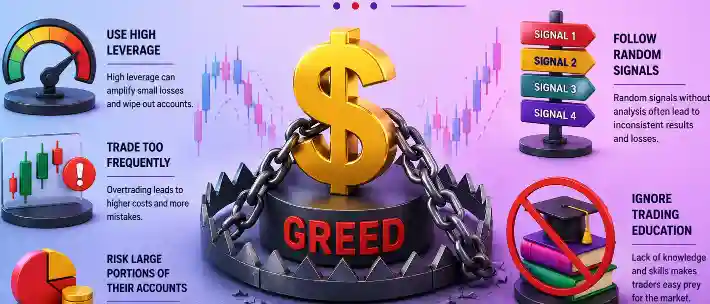
Understanding how greed destroys forex trading accounts can help beginners develop healthier trading habits early in their journey.
How to Control Greed in Forex Trading
Controlling greed requires self-awareness, discipline, and a structured trading approach. Traders who manage emotions effectively are more likely to survive long term.
- Create a Trading Plan: A structured trading plan helps traders avoid emotional decisions. A proper plan should include:
- Entry conditions
- Exit rules
- Risk management guidelines
- Daily loss limits
- Position sizing rules
- Use Proper Risk Management: Limiting risk per trade helps protect trading capital and reduces emotional pressure.Many experienced traders risk only a small percentage of their account on each trade.
- Accept That Losses Are Normal: Losses are part of trading. Traders who accept losses calmly are less likely to make emotional revenge trades.
- Focus on Consistency: Instead of chasing large profits quickly, traders should focus on building consistent habits and improving execution over time.
- Take Breaks After Emotional Trades: After significant wins or losses, taking a break can help traders regain emotional balance before entering new positions.
Final Thoughts
Understanding how greed destroys forex trading accounts is essential for anyone entering the forex market. Greed can influence every part of trading, including risk management, position sizing, emotional discipline, and decision-making.
Many traders lose money not because their strategy is completely wrong, but because emotions push them to ignore rules and take unnecessary risks.
Long-term success in forex trading usually comes from patience, discipline, controlled risk, and emotional stability. Traders who focus on protecting capital and following a structured process are far more likely to survive than those constantly chasing unrealistic profits.
Forex trading is not only about technical analysis or market predictions. It is also about managing emotions effectively and maintaining discipline during both winning and losing periods.
| you may also like this…….. Why Most Forex Traders Never Become Profitable |

