


The forex market attracts millions of traders every year because of its accessibility, liquidity, and potential opportunities. Many beginners enter the market hoping to generate extra income or even build a full-time trading career. However, after spending some time in the market, most traders discover that consistent profitability is far more difficult than it initially appears.
The reality is that many traders lose money not because forex trading is impossible, but because they approach it with unrealistic expectations, weak discipline, and poor risk management. Understanding why most forex traders never become profitable can help beginners avoid common mistakes and develop a more sustainable trading mindset.
In this article, we will break down the main reasons why most forex traders never become profitable and explain what traders can do differently to improve their long-term survival in the market.
Lack of Proper Trading Education
One of the biggest reasons why most forex traders never become profitable is the lack of proper education before entering live markets. Many beginners start trading after watching short videos on social media or reading simplified trading tips online. While some content can be useful, it often creates the illusion that trading is easy.

Forex trading involves much more than simply buying and selling currencies. Traders need to understand:
- Market structure
- Technical analysis
- Fundamental analysis
- Risk management
- Trading psychology
- Economic news impact
- Position sizing
- Trading plans
Without a strong educational foundation, traders often make emotional and impulsive decisions. They may enter trades randomly, overtrade, or risk too much capital on a single position.
Many profitable traders spend months or even years learning before achieving consistency. Forex trading should be treated like a professional skill rather than a shortcut to fast money.
Unrealistic Expectations About Profits
Another major reason why most forex traders never become profitable is unrealistic expectations. Many beginners believe they can turn a small account into a large fortune within weeks. This mindset usually leads to excessive risk-taking.
Social media has contributed heavily to this problem. Traders are constantly exposed to screenshots showing large profits, luxury lifestyles, and claims of easy success. What many beginners do not see are the losses, failed accounts, and emotional stress behind those images.
In reality, professional traders focus more on consistency and capital preservation than on making massive profits quickly. A trader risking 20% or 30% of their account on every trade may experience temporary success, but long-term survival becomes extremely difficult.
Profitable trading is generally built through:
- Controlled risk
- Patience
- Small consistent gains
- Strong discipline
- Long-term thinking
Traders who enter the market expecting instant wealth often abandon their trading plans and make emotional decisions when results do not match expectations.
Poor Risk Management
Poor risk management is one of the most common answers to the question of why most forex traders never become profitable. Even traders with good market analysis can fail if they do not control risk properly.
Risk management protects trading capital during losing periods. Since losses are unavoidable in trading, managing downside risk is essential for survival.
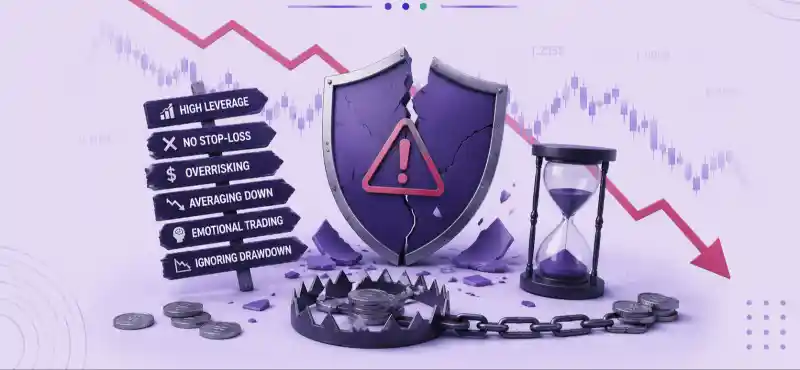
Common risk management mistakes include:
- Using excessive leverage
- Trading without stop-loss orders
- Risking too much per trade
- Averaging down losing positions
- Holding losing trades emotionally
- Ignoring account drawdown limits
Many beginners underestimate how quickly leverage can destroy an account. While leverage can increase profits, it also increases losses. A few poorly managed trades can wipe out months of progress.
Experienced traders often risk only a small percentage of their account per trade. This allows them to survive losing streaks while maintaining emotional stability.
Emotional Trading Decisions
Trading psychology plays a huge role in determining long-term success. Emotional decision-making is another reason why most forex traders never become profitable.
The forex market constantly tests emotions such as:
- Fear
- Greed
- Frustration
- Overconfidence
- Impatience
After a losing trade, some traders immediately try to recover losses by opening larger positions. This behavior is commonly known as revenge trading. Instead of following their strategy, traders allow emotions to control decisions.
Similarly, greed often causes traders to hold winning positions too long or ignore their original trading targets.
Emotional trading usually results in:
- Overtrading
- Breaking trading rules
- Entering low-quality setups
- Inconsistent performance
- Large account losses
Developing emotional discipline takes time and experience. Many successful traders use trading journals to track mistakes and improve self-awareness.
Overtrading the Market
Overtrading is another important reason why most forex traders never become profitable. Many traders believe that opening more trades increases their chances of making money. In reality, excessive trading often reduces performance.
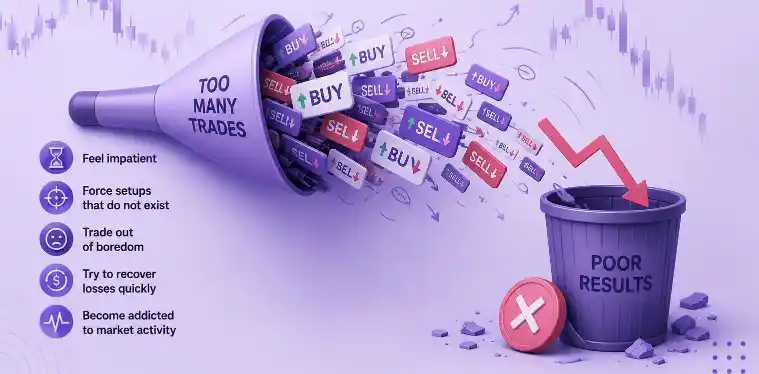
Overtrading usually happens when traders:
- Feel impatient
- Force setups that do not exist
- Trade out of boredom
- Try to recover losses quickly
- Become addicted to market activity
High-quality trading opportunities do not appear constantly. Professional traders often wait patiently for strong setups that align with their strategy.
Taking random trades without proper confirmation increases transaction costs and emotional stress while lowering overall consistency.
Learning when not to trade is just as important as learning when to enter the market.
No Clear Trading Plan
A trading plan acts as a roadmap for decision-making. Without one, traders often rely on emotions and random opinions. This is another major factor explaining why most forex traders never become profitable.
A proper trading plan should include:
- Entry rules
- Exit rules
- Risk management guidelines
- Trading schedule
- Maximum daily loss limits
- Preferred currency pairs
- Trading strategy details
Traders without a plan often switch strategies frequently after experiencing losses. This behavior prevents them from developing consistency or understanding whether a strategy actually works over time.
Consistency requires following a structured process rather than reacting emotionally to every market movement.
Ignoring Trading Psychology
Many beginners spend all their time learning indicators and strategies while completely ignoring psychology. However, mental discipline is one of the most important aspects of long-term trading success.
Some traders know exactly what they should do but fail to execute their plan consistently because emotions interfere.
Psychological challenges in forex trading include:
- Fear of losing money
- Fear of missing opportunities
- Difficulty accepting losses
- Lack of patience
- Emotional attachment to trades
Even a profitable strategy can fail if the trader cannot follow it properly. This is why psychology and discipline are frequently discussed among experienced traders.
Constantly Changing Strategies
Many traders abandon strategies too quickly. After a few losing trades, they immediately search for a new system, indicator, or mentor. This behavior is another reason why most forex traders never become profitable.
No trading strategy wins all the time. Every system experiences losing periods. Traders who constantly switch approaches never gather enough data to evaluate long-term performance properly.

Successful traders understand that consistency comes from:
- Testing strategies properly
- Following rules consistently
- Tracking results over time
- Improving execution gradually
Instead of searching endlessly for a perfect strategy, traders should focus on mastering one well-tested approach.
Using Excessive Leverage
Leverage is attractive because it allows traders to control larger positions with smaller capital. However, excessive leverage is one of the fastest ways to destroy a trading account.
Many beginners are attracted by the possibility of making large profits from small price movements. Unfortunately, leverage works both ways. Small losses can quickly become large account drawdowns.
High leverage also increases emotional pressure, making it harder for traders to follow their plans calmly.
Experienced traders usually focus more on protecting capital than maximizing short-term gains.
Failure to Adapt to Market Conditions
The forex market constantly changes due to economic events, central bank policies, global uncertainty, and market sentiment.
Some strategies work better during trending conditions, while others perform better in ranging markets. Traders who fail to adapt may continue using unsuitable strategies during changing market environments.
Understanding market conditions helps traders avoid unnecessary losses and improve decision-making.
Lack of Patience and Discipline
Patience and discipline are essential qualities in trading. Unfortunately, many beginners struggle with both.
Impatient traders often:
- Enter trades too early
- Close trades too quickly
- Ignore confirmation signals
- Break risk management rules
- Trade emotionally after losses
Discipline means following a trading plan even during emotionally difficult periods. Without discipline, even strong strategies become ineffective.
This is another major reason why most forex traders never become profitable over the long term.
Depending Too Much on Signals
Many beginners rely heavily on trading signals or copy trading without understanding the logic behind trades. While signals may occasionally produce profits, blindly following others can create long-term problems.
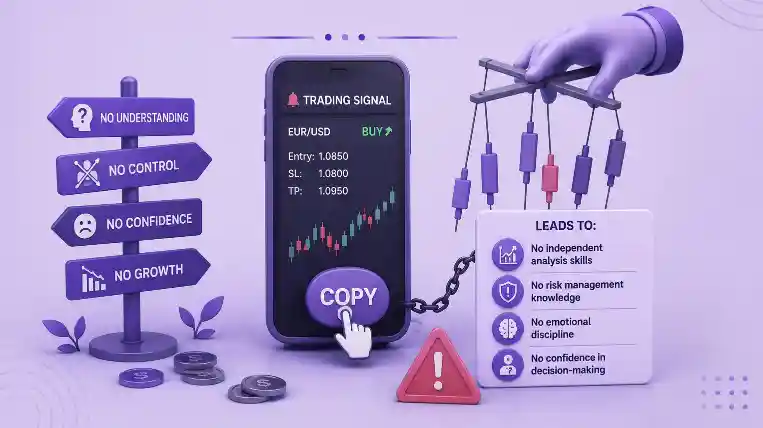
Traders who depend entirely on external signals often fail to develop:
- Independent analysis skills
- Risk management knowledge
- Emotional discipline
- Confidence in decision-making
Learning how the market works is more valuable than constantly searching for shortcuts.
Why Most Forex Traders Never Become Profitable Long Term
When traders combine unrealistic expectations, emotional behavior, poor risk management, and lack of discipline, long-term profitability becomes difficult.
The forex market rewards patience, preparation, consistency, and emotional control. Most traders fail not because success is impossible, but because they underestimate the level of discipline and education required.
Becoming profitable usually involves:
- Accepting losses as part of trading
- Developing strong risk management habits
- Following a structured trading plan
- Improving emotional discipline
- Focusing on long-term consistency
- Continuously learning and adapting
Final Thoughts
Understanding why most forex traders never become profitable is important for anyone entering the market. Forex trading can provide opportunities, but it is also highly competitive and emotionally demanding.
Many traders fail because they focus only on profits while ignoring education, psychology, and risk management. The traders who survive long term usually approach trading as a skill that requires patience, discipline, and continuous improvement.
Instead of chasing unrealistic profits, beginners should focus on building strong habits, protecting capital, and developing a consistent process. Long-term success in forex trading is rarely about finding a secret strategy. It is usually the result of discipline, controlled risk, and experience gained over time.

