


Best Metrics to Track in a Forex Trading Journal in 2026 can provide valuable insights into trading performance and help traders make more informed decisions over time. While many traders focus heavily on finding a better strategy, experienced market participants understand that consistent improvement often comes from analyzing trading results and identifying patterns in their own behavior. This is where a Forex trading journal becomes an essential part of the trading process.
A trading journal is far more than a record of winning and losing trades. It serves as a performance analysis tool that helps traders evaluate what is working, identify recurring mistakes, and uncover opportunities for improvement. The most successful traders approach trading like a business, and effective businesses rely on data to guide decision-making.
However, many traders limit their journals to basic details such as entry prices, exit prices, and profit or loss figures. While these metrics are important, they reveal only part of the overall picture.
The greatest value comes from tracking performance indicators that highlight strengths, weaknesses, risk management habits, and emotional decision-making patterns.
In this guide, we explore the best metrics to track in a Forex trading journal in 2026, why they matter, and how they can help traders improve consistency, discipline, and long-term performance.
Why Every Forex Trader Needs a Trading Journal
Before exploring the Best Metrics to Track in a Forex Trading Journal in 2026, it is important to understand why maintaining a trading journal is so valuable.
The Forex market generates a large amount of information every day. Without a structured method for reviewing trades, it can be difficult to identify recurring mistakes, recognize successful patterns, or evaluate overall trading performance. A well-maintained journal helps traders turn trading data into actionable insights that support long-term improvement.

A well-maintained journal helps traders:
- Measure performance objectively.
- Identify profitable setups.
- Improve risk management.
- Reduce emotional trading.
- Evaluate strategy effectiveness.
- Build trading discipline.
The traders who improve consistently are often the traders who review their performance consistently.
This is why understanding the best metrics to track in a Forex trading journal in 2026 can provide a significant advantage.
Best Metrics to Track in a Forex Trading Journal in 2026 for Long-Term Improvement
A trading journal should provide meaningful information that helps improve future performance. The following metrics are among the most useful data points traders can track.
Total Number of Trades
The total number of trades executed during a specific period is one of the most basic but important metrics.
This figure helps traders evaluate whether they are following their trading plan or engaging in excessive trading activity.
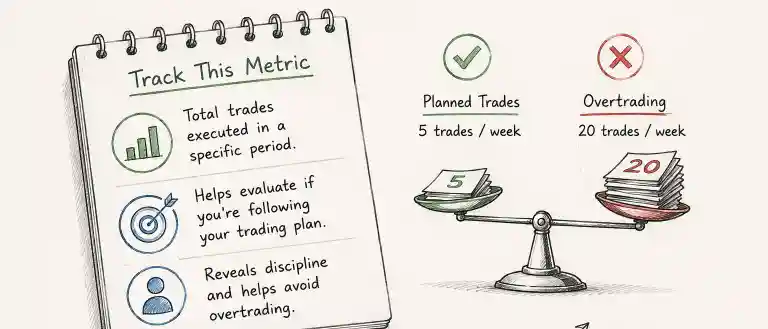
For example, a strategy designed to generate five quality setups per week may become less effective if a trader is placing twenty trades during the same period.
Tracking trade frequency can reveal whether discipline is being maintained.
Win Rate
Win rate measures the percentage of trades that close in profit.
The calculation is straightforward:
Winning Trades ÷ Total Trades × 100
For example:
- Total Trades: 100
- Winning Trades: 55
- Win Rate: 55%
Many traders focus heavily on win rate, but it should never be viewed in isolation.
A high win rate does not automatically guarantee profitability if losses are larger than gains.
Risk-to-Reward Ratio
The risk-to-reward ratio measures how much potential profit is targeted compared to the amount being risked.
For example:
- Risk: 50 pips
- Target: 100 pips
- Risk-to-Reward Ratio: 1:2
This metric is considered one of the Best Metrics to Track in a Forex Trading Journal in 2026 because it has a direct impact on long-term profitability. Many consistently profitable traders maintain favorable risk-to-reward ratios that allow them to remain profitable even when a portion of their trades result in losses.
Average Winning Trade
Tracking the average size of winning trades is one of the Best Metrics to Track in a Forex Trading Journal in 2026 because it helps traders evaluate how effectively they manage profitable positions.
If winning trades are consistently closed too early, this metric may reveal that potential gains are being limited. By reviewing average winners regularly, traders can identify opportunities to improve trade management and allow high-quality setups sufficient room to develop.
Average Losing Trade
Average losing trade size provides insight into risk control.
Consistently large losses often indicate:
- Poor stop-loss discipline.
- Emotional decision-making.
- Overexposure to risk.
- Failure to follow trading rules.
Successful traders focus heavily on controlling losses because capital preservation remains the foundation of long-term survival.
Profit Factor
Profit factor compares total profits to total losses.
The formula is:
Total Gross Profit ÷ Total Gross Loss
For example:
- Total Profit: $2,000
- Total Loss: $1,000
- Profit Factor: 2.0
A profit factor above 1 indicates overall profitability.
Many experienced traders consider this one of the most useful metrics for evaluating strategy performance.
Drawdown: One of the Most Important Journal Metrics
Drawdown measures the decline from a peak account balance to a subsequent low point.
For example:
- Account Peak: $10,000
- Account Low: $9,000
- Drawdown: 10%
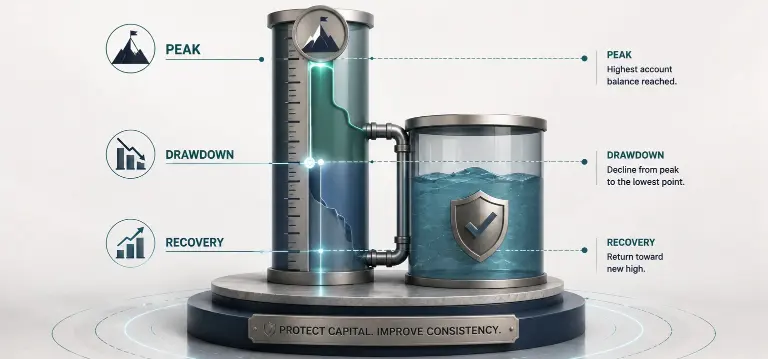
Understanding drawdown helps traders evaluate risk exposure and psychological resilience.
Large drawdowns often indicate that risk management requires improvement.
Among the best metrics to track in a Forex trading journal in 2026, drawdown remains one of the most valuable because it reflects the real risk associated with a trading strategy.
Average Trade Duration
Recording how long trades remain open can reveal useful behavioral patterns.
For example:
- Are winning trades held longer than losing trades?
- Are profitable trades being exited prematurely?
- Are losing trades being held too long?
This information can help traders refine both entry and exit management.
Performance by Currency Pair
Not all currency pairs produce the same results for every trader. Some traders may perform consistently well on pairs such as EUR/USD, while finding other markets like GBP/JPY or XAU/USD more challenging to trade.
Tracking performance by trading instrument can help identify which markets best match a trader’s strategy, personality, and risk tolerance. In many cases, traders discover that focusing on a smaller selection of familiar markets leads to greater consistency and more disciplined decision-making.
Performance by Trading Session
Market behavior varies throughout the trading day.
Tracking performance during different sessions can reveal when a trader performs best.
| Trading Session | Characteristics |
|---|---|
| Asian Session | Lower volatility |
| London Session | High liquidity and volume |
| New York Session | Strong volatility and news activity |
Some traders naturally perform better during specific market conditions.
Journal data can help identify these tendencies.
Tracking Emotional State Before and After Trades
One area that many traders ignore is emotional performance.
Yet emotions often influence trading decisions more than technical analysis.
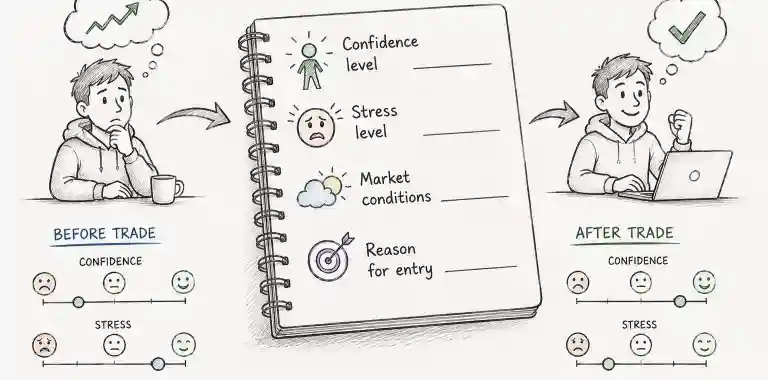
Before entering a trade, consider recording:
- Confidence level
- Stress level
- Market conditions
- Reason for entry
After the trade closes, record:
- Whether rules were followed
- Lessons learned
- Emotional reactions
- Areas for improvement
Over time, patterns often emerge that reveal how emotions influence trading outcomes.
Rule Compliance Score
One of the newer concepts becoming increasingly popular among traders is tracking rule compliance.
Instead of measuring only profit and loss, traders evaluate whether each trade followed their predefined trading plan.
For example:
- Entry criteria followed?
- Risk limits respected?
- Stop loss placed correctly?
- Trade management rules followed?
A profitable trade that violates trading rules should not necessarily be considered a successful trade.
Similarly, a losing trade that followed every rule may still represent good execution.
This perspective helps traders focus on process rather than short-term outcomes.
Screenshot Analysis and Visual Records
Many professional traders include screenshots within their journals.
Charts captured before and after trades provide visual evidence that can reveal patterns difficult to identify through numbers alone.
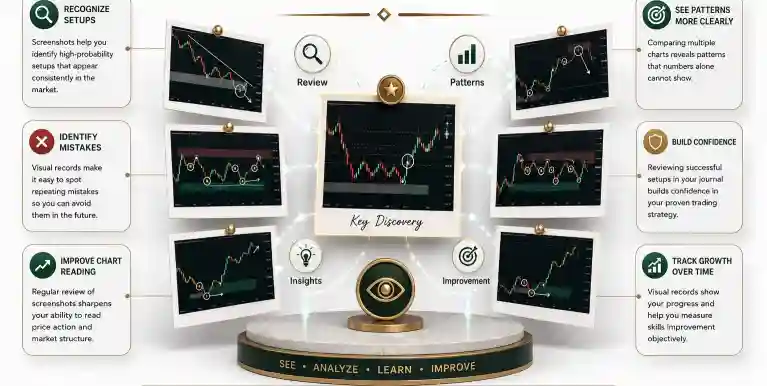
Reviewing screenshots helps traders:
- Recognize recurring setups.
- Identify common mistakes.
- Improve chart reading skills.
- Build confidence in proven strategies.
Visual records often become one of the most powerful components of a trading journal.
How Often Should You Review Your Trading Journal?
Recording data is only the first step.
The real value comes from regular review.
Most professional traders conduct:
- Daily reviews for recent trades.
- Weekly performance summaries.
- Monthly performance evaluations.
- Quarterly strategy assessments.
Consistent review transforms raw data into actionable insights.
Final Thoughts
Understanding the best metrics to track in a Forex trading journal can help traders evaluate performance more effectively and identify areas for improvement. While profit and loss are important, metrics such as win rate, risk-to-reward ratio, drawdown, profit factor, and trading discipline often provide deeper insight into overall trading performance.
A trading journal is more than a record of completed trades. It serves as a valuable tool for reviewing decisions, identifying recurring mistakes, and refining trading habits over time. Consistently tracking and analyzing performance can help traders develop a more disciplined and structured approach to the markets.
In many cases, long-term improvement comes not from changing strategies frequently, but from understanding what is working, what is not, and making informed adjustments based on objective data.
| You may also like this…… 1.How Professional Traders Identify Market Reversals Using Price Action 2.Multi-Timeframe Analysis Strategy for Forex Trading – A Practical Guide to Better Trade Entries |

