

Forex risk management strategies are one of the most important foundations of long-term trading survival. Many beginners spend months searching for profitable indicators, trading systems, or signal providers, but experienced traders understand that success in forex depends far more on controlling losses than chasing profits.
In real market conditions, even skilled traders experience losing trades regularly. The difference is that disciplined traders know how to manage risk before losses become emotionally or financially damaging.
Without proper risk management, a few emotional decisions or oversized positions can destroy weeks or even months of progress. On the other hand, traders who learn how to protect capital usually stay in the market long enough to improve consistently.
This guide explains practical forex risk management strategies in a beginner-friendly way, helping traders build safer habits, improve discipline, and reduce unnecessary losses over time.
Quick Summary: Forex Risk Management Strategies
| Risk Management Concept | Purpose |
|---|---|
| Stop Loss | Limits potential losses automatically |
| Position Sizing | Controls how much capital is exposed |
| Risk-to-Reward Ratio | Balances profit potential against risk |
| Leverage Control | Reduces account volatility and emotional pressure |
| Trading Journal | Helps improve decision-making over time |
| Emotional Discipline | Prevents impulsive and revenge trading |
Understanding these core principles can significantly improve trading consistency and reduce avoidable mistakes.
What Is Forex Risk Management
Forex risk management refers to the process of protecting trading capital by controlling potential losses during market activity.
Instead of focusing only on profits, risk management helps traders survive uncertain market conditions while maintaining emotional stability.
It includes:
- Managing trade size carefully
- Using stop-loss orders properly
- Reducing emotional decisions
- Controlling leverage exposure
- Protecting capital over the long term
In simple terms, forex risk management strategies are designed to help traders stay in the market long enough to improve and grow consistently.
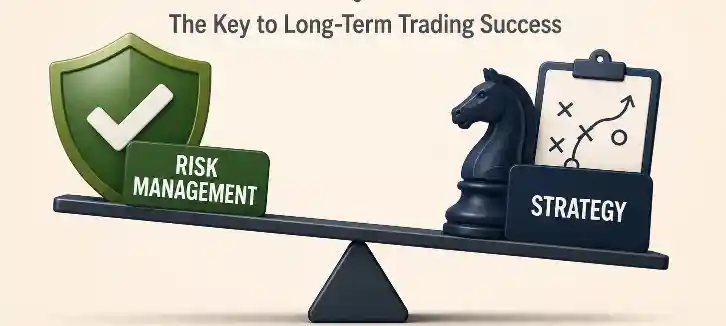
Why Risk Management Matters More Than Strategy
Many beginners believe profitable traders win almost every trade. In reality, even professional traders experience losses frequently.
Some consistent traders only maintain a 50–60% win rate, yet they remain profitable because their losses are controlled properly.
Without risk management:
- One bad trade can damage the account heavily
- Emotional decisions increase
- Recovering losses becomes difficult
- Trading consistency becomes unstable
A strong trading strategy without risk control often fails over time.
This is why experienced traders usually focus more on managing downside risk than chasing aggressive profits.
Reality Check: Losses Are a Normal Part of Trading
One important truth many beginners struggle to accept is that losses are unavoidable in forex trading.
No strategy wins every trade.
Successful traders understand:
- Losses are part of probability-based trading
- The goal is not perfection
- Protecting capital matters more than constant winning
Beginners often damage their accounts because they emotionally react to losses instead of managing them professionally.
1. Never Risk Too Much on One Trade
One of the most effective forex risk management strategies is limiting risk exposure per trade.
Many experienced traders risk only:
- 1% per trade
- 2% maximum per trade
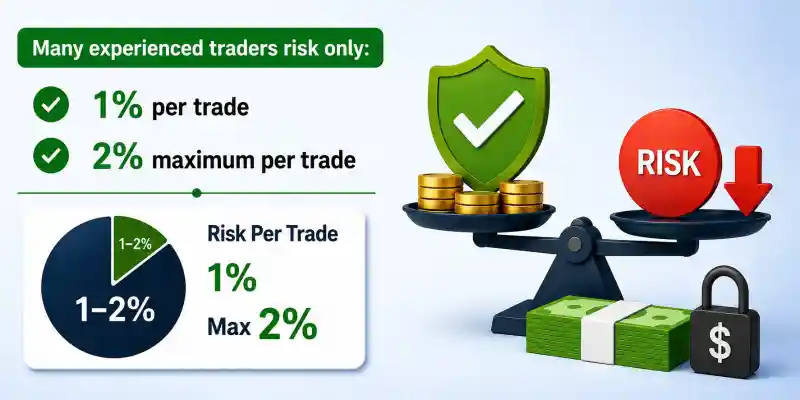
This helps reduce emotional stress while protecting the account from major drawdowns.
For example:
If a trader has a $1,000 account and risks 1% per trade, the maximum loss would be limited to $10.
This approach allows traders to survive losing streaks without destroying their accounts.
Beginners often make the mistake of risking large amounts to recover losses quickly, but this usually creates even bigger losses later.
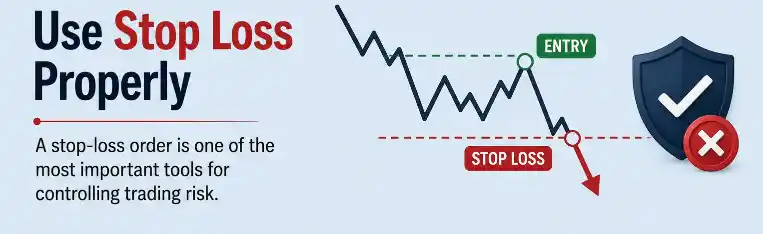
2. Use Stop Loss Properly
A stop-loss order is one of the most important tools for controlling trading risk.
It automatically closes a position if the market moves against you beyond a predefined level.
Without stop loss:
- Losses can become unlimited
- Emotional pressure increases
- Fast-moving markets become dangerous
However, simply placing a stop loss is not enough.
Professional traders usually place stop losses based on:
- Market structure
- Support and resistance levels
- Volatility conditions
Many beginners move stop losses emotionally after entering trades, which often increases losses instead of reducing them.
3. Understand Risk-to-Reward Ratio
Risk-to-reward ratio compares how much money you risk versus how much you aim to gain.
For example:
- Risking $20 to make $60 creates a 1:3 risk-to-reward ratio
This concept is important because traders do not need to win every trade to become profitable.
If profits are larger than losses over time, traders can remain profitable even with moderate win rates.
Many beginners focus only on winning percentage while ignoring the size of losses compared to gains.
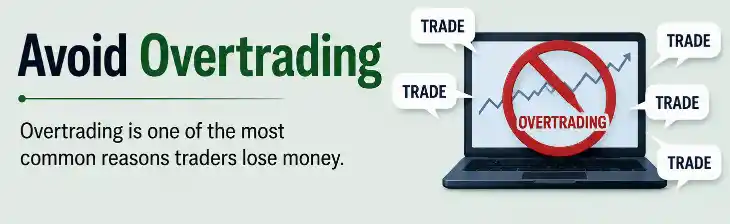
4. Avoid Overtrading
Overtrading is one of the most common reasons traders lose money.
Many beginners feel pressure to stay active constantly, even when market conditions are unclear.
This leads to:
- Low-quality setups
- Random entries
- Higher spread costs
- Emotional exhaustion
Professional traders often take fewer trades but focus on higher-quality opportunities.
Patience is an underrated part of forex risk management strategies.
5. Control Leverage Carefully
Leverage increases both profit potential and risk exposure.
While high leverage may look attractive, it can also destroy accounts quickly.
For example:
- A small market movement against an oversized leveraged position can cause major losses
Many traders fail not because their analysis was completely wrong, but because their position size was too large for the account balance.
Using leverage carefully helps traders maintain emotional stability and survive volatile conditions.
Trader Insight: Why Beginners Often Ignore Risk Management
In real trading environments, many beginners understand risk management logically but fail to apply it emotionally.
After several losses, traders often:
- Increase lot sizes emotionally
- Remove stop losses
- Take impulsive revenge trades
- Try to recover losses quickly
This emotional cycle usually creates even larger losses.
Experienced traders understand that protecting capital matters more than chasing fast profits.
The goal is not to win every trade. The goal is to remain consistent and survive long enough to improve over time.
6. Keep Emotions Under Control
Emotional trading is closely connected to poor risk management.
Fear and greed often cause traders to:
- Exit winning trades too early
- Hold losing trades too long
- Increase position size emotionally
- Ignore trading rules
Controlling emotions becomes easier when trade risk remains small and manageable.
This is why disciplined risk management also improves trading psychology.
7. Diversify Carefully Instead of Overexposing
Some traders open multiple trades without realizing they are heavily exposed to the same currency movement.
For example:
- Buying EUR/USD
- Buying GBP/USD
- Selling USD/CHF
These trades may all react similarly to USD strength or weakness.
This creates concentrated risk exposure.
Understanding correlation between currency pairs helps traders avoid unnecessary overexposure.
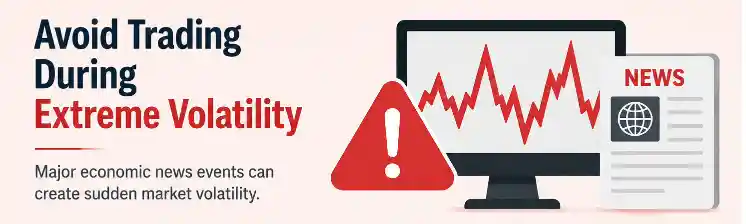
8. Avoid Trading During Extreme Volatility
Major economic news events can create sudden market volatility.
During these conditions:
- Spreads may widen sharply
- Price movement becomes unpredictable
- Slippage risk increases
Beginners often underestimate how quickly the market can move during news releases.
If you are inexperienced, avoiding high-impact news periods may help reduce unnecessary risk.
Hidden Risks Many Traders Ignore
Some trading risks are less visible but still important.
These include:
- Spread widening during volatility
- Slippage during fast execution
- Overnight swap charges
- Emotional fatigue from excessive screen time
Understanding these factors helps traders build more realistic expectations about live market conditions.
9. Use a Trading Journal
A trading journal helps traders review mistakes and improve decision-making over time.
Important details to record include:
- Trade entry and exit reasons
- Risk percentage used
- Market conditions
- Emotional state during trade
- Final outcome
Without reviewing past trades, traders often repeat the same mistakes repeatedly.
10. Focus on Consistency Instead of Fast Profits
One of the biggest mindset shifts in trading is understanding that consistency matters more than aggressive growth.

Many beginners try to grow accounts too quickly.
This creates:
- Emotional pressure
- Overtrading
- Excessive leverage usage
- Higher account volatility
Professional traders usually focus on controlled growth and long-term survival rather than unrealistic profit expectations.
Pros and Cons of Forex Risk Management
Advantages
- Protects trading capital
- Reduces emotional pressure
- Improves long-term consistency
- Helps traders survive losing streaks
Limitations
- Can feel slow for impatient traders
- Requires discipline and patience
- Does not eliminate losses completely
Common Forex Risk Management Mistakes
- Ignoring Stop Loss: Hoping the market reverses often leads to larger losses.
- Risking Too Much Per Trade: Large risk exposure increases emotional stress and instability.
- Revenge Trading: Trying to recover losses immediately usually creates bigger drawdowns.
- Using Excessive Leverage: High leverage magnifies mistakes very quickly.
Who Should Focus Most on Risk Management
Forex risk management strategies are especially important for:
- Beginner traders
- Scalpers and day traders
- Traders using leverage
- Emotionally reactive traders
However, forex risk management strategies is essential at every experience level.
Final Verdict
Learning forex risk management strategies is one of the most important steps toward becoming a more disciplined trader.
Many traders spend months searching for perfect indicators or secret systems while ignoring the importance of controlling losses.
But in real trading, survival comes first.
The market will always involve uncertainty, and losses are unavoidable. The key difference between struggling traders and consistent traders is how they manage those losses.
By controlling risk properly, staying disciplined, and avoiding emotional decisions, traders improve their chances of long-term consistency significantly.
Successful trading is rarely about winning every trade. It is usually about protecting capital, managing emotions, and staying consistent over time.
Related Topics You Should Read
- Why 90% Traders Lose Money in Forex Trading
- Trading Psychology in Forex Tading – 6 Powerful Ways to Control Emotions and Trade More Consistently

