


Liquidity in forex is one of the most important concepts every trader should understand before entering the market. It refers to how easily a currency pair can be bought or sold without causing a major change in its price.
In simple terms, liquidity tells you how active the market is. When there are many buyers and sellers, trades are executed quickly and smoothly. When fewer participants are involved, trading becomes slower and price movements can become unpredictable.
Understanding liquidity in forex is essential because it directly impacts your trading experience, including execution speed, spreads, and slippage.
What Does Liquidity Mean in Forex
Liquidity in forex represents the level of activity in the market — specifically, how many participants are actively buying and selling a currency pair.

- High Liquidity: Large number of buyers and sellers, smooth execution
- Low Liquidity: Fewer participants, slower trades, and unstable prices
When a market has high liquidity, traders can easily enter and exit positions without significant price changes. On the other hand, low liquidity conditions can make trading more difficult and risky.
This is why liquidity in forex plays a key role in determining overall market efficiency and stability.
Why Liquidity in Forex is Important
Liquidity is not just a technical concept—it has a direct impact on your daily trading results. Every trade you place is influenced by the level of liquidity available in the market.
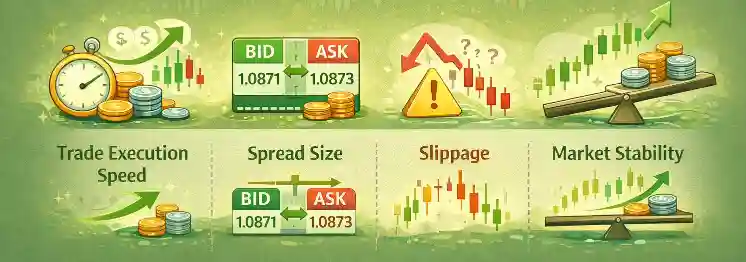
Here are the main factors affected by liquidity in forex:
- Trade Execution Speed: Higher liquidity ensures faster order execution
- Spread Size: More liquidity leads to tighter spreads
- Slippage: Lower liquidity increases the chances of slippage
- Market Stability: High liquidity keeps price movements smoother
For beginners, trading in high liquidity conditions is generally safer because it reduces unexpected risks and improves overall execution quality.
High vs Low Liquidity Market
Understanding the difference between high and low liquidity markets helps traders choose better trading conditions.
High Liquidity Market
- Tighter spreads
- Faster trade execution
- Minimal slippage
- Stable and predictable price movement
Low Liquidity Market
- Wider spreads
- Slower execution
- Higher slippage risk
- Sudden and sharp price movements
In most cases, professional traders prefer high liquidity environments because they provide more consistency and lower trading costs.
When is Liquidity Highest in Forex
The forex market operates 24 hours a day, but liquidity levels are not the same throughout the day. Certain trading sessions have significantly higher activity.
The most liquid periods occur during:
- London Session
- New York Session
The highest liquidity in forex is typically seen when these two sessions overlap. During this time, the market experiences increased trading volume, tighter spreads, and faster execution.
Traders who focus on these sessions often benefit from better trading conditions.
Liquidity and Currency Pairs
Not all currency pairs have the same level of liquidity. Some pairs are traded more frequently than others, making them more liquid.
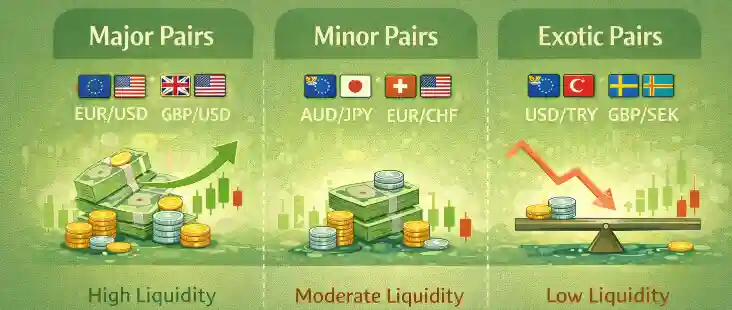
- Major Pairs (EUR/USD, GBP/USD): High liquidity
- Minor Pairs: Moderate liquidity
- Exotic Pairs: Low liquidity
For beginners, it is usually recommended to trade major currency pairs because they offer better liquidity, lower spreads, and more stable price movements.
Liquidity and Volatility Relationship
Liquidity and volatility are closely connected in the forex market. Understanding this relationship helps traders manage risk more effectively.
- High Liquidity: Generally leads to stable and controlled volatility
- Low Liquidity: Can result in high and unpredictable volatility
When liquidity is low, even small orders can cause large price movements. This increases risk, especially for beginner traders who may not be prepared for sudden market changes.
Liquidity and Slippage
Slippage occurs when a trade is executed at a different price than expected. Liquidity in forex plays a major role in determining how often this happens.
- High Liquidity: Orders are filled close to the requested price
- Low Liquidity: Orders may be executed at unfavorable prices
This is why trading during low liquidity periods can lead to unexpected losses due to slippage.
Common Mistakes Traders Make
Many beginner traders ignore liquidity in forex, which can lead to avoidable mistakes. Here are some common errors:
- Trading during low liquidity hours
- Ignoring spread changes
- Choosing exotic pairs without proper understanding
- Not considering active market sessions
Avoiding these mistakes can significantly improve your trading performance.
Pro Tips for Beginners
If you are new to trading, here are some practical tips to help you use liquidity in forex effectively:
- Trade during London and New York sessions
- Focus on major currency pairs
- Avoid trading during quiet market hours
- Monitor spreads before entering trades
- Stay aware of market conditions
Following these tips can help you trade in better conditions and reduce unnecessary risks.
Final Thoughts
Liquidity in forex is a fundamental concept that directly affects how trades are executed and how the market behaves. It influences spreads, slippage, execution speed, and overall trading conditions.
For beginners, understanding liquidity is essential for making smarter trading decisions. By focusing on high liquidity periods and choosing the right currency pairs, traders can improve execution quality and manage risks more effectively.
In the long run, mastering liquidity in forex will help you develop a more consistent and disciplined trading approach.
To better understand market conditions, you should also learn about Volatility in Forex and Spread in Forex, as both are directly influenced by liquidity.

