

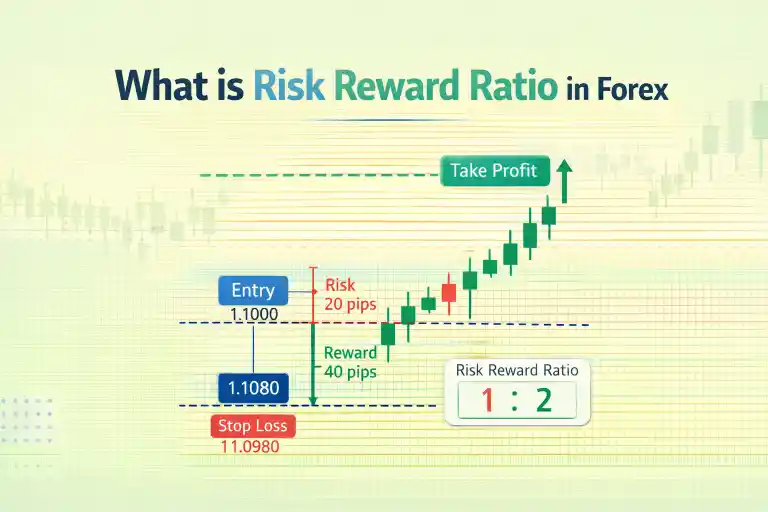
The Risk Reward Ratio in Forex is one of the most important concepts every trader must understand before entering the market. It helps you measure how much you are willing to lose compared to how much you expect to gain from a trade.
For beginners, understanding the Risk Reward Ratio in Forex is essential because it forms the foundation of risk management and long-term profitability. Without it, trading becomes more like gambling rather than a calculated strategy.
In simple terms, this ratio allows traders to decide whether a trade is worth taking by comparing the potential loss with the potential profit.
What is Risk Reward Ratio in Forex
The Risk Reward Ratio in Forex represents the relationship between risk (possible loss) and reward (possible profit) in a trade.
It answers a simple but powerful question:
- How much am I risking
- How much can I potentially earn
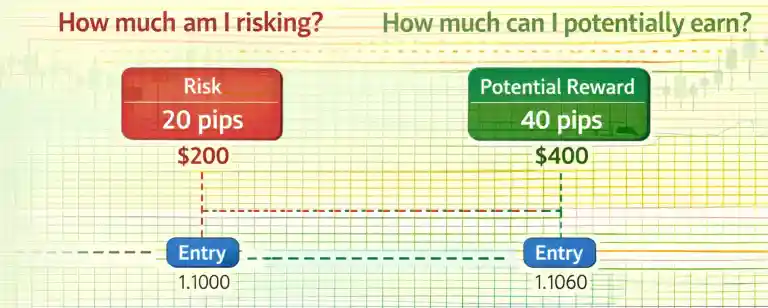
For example:
- Risk = 20 pips
- Reward = 40 pips
Risk Reward Ratio = 1:2
This means you are risking 1 unit to potentially gain 2 units. This type of setup is generally considered favorable because the reward is greater than the risk.
How Risk Reward Ratio Works in Trading
Before placing any trade, traders typically define two important levels:
- Stop Loss – the level where the trade will automatically close to limit loss
- Take Profit – the level where the trade will close to secure profit
Let’s understand this with an example:
- Entry Price = 1.1000
- Stop Loss = 1.0980 (20 pips risk)
- Take Profit = 1.1040 (40 pips reward)
In this case:
Risk Reward Ratio = 1:2
This structured approach helps traders maintain consistency and avoid emotional decisions during trading.
Why Risk Reward Ratio in Forex is Important
The Risk Reward Ratio in Forex plays a major role in building a successful trading strategy. It is not just about making profits, but also about controlling losses.
Here’s why it matters:
- Helps you make smarter trading decisions
- Protects your trading capital
- Encourages disciplined trading habits
- Improves long-term consistency
One of the biggest advantages is that even if you lose multiple trades, a proper risk reward ratio can still keep you profitable over time.
Ideal Risk Reward Ratio for Beginners
Many experienced traders follow a minimum ratio of 1:2. This means the potential reward should be at least double the risk.
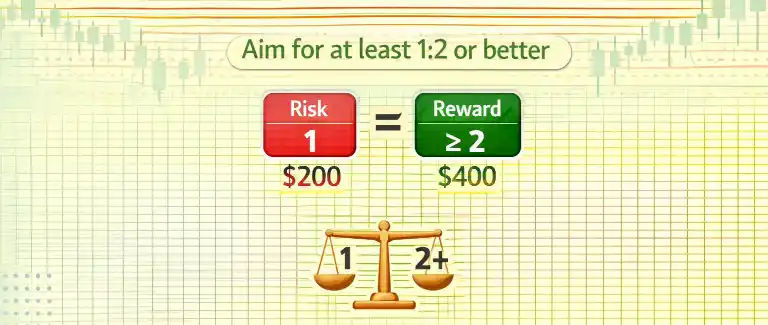
Some traders even aim for:
- 1:2 (recommended for beginners)
- 1:3 (more advanced setups)
- 1:4 or higher (less frequent but high-quality trades)
The key idea is simple: your winning trades should cover your losing trades and still leave you in profit.
Risk Reward Ratio and Win Rate
The Risk Reward Ratio in Forex works closely with your win rate (the percentage of trades you win).
Here’s how they interact:
- High win rate + low ratio = slow growth
- Low win rate + high ratio = still profitable
For example, even if you win only 50% of your trades, a 1:2 ratio can still generate profits over time.
The balance between risk reward ratio and win rate is what defines a strong trading system.
How to Calculate Risk Reward Ratio in Forex
Calculating the Risk Reward Ratio in Forex is simple and should be done before entering every trade.
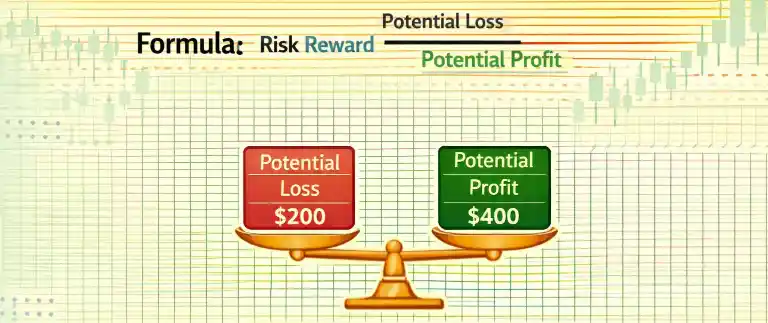
Formula: Risk Reward Ratio = Potential Loss / Potential Profit
Example:
- Potential Loss = 20 pips
- Potential Profit = 40 pips
Ratio = 1:2
This calculation helps you quickly decide whether a trade setup is worth taking or not.
Common Mistakes Traders Make
Many beginners ignore the importance of the Risk Reward Ratio in Forex, which often leads to inconsistent results.
Here are some common mistakes to avoid:
- Not checking the ratio before entering trades
- Taking trades with low reward potential
- Setting unrealistic take profit levels
- Trading without a proper stop loss
- Letting emotions override trading rules
Avoiding these mistakes can significantly improve your trading performance.
Practical Example of Risk Reward Ratio
Let’s look at a simple trading scenario:
- Total Trades = 10
- Winning Trades = 5 (with 1:2 ratio)
- Losing Trades = 5
Calculation:
- Profit from wins = +100 pips
- Loss from losses = -50 pips
Net Result = +50 pips
This example clearly shows how the Risk Reward Ratio in Forex can help you stay profitable even with an average win rate.
Pro Tips for Beginners
If you are just starting, follow these practical tips:
- Always define your risk before entering a trade
- Use stop loss and take profit in every trade
- Avoid trades with poor risk-reward setups
- Stay consistent with your strategy
- Focus on long-term results, not short-term wins
Consistency and discipline are more important than chasing quick profits.
Final Thoughts
The Risk Reward Ratio in Forex is not just a concept—it is a core principle that separates professional traders from beginners.
By understanding and applying this concept, traders can manage risk effectively, stay disciplined, and build a strategy that works over the long term.
For beginners, focusing on the right risk reward ratio can make a significant difference in overall trading performance. Instead of trying to win every trade, aim to manage risk properly and let your strategy work over time.To apply this concept effectively, you should also understand Stop Loss in Forex and Take Profit in Forex, as they define your risk and reward in every trade.

