

Understanding Stop Loss in Forex is one of the most important steps for anyone starting their trading journey. A stop loss is a simple yet powerful tool that helps traders control risk and protect their trading capital from unexpected market movements.
In forex trading, prices can move quickly, and without proper risk control, even a single trade can cause significant losses. This is why experienced traders always rely on stop loss orders to maintain discipline and consistency.
What Does Stop Loss in Forex Mean
A Stop Loss in Forex is an automatic order that closes your trade when the market reaches a specific price level that you define in advance. This level represents the maximum loss you are willing to accept on a trade.
Instead of manually closing a losing trade, the stop loss ensures that your position is exited automatically, even if you are not actively watching the market.
This approach helps traders stay disciplined and avoid emotional decisions during volatile market conditions.
How Stop Loss in Forex Works
The concept of Stop Loss in Forex is straightforward. When you open a trade, you choose a price level where your trade should close if the market moves against you.
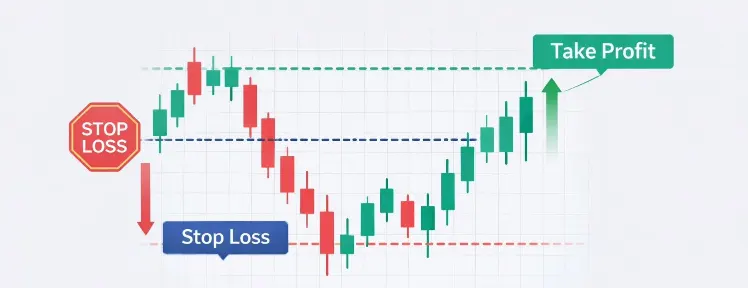
Example:
- You buy EUR/USD at 1.1000
- You set a stop loss at 1.0980
If the price drops to 1.0980, your trade will automatically close, resulting in a loss of 20 pips.
This predefined exit helps you avoid larger losses if the market continues moving in the wrong direction.
Types of Stop Loss in Forex
There are different types of Stop Loss in Forex, and each serves a specific purpose depending on your trading style and strategy.
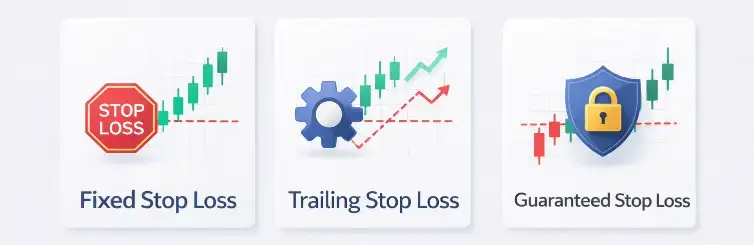
1. Fixed Stop Loss
A fixed stop loss is set at a specific number of pips away from your entry price.
- Simple and easy to use
- Ideal for beginners
- Based on your risk tolerance
2. Trailing Stop Loss
A trailing stop loss automatically adjusts as the market moves in your favor.
- Locks in profits as price moves forward
- Reduces risk over time
- Works best in trending markets
3. Technical Stop Loss
This type of stop loss is based on chart analysis and market structure.
- Placed below support for buy trades
- Placed above resistance for sell trades
- Considered more accurate and strategic
Why Stop Loss in Forex is Important
Using a Stop Loss in Forex is essential for long-term trading success. It helps traders manage risk effectively and maintain control over their trading account.
- Protects your trading capital
- Limits potential losses
- Reduces emotional decision-making
- Encourages disciplined trading habits
Without a stop loss, traders are exposed to unlimited risk, which can quickly damage their account.
Stop Loss and Risk Management
Stop Loss in Forex plays a central role in risk management. It allows traders to decide how much they are willing to lose before entering a trade.
- Helps control risk per trade
- Works alongside lot size and leverage
- Protects your account from large drawdowns
Professional traders always calculate their risk first and then place their stop loss accordingly. This approach ensures consistency and long-term sustainability.
Common Mistakes Traders Make
Many beginners misuse or ignore Stop Loss in Forex, which often leads to unnecessary losses. Here are some common mistakes:
- Not using a stop loss at all
- Setting the stop loss too close to entry
- Placing the stop loss too far away
- Moving the stop loss emotionally
- Ignoring market structure and volatility
Avoiding these mistakes can significantly improve your trading performance.
How to Set a Good Stop Loss in Forex
Setting an effective Stop Loss in Forex requires a combination of strategy and market understanding.
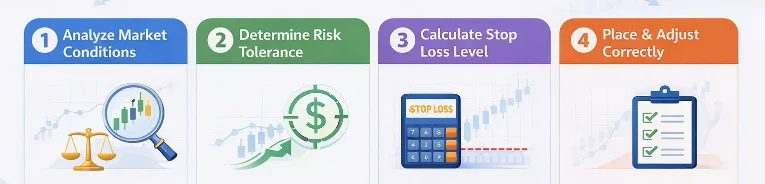
- Use support and resistance levels
- Follow a proper risk-reward ratio
- Avoid random placement
- Adjust based on market volatility
A well-placed stop loss should protect your trade while allowing enough room for normal price movement.
Pro Tips for Beginners
If you are new to trading, follow these practical tips to use Stop Loss in Forex effectively:
- Always use a stop loss in every trade
- Risk only 1–2% of your trading account
- Combine stop loss with a clear trading strategy
- Avoid changing stop loss without valid reasoning
Consistency in applying these rules can help you build strong trading discipline over time.
Final Thoughts
Stop Loss in Forex is not just a tool—it is a fundamental part of successful trading. It helps traders manage risk, protect their capital, and stay disciplined in all market conditions.
For beginners, mastering the use of stop loss can make a significant difference in long-term results. Instead of focusing only on profits, learning how to control losses is what truly separates successful traders from unsuccessful ones.
By using stop loss correctly, you create a safer and more structured trading approach that supports consistent growth over time.
To manage your trades effectively, you should also understand Take Profit in Forex and Lot Size in Forex, as they help in planning your overall risk and reward.

