


If you are new to trading, one of the first questions you will encounter is what is a forex broker. A forex broker is a company that provides traders access to the global currency market, allowing them to buy and sell different currency pairs.
Since the forex market is decentralized and operates through large financial institutions, individual traders cannot directly access it. This is where forex brokers play a vital role by acting as a bridge between traders and the market.
What is a Forex Broker and How Does It Work
To understand what is a forex broker, it is important to know how trading actually happens. A broker connects your trading account to liquidity providers such as banks, hedge funds, and financial institutions.
When you place a trade, the broker either sends your order directly to the market or processes it internally depending on its system.
Forex brokers typically provide the following services:
- Trading platforms like MT4 or MT5
- Real-time price quotes
- Trade execution
- Leverage for larger position sizes
This setup makes it possible for beginners to start trading even with a small amount of capital.
Types of Forex Brokers
Another important part of understanding what is a forex broker is knowing the different types available in the market.
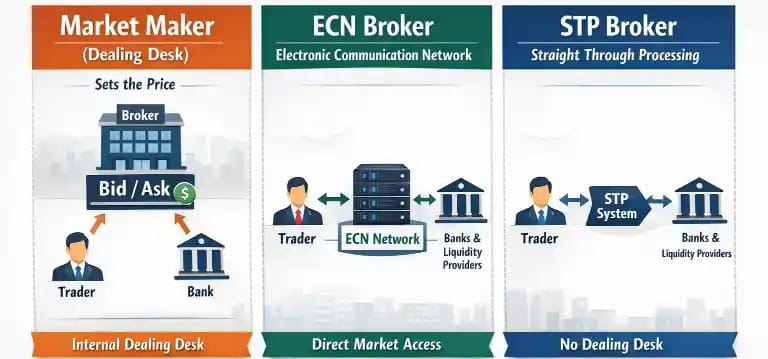
1. Market Maker (Dealing Desk)
Market makers create their own trading environment and often take the opposite side of your trade.
- Fixed spreads
- Fast execution
- Beginner-friendly environment
2. ECN Broker (Electronic Communication Network)
ECN brokers connect traders directly with liquidity providers, offering a more transparent trading experience.
- Very low (raw) spreads
- High-speed execution
- Commission charged per trade
3. STP Broker (Straight Through Processing)
STP brokers send orders directly to liquidity providers without manual interference.
- Variable spreads
- No dealing desk involvement
- Better pricing transparency
Key Features of a Forex Broker
When learning what is a forex broker, you should also understand the features that define a good broker.
- Trading Platform: Easy-to-use interface for placing trades
- Leverage: Ability to control larger trades with smaller capital
- Spreads and Commissions: The cost of trading
- Execution Speed: Fast order processing is crucial
- Customer Support: Reliable help when needed
How Forex Brokers Make Money
Forex brokers earn revenue through different methods. Understanding this helps you make better trading decisions.
- Spreads: The difference between buy and sell prices
- Commissions: Fees charged per trade (common in ECN accounts)
- Swap Fees: Charges for holding positions overnight
How to Choose a Good Forex Broker
Choosing the right broker is essential once you understand what is a forex broker. A poor choice can impact your trading performance and safety.
Here are key factors to consider:
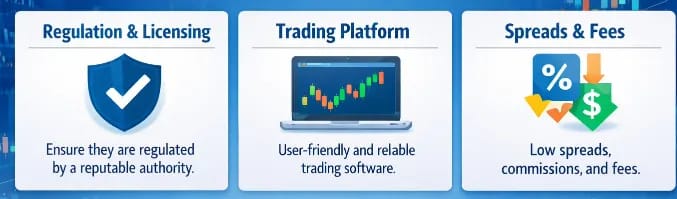
- Regulation and proper licensing
- Transparent fee structure
- Fast and reliable withdrawals
- Stable trading platform
- Positive user reviews
Advantages of Using a Forex Broker
Forex brokers make trading accessible and convenient for individuals.
- Access to the global currency market
- Ability to start with small capital
- Advanced tools and charting features
- Leverage to increase trading opportunities
Risks to Consider
While forex brokers provide many benefits, there are also risks involved.
- Unregulated brokers can be unsafe
- High leverage may increase losses
- Hidden charges in some accounts
- Slippage during high market volatility
Final Thoughts
By now, you should have a clear understanding of what is a forex broker and why it is essential in trading. A broker provides the tools, platform, and access needed to participate in the forex market.
For beginners, it is always a smart approach to start with a demo account, explore the platform, and gradually move to live trading with proper risk management.
Choosing a trusted and regulated broker can significantly improve your overall trading experience and long-term success.

