

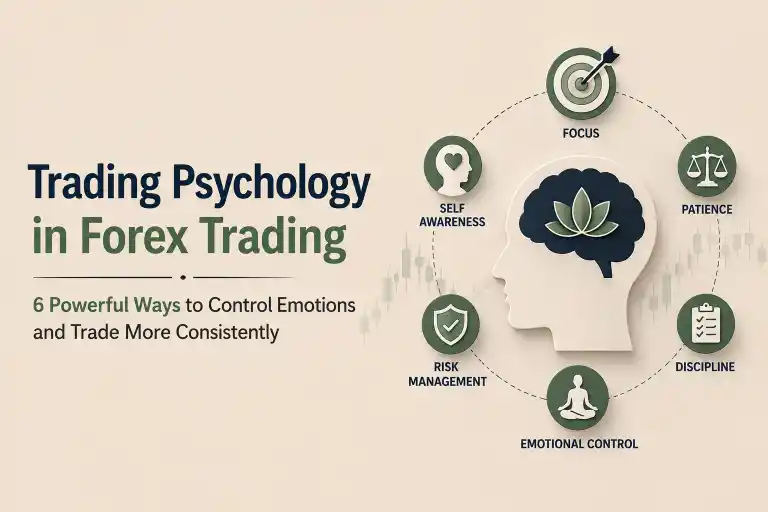
Trading Psychology in Forex is often one of the most overlooked aspects of forex trading, especially by beginners who tend to focus more on indicators, entry signals, and technical strategies. While market analysis plays an important role, Trading Psychology in Forex highlights that emotional control is what truly separates long-term successful traders from those who consistently lose money
In real trading conditions, emotions can influence decisions far more than charts. Fear can force traders to close good trades too early. Greed can push traders into taking unnecessary risks. Frustration after losses may lead to revenge trading, while overconfidence after profits can create careless decisions.
This is why experienced traders often say that forex trading is not only a technical challenge — it is also a psychological challenge.
Many traders already know what they should do, but emotions prevent them from following their own rules consistently. A profitable strategy alone is rarely enough if emotional discipline is missing.
This article explains how trading psychology in forex works, why emotions have such a strong impact on trading decisions, and practical methods traders can use to improve emotional control and make better trading decisions
Quick Summary: Trading Psychology in Forex
| Topic | Key Insight |
|---|---|
| Trading Psychology in forex | The emotional and mental factors affecting trading decisions |
| Main Emotional Triggers | Fear, greed, frustration, impatience, hope, overconfidence |
| Common Psychological Mistakes | Overtrading, revenge trading, excessive risk-taking |
| Biggest Beginner Problem | Ignoring emotional discipline while focusing only on strategy |
| Best Emotional Control Method | Risk management and structured trading plans |
| Professional Trader Focus | Consistency and discipline instead of quick profits |
What is Trading Psychology in Forex Trading
Trading psychology in forex refers to the emotional and mental state that influences how traders behave in the market. It affects every decision, including when to enter trades, when to exit, how much risk to take, and whether traders follow their plans properly.
Every trader experiences emotions during trading. The difference between experienced traders and struggling traders is usually not the absence of emotion — it is the ability to manage emotions under pressure.
Common emotional reactions in forex trading include:
- Fear of losing money
- Greed for larger profits
- Frustration after losses
- Impatience while waiting for setups
- Hope during losing trades
- Overconfidence after winning streaks
These emotional responses can easily interfere with discipline and risk management. In many situations, traders do not lose because their strategy is weak. They lose because emotions force them to abandon their trading rules.
Why Emotions Become Strong in Forex Trading
Forex trading naturally creates emotional pressure because money is directly involved. Unlike demo accounts, live trading introduces real financial consequences.
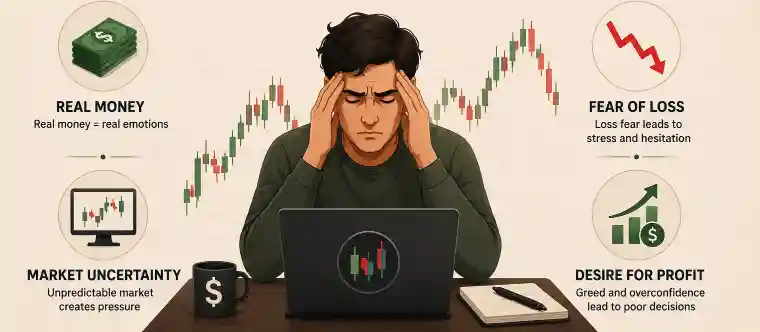
Even small market movements can create stress when traders risk too much capital or use high leverage. The uncertainty of the market also adds emotional tension because no trade outcome is guaranteed.
Several factors increase emotional instability in trading:
- Trading without a clear plan
- Using excessive leverage
- Risking too much per trade
- Expecting unrealistic profits
- Trying to recover losses quickly
- Depending emotionally on trading income
Many beginners underestimate how emotionally difficult trading becomes under live market conditions. A setup may look simple on historical charts, but real-time decision-making becomes much harder when profits and losses constantly fluctuate.
The Reality Check Most Beginners Learn Late
Many new traders believe success comes from finding the perfect indicator or secret strategy. This belief often causes traders to spend months switching systems instead of improving discipline.
In reality, even simple trading systems can perform reasonably well when combined with proper risk management and emotional control.
At the same time, even advanced strategies can fail when traders become emotional.
For example:
- A trader exits winning trades too early because of fear
- A trader removes stop-losses hoping the market reverses
- A trader increases lot size after losses to recover quickly
- A trader overtrades after feeling frustrated
These are psychological problems, not strategy problems.
This is why many professional traders focus heavily on consistency, patience, and discipline rather than constantly searching for new indicators.
Fear: One of the Strongest Emotions in Trading
Fear affects traders in multiple ways, and it often appears during both winning and losing situations.
Some traders fear losing money so much that they close trades too early, even when their original setup remains valid. Others hesitate too long before entering trades and miss good opportunities entirely.
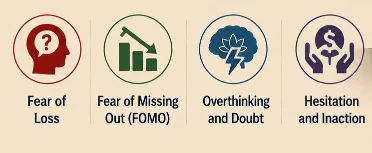
Fear becomes especially strong after several losing trades. Traders may begin doubting their strategy and stop following their plan altogether.
Common fear-based behaviors include:
- Closing trades too early
- Avoiding valid setups
- Reducing confidence after losses
- Constantly changing strategies
- Moving stop-losses emotionally
Fear is normal in trading, but unmanaged fear often creates inconsistent results.
Greed and the Desire for Fast Profits
Greed is another major psychological issue in forex trading. Many traders enter the market hoping to grow small accounts quickly, especially after seeing unrealistic social media claims about fast profits.
This mindset often encourages dangerous trading behavior.
Greedy trading habits commonly include:
- Using extremely high leverage
- Taking oversized positions
- Overtrading throughout the day
- Ignoring stop-loss rules
- Holding trades too long
Instead of focusing on consistency, traders become obsessed with making large profits quickly.
Unfortunately, aggressive trading usually increases emotional pressure and account instability. Many accounts fail not because traders cannot analyze charts, but because greed encourages reckless risk-taking.
Revenge Trading: A Common Emotional Trap
Revenge trading happens when traders try to recover losses emotionally instead of logically.
After a losing trade, frustration can create pressure to immediately win the money back. Instead of calmly analyzing the market, traders begin forcing trades impulsively.
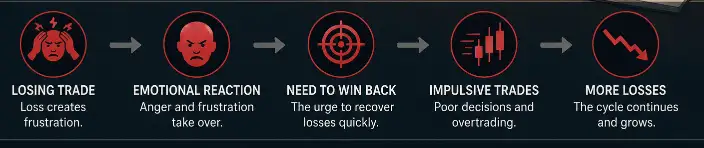
Common signs of revenge trading include:
- Increasing lot size after losses
- Entering trades without confirmation
- Trading aggressively out of frustration
- Ignoring original trading rules
- Taking random setups emotionally
Revenge trading is dangerous because emotional decisions usually create even larger losses. Many traders damage accounts quickly during emotionally driven trading sessions.
Professional traders understand that losses are part of the business. They focus on protecting capital instead of emotionally chasing recovery.
Overconfidence Can Also Be Dangerous
Psychological mistakes do not only happen during losing periods. Winning streaks can also create emotional problems.
After several profitable trades, some traders begin feeling invincible. They may start ignoring risk management because they believe they cannot lose.
This overconfidence often leads to:
- Taking lower-quality setups
- Increasing position sizes unnecessarily
- Breaking trading rules
- Trading too frequently
- Underestimating market risk
Experienced traders understand that discipline must remain stable during both winning and losing periods.
The market can change quickly, and emotional confidence without proper risk management can become dangerous.
Trader Insight: Why Emotional Discipline Matters More Than Most Strategies
One important reality many traders eventually discover is that psychological discipline often matters more than having a complicated strategy.
Many profitable traders use relatively simple trading methods. What separates them from struggling traders is consistency.
They:
- Accept losses calmly
- Protect capital carefully
- Avoid emotional decisions
- Follow structured plans
- Remain patient during uncertain conditions
Meanwhile, emotionally unstable traders often sabotage their own systems through impulsive behavior.
This is why improving emotional control becomes one of the most valuable long-term trading skills.
How to Control Emotions in Forex Trading
Controlling emotions does not mean becoming emotionless. It means learning how to make decisions logically even when emotions appear.
Below are practical ways traders improve emotional discipline.
1. Use Proper Risk Management
Risk management is one of the strongest tools for reducing emotional stress.
When traders risk too much money on a single trade, emotions become extremely difficult to control. Small market movements suddenly feel emotionally overwhelming.
Many experienced traders risk only a small percentage of their account per trade. Smaller risk exposure helps traders remain calmer and think more clearly.
Lower emotional pressure usually leads to better decision-making.
2. Follow a Structured Trading Plan
A detailed trading plan helps remove emotional guessing.
A proper trading plan should include:
- Entry conditions
- Exit rules
- Risk percentage
- Maximum daily loss limit
- Trading schedule
- Preferred market conditions
Without a structured plan, traders often make impulsive decisions based on emotions instead of logic.
3. Accept That Losses Are Part of Trading
Many beginners struggle emotionally because they expect every trade to succeed.
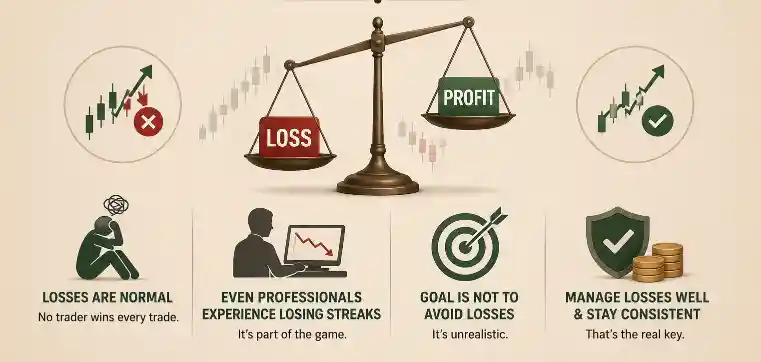
In reality, losses are unavoidable in trading.
Even professional traders experience losing streaks. The goal is not to avoid losses completely. The goal is to manage losses properly while maintaining consistency over time.
Once traders accept this reality, emotional reactions usually become more stable.
4. Avoid Overtrading
Overtrading in Trading Psychology in Forex is often driven by boredom, greed, or frustration. Many traders feel the need to stay active in the market even when no strong setup is available.
However, forcing trades usually leads to higher emotional stress and weakens discipline in Trading Psychology in Forex. Professional traders often spend more time waiting for quality setups than actually trading.
Patience is a key part of emotional control in Trading Psychology in Forex.
5. Keep a Trading Journal
A trading journal helps traders identify emotional patterns more clearly.
Important information to record includes:
- Trade entry reason
- Emotional state during the trade
- Risk percentage used
- Market conditions
- Trade outcome
- Mistakes made during execution
Reviewing past trades helps traders recognize repeated emotional mistakes and improve discipline over time.
6. Focus on Process Instead of Daily Profit
Many traders become emotionally unstable because they focus only on money. When profit becomes the sole goal, emotional pressure increases significantly.
Instead, experienced traders usually focus on the process rather than just profits:
- Following trading rules
- Executing setups properly
- Maintaining discipline
- Managing risk consistently
- Improving long-term performance
Ironically, focusing on process rather than short-term profits usually creates more stable results over time.
Common Psychological Mistakes Beginners Make
- Changing Strategies Too Frequently: Many beginners abandon strategies after only a few losses. Instead of evaluating performance over time, they constantly search for new systems. This creates inconsistency and prevents long-term improvement.
- Watching Charts Constantly: Monitoring every small price movement often increases emotional stress. Excessive chart watching can lead to impulsive decisions and unnecessary trade adjustments.
- Trying to Recover Losses Quickly: Emotionally chasing losses usually creates revenge trading behavior and larger account damage.
- Comparing Results With Other Traders: Social media comparisons often create unrealistic expectations.
Many online trading results are exaggerated or selectively shown, which can create emotional pressure for beginners.
How Discipline Improves Long-Term Trading Performance
Discipline allows traders to execute strategies consistently regardless of emotional conditions.
Over time, disciplined trading behavior improves:
- Consistency
- Risk control
- Decision-making quality
- Emotional stability
- Confidence in execution
Without discipline, even strong strategies become difficult to apply properly.
This is why many experienced traders consider emotional discipline one of the most valuable trading skills.
Who Should Focus Most on Trading Psychology
Trading psychology in forex is important for all traders, but it becomes especially important for:
- Beginners learning live trading
- Traders struggling with consistency
- Traders using high leverage
- People emotionally affected by losses
- Scalpers and high-frequency traders
- Traders recovering from repeated account losses
Improving emotional discipline can often produce better results than constantly searching for new strategies.
Final Verdict
Understanding trading psychology in forex is essential for long-term success in trading. While technical analysis, indicators, and strategies are important, emotional discipline often decides how consistently traders can apply them in real market conditions.
Emotions like fear, greed, frustration, impatience, and overconfidence are normal in trading. The key is not to remove them completely, but to prevent them from controlling decisions.
With proper risk management, a structured trading plan, discipline, and a focus on consistency instead of quick profits, traders can improve emotional control over time. Like any skill, trading psychology develops through practice, patience, and experience.

