

Volatility in forex is one of the most important concepts every trader must understand before entering the market. It refers to how quickly and how significantly the price of a currency pair changes over time. In simple terms, volatility tells you whether the market is moving fast or slowly.
When the market shows large and rapid price changes, it is considered highly volatile. On the other hand, when price movements are small and stable, volatility is low. For beginners, understanding volatility is essential because it directly impacts trading opportunities, risk levels, and strategy selection.
What Does Volatility Mean
Volatility measures the intensity of price fluctuations in currency pairs. It helps traders evaluate how active or calm the market is at any given time.
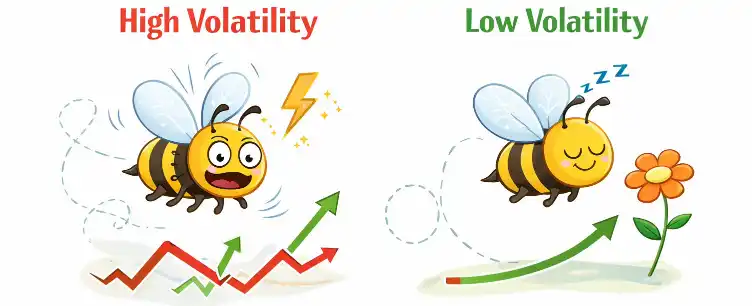
- High volatility: Prices move quickly with large swings
- Low volatility: Prices move slowly with small changes
For example, during major economic news releases, the market often becomes highly volatile, creating sudden price spikes. In contrast, during quiet market hours, price movement tends to be minimal.
Understanding volatility allows traders to better prepare for market conditions and adjust their trading approach accordingly.
Types of Volatility
1. High Volatility
High volatility in forex occurs when the market experiences strong and rapid price movements within a short period.
- Provides more trading opportunities
- Offers higher profit potential
- Involves increased risk
High volatility is often seen during major news releases, central bank announcements, or unexpected global events.
2. Low Volatility
Low volatility happens when the market moves slowly with limited price fluctuations.
- Fewer trading opportunities
- Lower risk exposure
- More suitable for beginners
Low volatility conditions are common during off-market hours or when there is no significant economic activity.
What Causes Volatility in Forex
Several factors influence volatility in forex markets. Understanding these drivers helps traders anticipate potential price movements.
- Economic news: Data such as GDP, inflation, and employment reports
- Interest rate decisions: Central bank policies impact currency strength
- Political events: Elections, conflicts, and policy changes
- Market sentiment: Trader expectations and reactions
- Global economic conditions: Overall financial stability
When these factors create uncertainty or strong expectations, volatility tends to increase significantly.
Volatility in Forex and Trading Styles
Different trading strategies perform differently depending on market volatility. Choosing the right style based on volatility can improve trading outcomes.
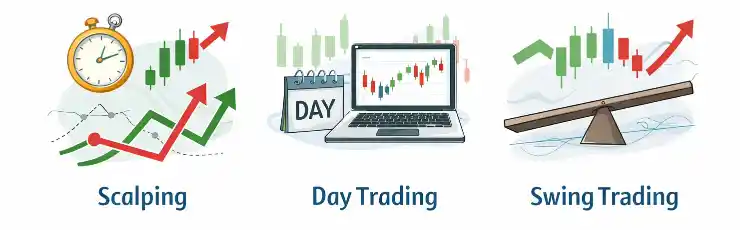
- Scalping: Works best in high volatility due to quick price movements
- Day Trading: Can operate in both high and low volatility conditions
- Swing Trading: Prefers moderate volatility for stable trends
Traders should not use the same strategy in all market conditions. Instead, adapting to volatility in forex is key to long-term success.
Volatility in Forex and Risk Management
Volatility plays a major role in determining trading risk. The higher the volatility, the greater the potential reward—but also the greater the risk.
- High volatility: Higher risk and higher reward
- Low volatility: Lower risk but slower growth
This is why risk management is crucial. Using tools like stop loss and proper position sizing helps protect your capital, especially in highly volatile conditions.
Beginners should always prioritize safety over aggressive trading when dealing with volatility in forex.
How to Measure Volatility in Forex
There are several tools traders use to measure volatility and understand market conditions more clearly.
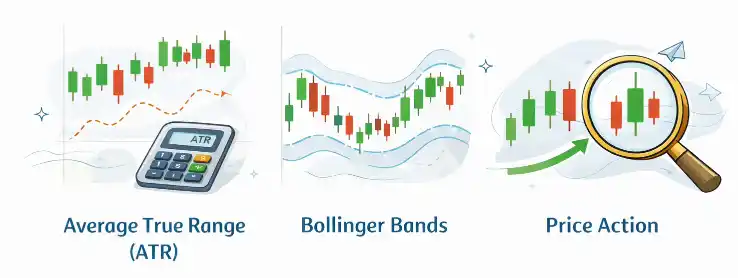
- Average True Range (ATR): Measures market volatility by calculating average price range
- Bollinger Bands: Shows volatility through expanding and contracting bands
- Price Action: Observing candle size and movement patterns
These tools help traders identify whether the market is trending, ranging, or preparing for a breakout.
Volatility in Forex and Slippage
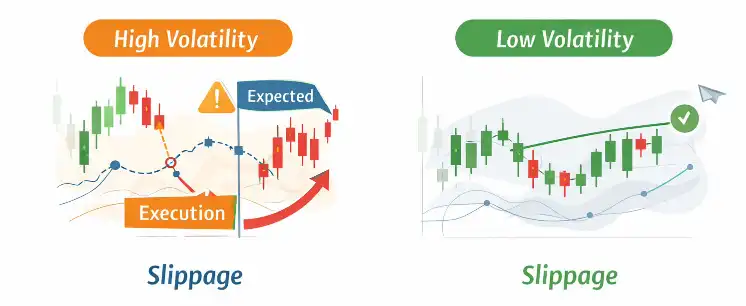
Volatility is closely connected to slippage. Slippage occurs when a trade is executed at a different price than expected.
- High volatility: Increased chances of slippage
- Low volatility: More stable trade execution
During fast-moving markets, prices can change rapidly, making it difficult for orders to execute at the exact desired level.
Understanding this relationship helps traders avoid unexpected losses and manage trades more effectively.
Common Mistakes Traders Make
Many beginners struggle because they ignore the importance of volatility in forex. Here are some common mistakes:
- Trading without analyzing market volatility
- Using the same strategy in all conditions
- Ignoring risk during high volatility
- Overtrading in fast-moving markets
Avoiding these mistakes can significantly improve trading performance.
Pro Tips for Beginners
If you are new to trading, these tips will help you handle volatility in forex more effectively:
- Always check volatility before entering a trade
- Adjust your strategy based on market conditions
- Use stop loss in volatile markets
- Avoid trading during unpredictable news events
Developing discipline and awareness is more important than chasing quick profits.
Final Thoughts
Volatility in forex is a fundamental concept that shapes how the market behaves. It influences trading opportunities, risk levels, and overall strategy decisions.
For beginners, mastering volatility in forex is a crucial step toward becoming a more confident and consistent trader. By understanding when the market is fast or slow, you can make smarter decisions and avoid unnecessary risks.
As you gain experience, you will learn how to use volatility to your advantage and adapt your trading style accordingly.
To better understand market behavior, you should also learn about Slippage in Forex and Liquidity in Forex, as both are closely related to volatility and trade execution.

