

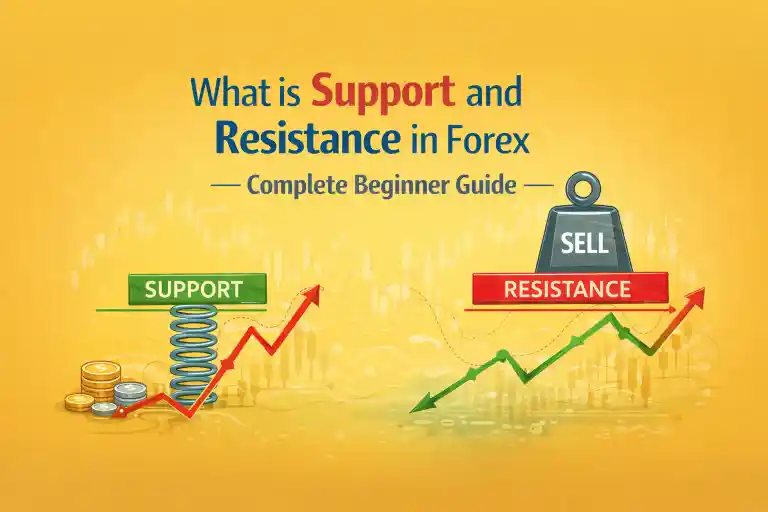
Support and resistance in forex are essential concepts that every trader should understand before placing trades. These levels help identify where the price is likely to stop, reverse, or continue its movement.
In simple terms, support and resistance act as barriers in the market. Traders use these levels to plan entries, exits, stop loss placement, and take profit targets. Whether you are a beginner or an experienced trader, mastering support and resistance in forex can significantly improve your trading decisions.
What Does Support and Resistance Mean
Support and resistance in forex refer to specific price levels where the market tends to react.
- Support: A price level where the market usually stops falling and may move upward
- Resistance: A price level where the market usually stops rising and may move downward
These levels are formed because of the interaction between buyers and sellers. When price reaches support, buyers tend to enter the market. When price reaches resistance, sellers become more active.
This is why support and resistance in forex are often seen as key turning points in the market.
How Support and Resistance Work
The forex market operates based on supply and demand. Support and resistance levels are a direct reflection of this relationship.
- At support, demand is strong, which pushes prices higher
- At resistance, supply is strong, which pushes prices lower

These levels are not random. They are created because traders remember past price behavior and tend to react similarly when price revisits those levels.
As a result, support and resistance in forex become self-reinforcing levels that many traders rely on.
Types of Support and Resistance in Forex
There are different ways support and resistance levels appear on the chart. Understanding these types will help you analyze the market more effectively.
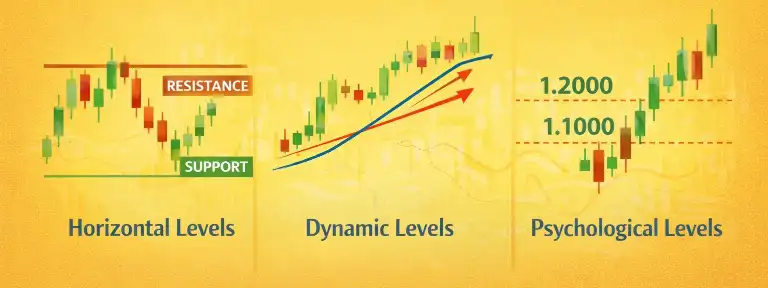
1. Horizontal Levels
Horizontal levels are the most basic and commonly used form of support and resistance in forex.
- Flat price zones where the market has reversed multiple times
- Easy to identify on charts
- Widely used by beginner and professional traders
These levels are considered strong when price reacts to them repeatedly.
2. Dynamic Levels
Dynamic support and resistance levels move along with the market trend.
- Moving averages
- Trendlines
These levels are especially useful in trending markets, where price does not stay within fixed ranges.
3. Psychological Levels
Psychological levels are round numbers where traders tend to place orders.
- Examples: 1.1000, 1.2000
These levels often act as strong support and resistance in forex because many traders focus on them.
How to Identify Support and Resistance
Identifying support and resistance in forex requires observation and practice. Here are some simple methods:
- Look for areas where price has reversed multiple times
- Mark previous highs and lows on the chart
- Use trendlines to connect price movements
- Analyze historical price behavior
The more times price reacts to a level, the stronger that level becomes. Strong levels often provide better trading opportunities.
Support and Resistance in Trading
Support and resistance in forex are widely used by traders to plan and manage trades effectively.
Traders use these levels to:
- Identify entry points
- Place stop loss orders
- Set take profit targets
- Spot breakout opportunities
Using these levels correctly can help traders improve accuracy and reduce unnecessary risks.
Breakout and Reversal Strategies
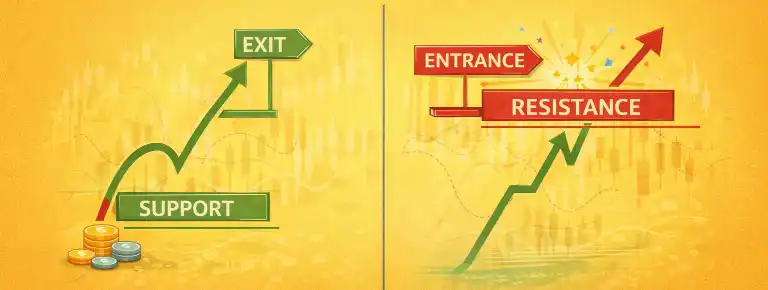
Price behavior around support and resistance in forex generally follows two patterns: reversal or breakout.
Reversal
- Price bounces back from support or resistance
- Indicates the level is holding strong
Breakout
- Price breaks through support or resistance
- Often followed by strong momentum
Breakouts can lead to powerful price movements, but traders should always wait for confirmation before entering a trade.
Common Mistakes Traders Make
Many beginners misuse support and resistance in forex, which can lead to poor trading results. Here are some common mistakes to avoid:
- Drawing too many support and resistance levels
- Ignoring the overall market trend
- Entering trades without confirmation
- Placing stop loss too close to key levels
Avoiding these mistakes can help you use support and resistance more effectively.
Pro Tips for Beginners
If you are new to trading, these tips will help you master support and resistance in forex:
- Use higher timeframes for more accurate levels
- Combine support and resistance with trend analysis
- Wait for confirmation before entering trades
- Keep your charts clean and simple
Consistency and practice are key when learning how to use these levels effectively.
Final Thoughts
Support and resistance in forex are among the most powerful tools in technical analysis. They help traders understand market behavior and make more informed trading decisions.
By identifying key levels and using them correctly, traders can improve their entries, manage risk better, and increase overall confidence in trading.
For beginners, mastering support and resistance is a crucial step toward becoming a more disciplined and successful trader.
To improve your trading strategy, you should also learn about Trend in Forex and Stop Loss in Forex, as they help in using support and resistance more effectively.

