

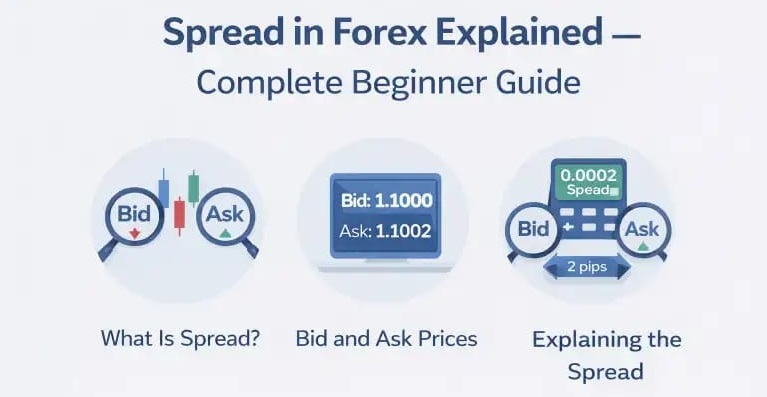
Spread in forex is one of the most important concepts every trader must understand before placing trades. It refers to the difference between the buying price (ask) and the selling price (bid) of a currency pair.
This difference represents the cost you pay to enter a trade. No matter which strategy you use, the spread directly affects your profit and loss. That’s why learning how it works is essential for better decision-making.
What is Spread in Forex
To fully understand spread in forex, you need to know how currency prices are displayed.
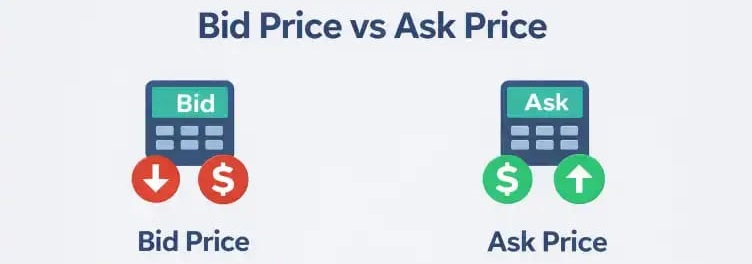
Every currency pair has two prices:
- Bid Price: The price at which you can sell a currency
- Ask Price: The price at which you can buy a currency
The difference between these two prices is called the spread.
Example:
- EUR/USD Bid = 1.1000
- EUR/USD Ask = 1.1002
The difference is 2 pips, which means the spread in forex here is 2 pips.
Types of Spread in Forex
Understanding the different types of spread in forex helps you choose the right trading conditions.
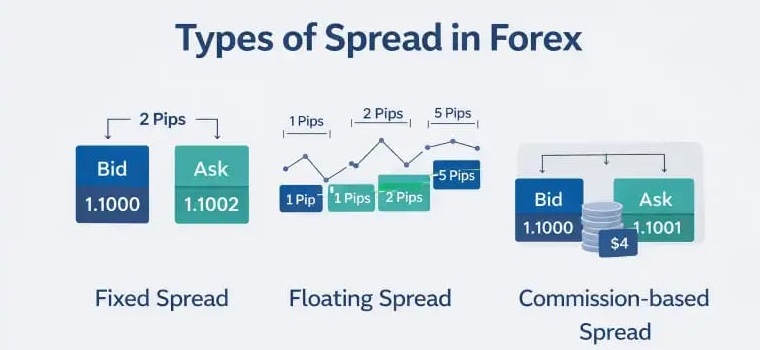
1. Fixed Spread
Fixed spreads remain constant regardless of market volatility.
- Trading costs stay stable
- Common with market maker brokers
- Suitable for beginners
2. Variable Spread
Variable spreads change depending on market conditions and liquidity.
- Lower during active trading sessions
- Higher during news events or volatility
- Common with ECN and STP brokers
3. Commission-Based Spread (Raw Spread)
In this model, brokers offer very low or near-zero spreads, but charge a separate commission on each trade.
- Very tight spreads (sometimes 0.0 pips)
- Commission charged per lot traded
- Common in ECN accounts
- Best for scalpers and professional traders
Why Spread in Forex is Important
The spread in forex has a direct impact on your trading performance.
- Lower spread means lower trading cost
- Higher spread requires more price movement to become profitable
This is why most traders prefer major currency pairs like EUR/USD, which usually have lower spreads compared to exotic pairs.
How Spread Affects Your Trade
Every time you open a trade, you start at a small loss equal to the spread in forex.
Example:
- You buy EUR/USD at 1.1002
- Current bid price is 1.1000
This means your trade starts at -2 pips. The price must move in your favor first to cover the spread before generating any profit.
Spread and Trading Style
Different trading strategies are affected differently by the spread in forex.
- Scalping: Requires very low spreads due to frequent trades
- Day Trading: Moderate impact
- Swing Trading: Less affected by spread
Short-term traders should always focus on brokers offering tight spreads to reduce costs.
Factors That Affect Spread in Forex
Several factors influence the spread in forex:
- Market liquidity
- Trading session timing
- Economic news releases
- Type of currency pair
Spreads are usually lowest during high liquidity periods such as the London and New York sessions.
How to Reduce Spread Cost
Managing the spread in forex can help improve your overall profitability.
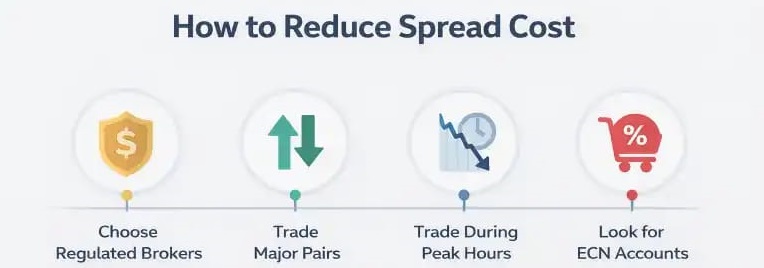
- Choose brokers with competitive spreads
- Trade major currency pairs
- Trade during high liquidity sessions
- Avoid trading during high-impact news events
Common Mistakes Traders Make
Many beginners overlook the importance of spread in forex, which can lead to unnecessary losses.
- Ignoring spread before entering trades
- Trading exotic pairs with high spreads
- Using scalping strategies with wide spreads
- Not checking spreads during news events
Pro Tips for Beginners
If you are starting out, keep these tips in mind:
- Always check the spread before placing a trade
- Combine spread analysis with stop loss and take profit planning
- Avoid overtrading in unfavorable conditions
Understanding how spread works along with pip movement can significantly improve your trading decisions.
Final Thoughts
The spread in forex is a small but powerful factor that affects every trade you take. Even a few pips difference can impact your long-term profitability, especially if you trade frequently.
By choosing better trading conditions and being aware of spread behavior, traders can reduce unnecessary costs and trade more efficiently.
o understand how trading costs increase with position size, you should also learn about Leverage in Forex, as it directly affects your exposure and risk in the market.

