

The Forex Trading Guide is essential for anyone who wants to understand how the global currency market works. Forex trading, also called foreign exchange trading, involves buying and selling currencies to benefit from price changes. It is considered the largest financial market in the world, with trillions of dollars traded daily.
One of the unique aspects of forex trading is its accessibility. The market operates 24 hours a day, five days a week, making it possible for traders around the world to participate at almost any time.
Understanding the Forex Market
The forex market is a decentralized system where currencies are traded electronically. Unlike stock markets, there is no single physical exchange. Instead, transactions happen through a network of banks, brokers, institutions, and individual traders.
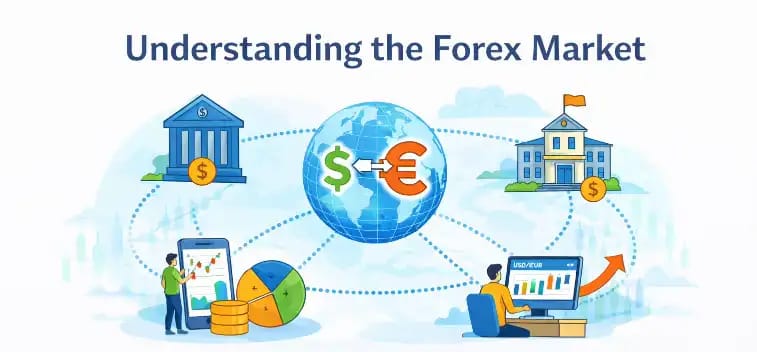
In this market, currencies are traded in pairs. This means when you trade, you are buying one currency while selling another.
- EUR/USD (Euro vs US Dollar)
- GBP/USD (British Pound vs US Dollar)
- USD/JPY (US Dollar vs Japanese Yen)
If you expect one currency to strengthen against another, you place a buy trade. If you expect it to weaken, you place a sell trade.
How Forex Trading Works
According to this Forex Trading Guide, trading is based on price movement. Currency prices change due to economic data, global events, and market sentiment.
- Buy (Long): When you expect the price to rise
- Sell (Short): When you expect the price to fall
Your profit or loss depends on how much the market moves after you enter a trade.
Key Components of Forex Trading
1. Currency Pairs
Currency pairs are divided into different types:
- Major Pairs: Most traded pairs like EUR/USD
- Minor Pairs: Do not include USD
- Exotic Pairs: Include emerging market currencies
2. Pips
A pip represents the smallest price movement in a currency pair, usually measured at the fourth decimal place.
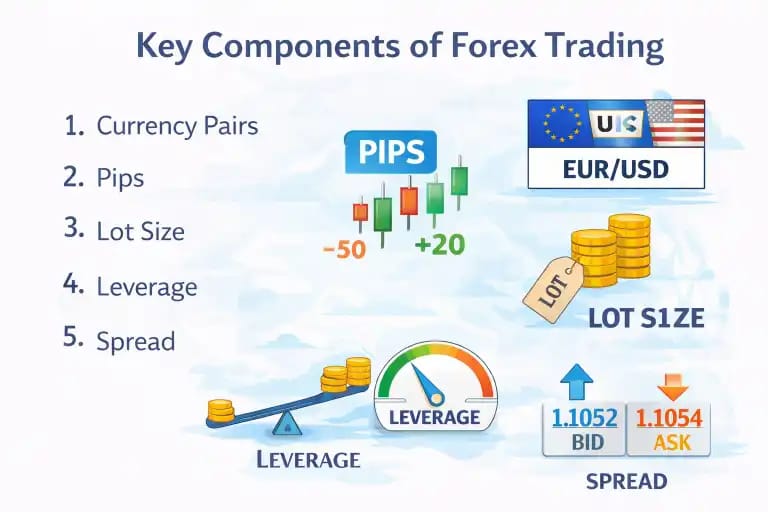
It is used to calculate profit and loss in forex trading. For most currency pairs, one pip equals 0.0001, making it a standard unit for measuring price changes in the market.
3. Lot Size
- Standard Lot = 100,000 units
- Mini Lot = 10,000 units
- Micro Lot = 1,000 units
4. Leverage
Leverage allows traders to control larger positions with a smaller amount of capital.
While it can significantly increase potential returns, it also amplifies the risk of losses. Proper use of leverage requires strong risk management and disciplined trading practices.
5. Spread
The spread is the difference between the buy (ask) price and the sell (bid) price of a currency pair.
It acts as a trading cost charged by the broker and can vary depending on market conditions, liquidity, and the type of account used. Lower spreads are generally more favorable for traders, especially for short-term strategies.The spread is the difference between the buy and sell price and acts as a trading cost.
Types of Forex Markets
This Forex Trading Guide also covers the main types of markets where currencies are traded:
- Spot Market: Immediate exchange of currencies
- Forward Market: Contracts for future transactions
- Futures Market: Standardized contracts traded on exchanges
Advantages of Forex Trading
- High liquidity for easy trade execution
- 24-hour trading availability
- Low starting capital requirement
- Ability to trade in both rising and falling markets
- Access to leverage
Risks of Forex Trading
While this Forex Trading Guide highlights opportunities, it is important to understand the risks:
- Market volatility can cause sudden losses
- Leverage can amplify losses
- Requires discipline and emotional control
- Global events can impact the market unpredictably
Basic Forex Trading Strategies
- Trend Following: Trading in the direction of the current market trend.
- Scalping: Making small profits from short-term trades.
- Swing Trading: Holding trades for a few days to capture medium-term price movements.
- Breakout Trading: Entering trades when price breaks key support or resistance levels.
What Moves the Forex Market
Several factors influence currency prices in this Forex Trading Guide:
- Interest rates set by central banks
- Economic data such as inflation and GDP
- Political stability and global events
- Market sentiment and trader behavior
How to Start Forex Trading
If you are new, this Forex Trading Guide suggests the following steps:
- Choose a reliable forex broker
- Open and verify your trading account
- Deposit funds
- Use a trading platform like MT4 or MT5
- Practice with a demo account
- Create a trading strategy
Importance of Risk Management
Risk management plays a crucial role in long-term success. Traders should:

- Use stop-loss orders
- Avoid excessive leverage
- Risk only a small percentage per trade
- Maintain discipline
Final Thoughts
This Forex Trading Guide provides a solid foundation for beginners. While the market offers many opportunities, it also requires patience, knowledge, and consistent practice.
Starting with a demo account and gradually moving to live trading can help reduce risk. With the right mindset and proper learning, forex trading can become a valuable financial skill.

